Gulf of California classified as a threatened world heritage
environmentmarine conservationillegal fishingendangered speciesgulf of california
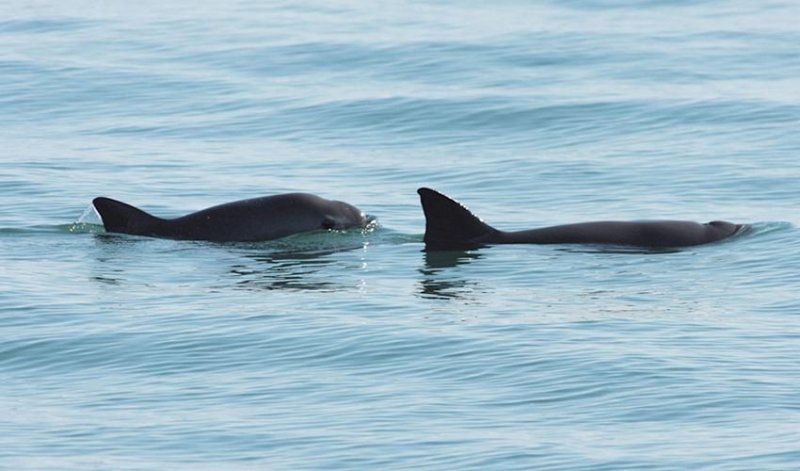
Vaquitas in the Gulf of California, (c) SEMARNAT (public domain)
Vaquitas: The world's smallest whale is critically endangered The World Heritage Committee has followed the advice of the IUCN and has identified the Mexican islands and protected areas in the Gulf of California as endangered world heritage. The population of the Vaquitas - the smallest and most vulnerable porpoise in the world - has been decimated by the illegal trade in marine products, possibly leaving only ten individuals... In recent years, illegal fishing in the Gulf of California has wreaked havoc on the unique sealife world and has brought the Vaquitas on the verge of extinction. The porpoise becomes entangled in nets used illegally to fish another endangered species, the Totoaba fish, whose swim bladder scores high on Asian markets. "It is an alarming indicator of the seriousness of the illegal wildlife trade that we will soon see the extinction of such an iconic species as the Vaquitas - within the perceived security of a world heritage," says Peter Shadie, director of the IUCN World Heritage Program. The islands and protected areas of the Gulf of California were declared a World Heritage Site in 2005 for their exceptional marine biodiversity. The site consists of 244 islands, islets and coastal areas in northeastern Mexico, with 39% of marine mammals and one third of whales in the world. The Upper Gulf of California is the only place on earth where the Vaquitas occur. In 2017, the population of Vaquitas dropped dramatically from about 300 to an estimated 30. The attempts to breed Vaquitas were quickly abandoned, as the porpoise proved very susceptible to captive-related stress ( see also here Experts estimate that in the summer of 2018 - before the current fishing season - ten Vaquitas were left. The high level of illegal fishing on Totaloaba continued in the Upper Gulf of California in 2018 and 2019, and even escalated, even in the small area where the few Vaquitas still live. Following two recent missions and regular surveillance, the IUCN and the UNESCO World Heritage Center concluded that the threat of illegal fishing in the Gulf of California justifies the inclusion of the site in the World Heritage List. As recommended by the IUCN, Mexico now needs to take all necessary measures to protect the remaining vaquitas and develop longer-term solutions to ensure a sustainable livelihood for local communities in the Gulf of California, including through improved sustainable fishing practices. The World Endangered Heritage List is a mechanism designed to facilitate emergency response to the conservation and international support of high-risk World Heritage Sites. More Information: https://www.iucn.org
この記事は自動翻訳されており、多少の不正確な点が含まれている可能性があります。不明な点がある場合は、元の英語版を参照してください。