Turbid water makes reef fish more cautious
environmentmarine lifevisibilityreef fishsediment
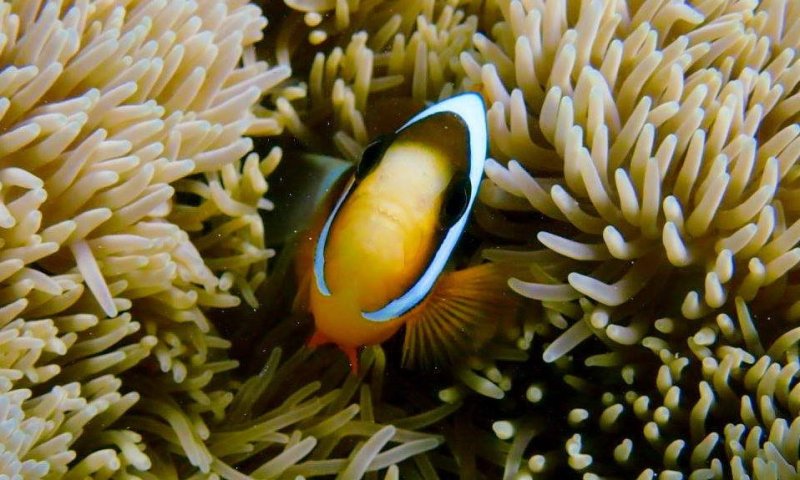
Anenome
fish.
(c) ARC
CoE
for
Coral
Reef
Studies/
Sofia
Jain
Schlaepfer
Restricted visibility on the reef costs anemone fish a lot of energy
Scientists at James Cook University have found that fish become more fearful and cautious when water quality is affected by sediment, an effect that could affect the growth and health of the animals. Levels of suspended sediment in tropical coastal waters have greatly increased in recent decades as a result of human activity, and we wondered if this limited visibility is affecting fish, especially their ability to escape predators, " said Jodie Rummer of the ARC Center of Excellence for Coral Reef Studies. The researchers, led by doctoral student Sybille Hess, studied the response of one-month blackfin anemone fish to a simulated predator attack after living in a sediment-filled basin for seven days. We found that the fish responded more quickly and were able to break away from the simulated predator attack more effectively than those living in the clear water, suggesting that the fish are on high alert because of the reduced visibility, " says Sybille Hess. She also emphasizes that the fish are also less active in cloudy waters when looking for food. In addition, they avoid open areas. " The faster responses and more careful foraging increase survival rates in low visibility environments where predators are present, but the fish also pay a price ," Hess said. Dr. Rummer explains that the energy consumed to escape predators reduces the available energy for growth, maintenance and reproduction. This is particularly bad for young reef fish, since the survival rate in this critical phase of life is already low anyway. More cautious behaviour, as we have observed in an increased concentration of suspended matter, can not only limit movement within their home area and possibly limit their access to food, but also the ability of juvenile fish to find a suitable anemone they call home. However, permanent limited visibility may be enough to affect fish, and when fish feel as if they are constantly endangered, this perceived risk removes energy from other important tasks - side effects can be growth disorders and a weakened immune system. " explained Rummer. More Information: https://www.coralcoe.org.au.

nenome
fish.
(c) ARC
CoE
for
Coral
Reef
Studies/
Sofia
Jain
Schlaepfer

Anenome
fish.
(c)
ARC
CoE
for
Coral
Reef
Studies
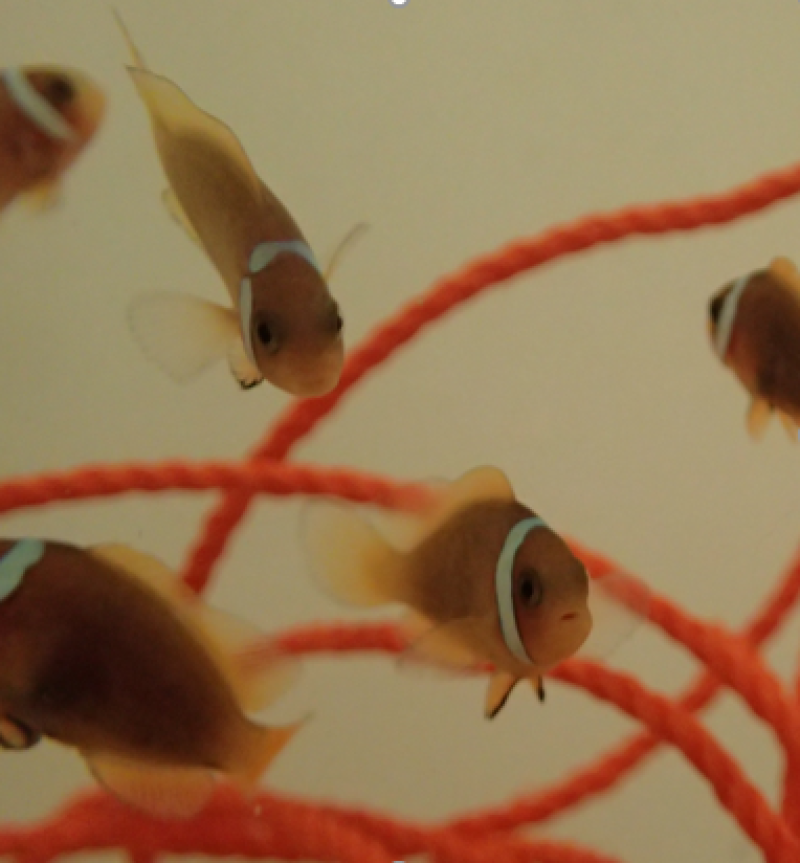
Juvenile Anenome
fish.
(c)
ARC
CoE
for
Coral
Reef
Studies
Cet article a été traduit automatiquement et peut contenir des inexactitudes mineures ; veuillez vous référer à la version anglaise originale en cas de doute.