Healthy reefs “sound good” for coral larvae
coral reefsenvironmentmarine lifeunderwater ecosystem
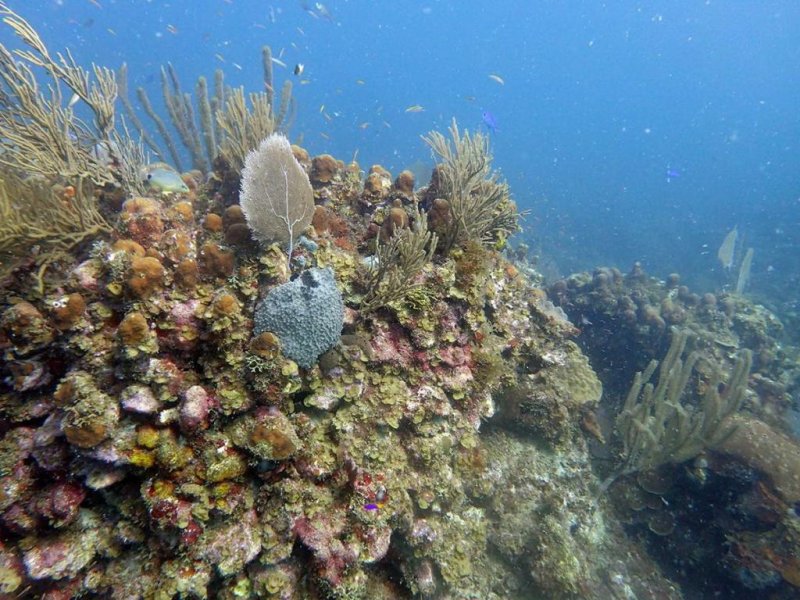
The healthy Tektite reef, which has an abundance of coral and fish., (c) Amy Apprill, WHOI
Soundscape plays a role in the settlement of corals In the larval stage corals drift freely in the sea - but once the larva has settled down, it anchors permanently on the rocky bottom of a reef. How exactly the larvae chooses a particular habitat, however, is largely unclear. A new study by the Woods Hole Oceanographic Institution (WHOI) is beginning to unravel this mystery. Researchers found that the soundscape of a reef - the combined sounds of all living animals - could play an important role in reef larvae selection: towards healthy reef systems and away from damaged ones. The study has recently been published in the journal Royal Society Open Science. In the study, we brought together scientists with expertise in acoustics and coral reefs to investigate whether sound influences the choice of coral home, " says Amy Apprill, a coral reef ecologist, co-author of the study with sound landscape ecologist Ashlee Lillis. Both are researchers at the WHOI. Healthy reefs, says Apprill, are not exactly quiet places - they are filled with the constant crackle of popping shrimps, grunts of fish, shouts of dolphins or whales and other sounds. It's a bit like being in a lush rainforest, in the midst of a cacophony of bird calls and animal calls. To test how these sounds affect coral, Apprill and her colleagues first collected larvae of the mustard-hipped coral (Porites asteroides) near the Caribbean island of St. John. Then they placed the tiny larvae in sealed containers of seawater, each with a ceramic substrate inside to simulate the rocky surface of a reef. The team positioned the test containers at three points in the waters off St. John: a bare sandy patch, a dying, unhealthy reef, and a more thriving, heavily-populated reef. Above the experimental set-up of the containers, the researchers each placed a hydrophone, a special microphone that can measure the sound underwater, and recorded the sounds of the locations for the next two and a half days. At the end of the experiment, the team counted the number of coral larvae that had settled in each area and analyzed the soundscape around them. Sounds of snapping shrimp in all areas, constant background noise, sound of fish, low-frequency grunts, chirping, and knocking on healthy reefs, " says Aran Mooney, ecologist and bio-acoustics expert at WHOI. " These noises may reflect the biodiversity of a reef, a healthy reef will have many fish sounds, an unhealthy reef will be very few, " he says. At the "healthy" reef of the study, which had a large variety of low-frequency sounds, larval colonization was twice as high as at the other sites. " We think that without these noises, the larvae might miss the opportunity to settle in a particular reef, " says Apprill. She believes that these findings could help to better protect coral reefs in the future. So the noise nuisance z. B. by shipping in the vicinity of sensitive marine areas are avoided. " Our study also has a major impact on coral reef efforts, could you place a concrete slab in the sea, play the sounds of a healthy reef, and attract new coral? " asks Apprill. Audio link: https://soundcloud.com/woodsholeocean/apprill-mooney-multimedia-181207a
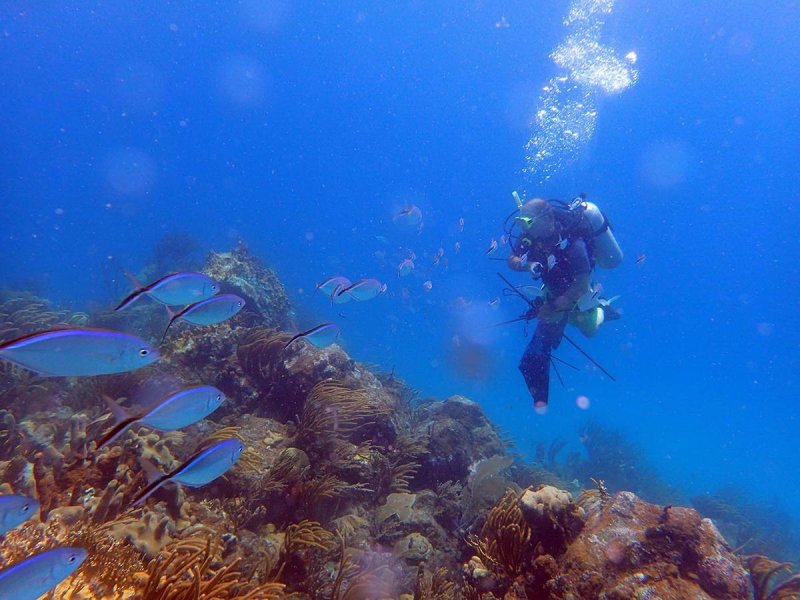
Aran Mooney, a sensory ecologist and bioacoustician at WHOI, deploying a settlement experiment at the Tektite site (most pristine reef) in the US Virgin Islands. (c) Amy Apprill, WHOI
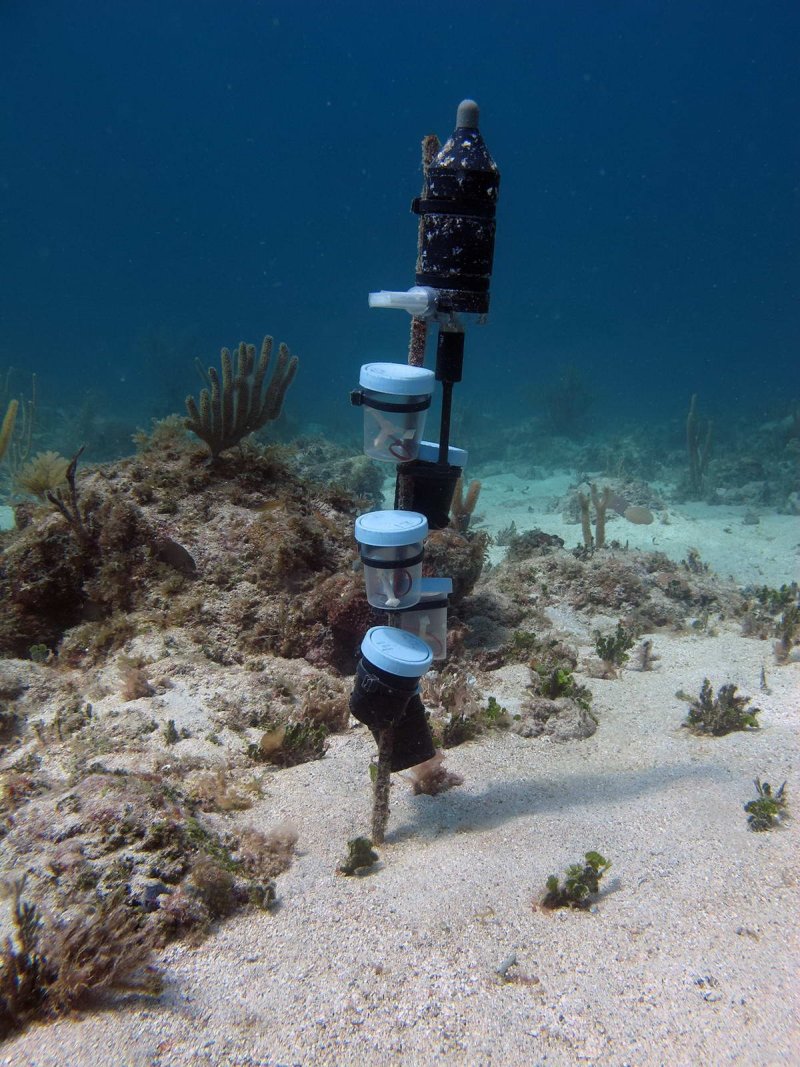
Settlement experiment deployed at the more degraded, less fish abundant Cocolaba reef in the US Virgin Islands. (c) Amy Apprill, WHOI
Cet article a été traduit automatiquement et peut contenir des inexactitudes mineures ; veuillez vous référer à la version anglaise originale en cas de doute.