Coral bleaching threatens the diversity of reef fish
environmentmarine conservationbiodiversityreef fishcoral bleaching
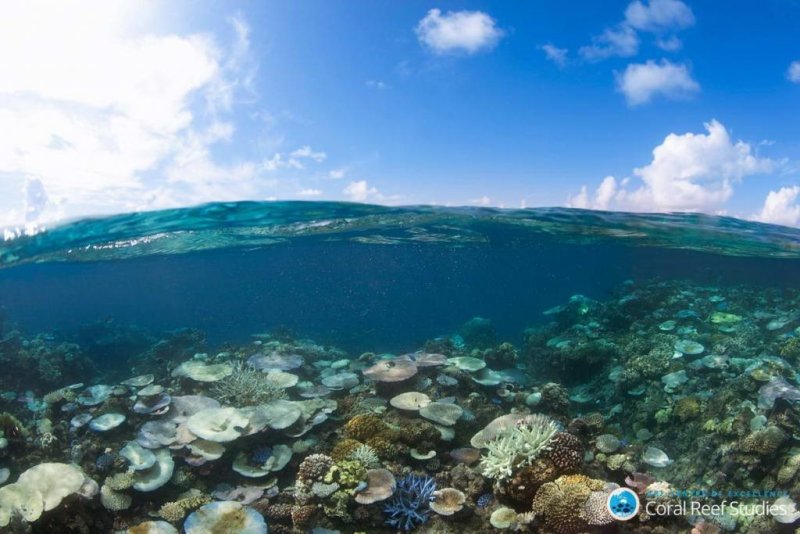
Climate induced coral bleaching events are the greatest threat to coral reefs. As shown here, there is extensive bleaching of hard and soft corals at Moore Reef following sustained heat stress in March 2017 on Great Barrier Reef.
(c) ARC CoE for Coral Reef Studies/ Ciemon Caballes
New research shows that global warming also affects fish that rely on corals New international research led by PhD student Laura Richardson from the ARC Center of Excellence for Coral Reef Studies at James Cook University, Australia, shows that coral bleaching can not only damage the coral itself, but also reduce the diversity of fish in these valuable ecosystems The study was conducted by researchers from James Cook University and Lancaster University, UK, who studied 16 reefs off Lizard Island in the northern part of the Great Barrier Reef. The numbers and types of coral and fish species were studied before, during and after the devastating mass bleaching of 2016. "The widespread impact of heat stress on coral has been the subject of much discussion within and outside the research community, and we learn that some corals are more sensitive to heat stress than others, but reef fish also respond differently to these disorders," said Richardson, lead author of the study. "Fish accumulations are significantly affected by the loss of coral coverage due to bleaching, and some fish are more sensitive than others," adds co-author Prof. Nick Graham of Lancaster University. The loss of coral affected some fish species more than others. After bleaching, researchers noted a sharp decline in the diversity of fish communities. Fish strongly dependent on branched corals, e.g. Butterfly fish, fell the hardest. "Before the mass bleaching in the year 2016, we observed significant differences in the number of fish species, total fish abundance and functional diversity between the different fish communities, but six months after the bleaching event, this diversity was almost completely lost," says co-author Dr. Andrew Hoey. Also known as "biotic homogenization", this tendency towards individual and community similarity is increasingly regarded as one of the most urgent but largely unrecognized biodiversity crises worldwide. More information: https://www.coralcoe.org.au
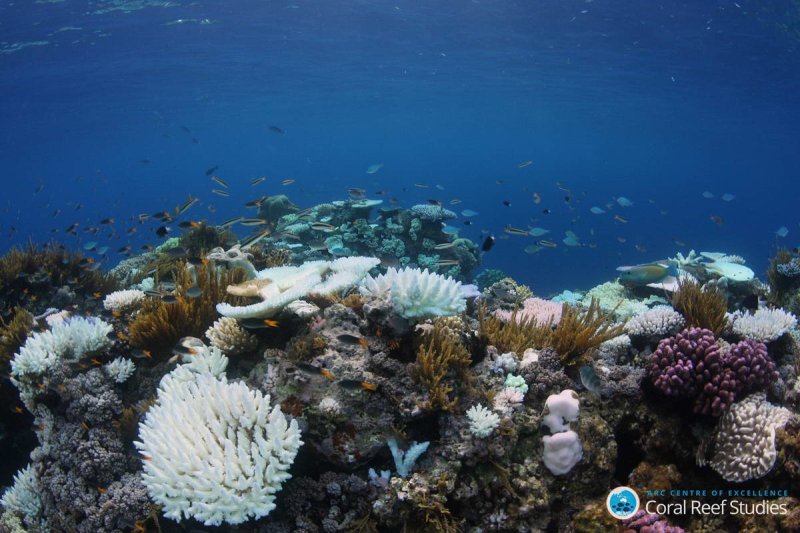
Coral and reef fish species vary in their tolerance to severe heat stress. Here, the ‘winners’ and ‘losers’ of the 2016 mass coral bleaching event at Moore Reef, Great Barrier Reef, March 2017.
(c) ARC CoE for Coral Reef Studies/ Ciemon Caballes
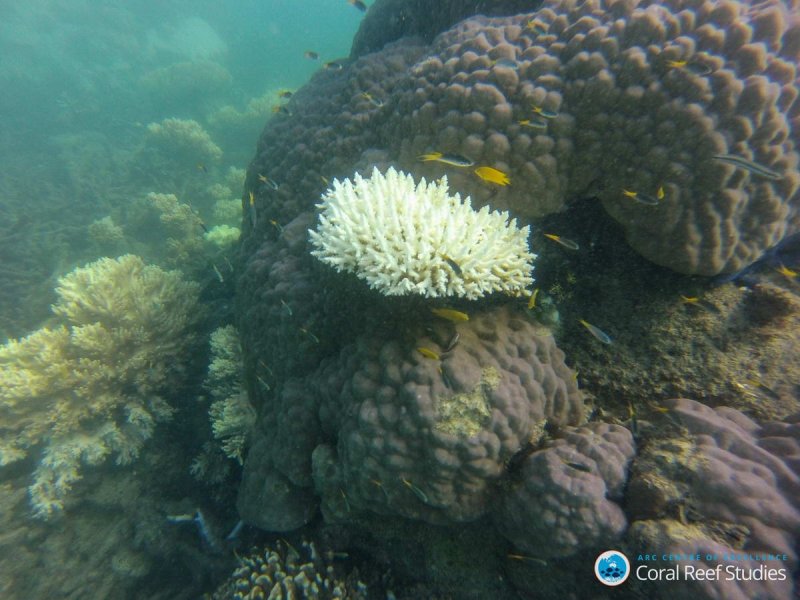
Branching corals and small‐bodied reef fish are often worse affected. Pictured here, a bleached branching acroporid colony with associated reef fish, right next to a healthy (or yet to bleached) Porites col
Cet article a été traduit automatiquement et peut contenir des inexactitudes mineures ; veuillez vous référer à la version anglaise originale en cas de doute.