Experience Marine Research First-Hand
environmentmarine lifessiunderwater technologyoceanmarine research
GEOMAR Open House in Kiel on 12 July 2015
How dangerous is plastic waste in the ocean? How much World War II munitions is there still left in the sea? Are there actually robots on the seabed at this very moment? These and many other questions will be answered by scientists at the Open House this Sunday at the GEOMAR Helmholtz Centre for Ocean Research Kiel.
Even today, the seabed of the deep seas remains largely unexplored.
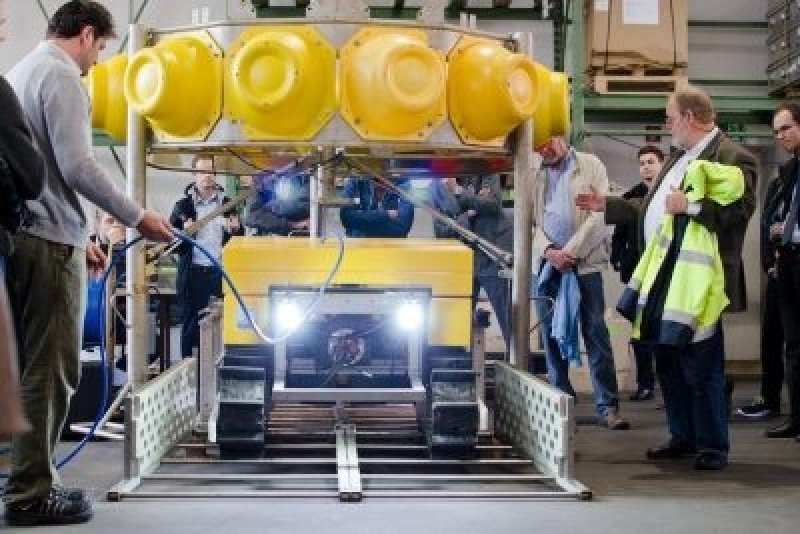
There's much we don't know about what lies beneath the surface – but not for long. New autonomous deep-sea crawlers are being developed to shed light onto this. One of them – called VIATOR – is been developed at GEOMAR with collaboration from partners from the aerospace industry. VIATOR makes its first public debut at the open house.
Besides VIATOR, many other devices go on show at the open house, like the remotely-controlled underwater vehicle ROV PHOCA, as well as seismometers that can cause a minor earthquake. Stop by at our information booths and take part in hands-on activities. Employees of GEOMAR are on hand if you have any further questions about the exhibits.
There are also exciting and informative lectures, covering topics from the problem of ammunition-contaminated sites in the North and Baltic Seas, volcanoes on the seafloor and plastic waste in the sea.
If you've ever wondered what it takes to be an oceanographer, or what takes place on a research vessel, here's your chance! Step on board the research vessel ALKOR, which is moored at the Schwentine river mouth.
Get an insight into the diverse biodiversity of the Baltic Sea, as well as view and touch some of the marine creatures in the display tanks.
There are fish, starfish, crabs and other sea creatures, etc. Short tours are conducted on board the research barge POLARFUCHS as well.
For kids aged 5 to 14, there are readings by authors. Students from the Kiel region will showcase projects they have done in collaboration with GEOMAR scientists. These projects cover basic models and principles to the consequences of global warming and whether 'climate engineering' can solve this.
The GEOMAR Open House takes place on July 12th from 11am to 5pm at "Das Ostufer macht mobil" ("The East Bank Mobilises") event near the Kiel Fish Market.
Maps and event information: http://www.geomar.de/fileadmin/content/news/Events/2015/tdot_2015_en.pdf
Este artículo se ha traducido automáticamente y puede contener pequeñas inexactitudes; en caso de duda, consulta la versión original en inglés.