Why did 30 sperm whales get stranded at the North Sea coasts?
environmentmarine lifemarine conservationocean protectionenvironmental impactwhale strandings
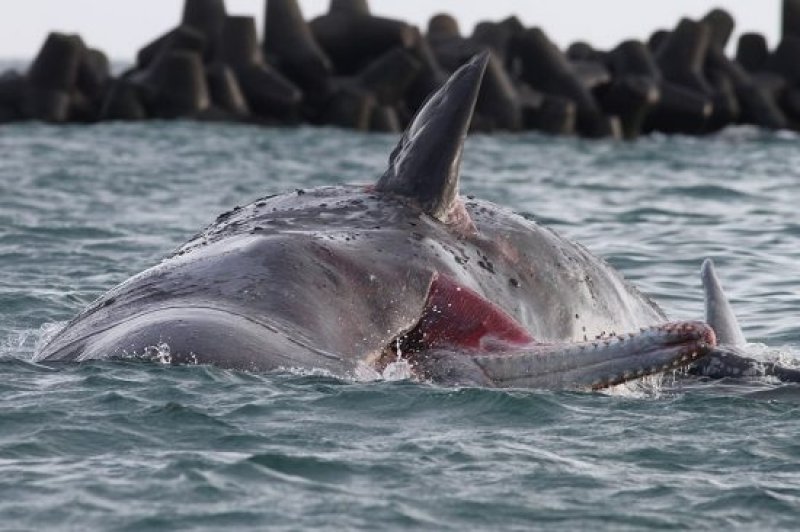
Sperm whales off Heligoland (c) Jochen Dierschke
WDC reports on possible causes of whale strandings
This spring, there have been numerous strandings of sperm whales at the North Sea coast. In total, 30 young male sperm whales perished - an exceptionally high and alarming number.
In response, the Whale and Dolphin Conservancy (WDC) has issued a report offering a detailed analysis of the possible causes of the strandings.
WDC biologist David Pfender described the strandings as a reflection of the ocean's current state. He continued in German, "Although the causes of the strandings are still unknown, the discovery of plastic in the whales' stomachs alone are a clear indication that we have to better protect the ocean and its inhabitants."
It has been suggested that the sperm whales died from cardiovascular failure after they became stranded in the shallow waters of the Wadden Sea and their cardiovascular system collapsed under their body weight. The WDC report highlights several possible causes of the stranding. Here are some excerpts:
Uncommon oceanographic conditions
The sperm whale's migration is highly dependent on their food supply; hence, the male sperm whales that perished might have followed their prey into the North Sea, where they became stranded. It has been theorised that the squid, which comprises part of the sperm whales' diet, follow the ocean currents and end up congregating in the shallow waters there.
Disorientation by underwater noise
The necropsy of some of the male sperm whales that had stranded in Germany did not uncover any evidence of hearing impairment. While noise does not appear to be the reason for the strandings, increased noise levels in the ocean have been known to cause animals to become confused and disoriented.
Impaired sense of direction
It has been suggested that the male sperm whales had become lost in the shallow waters of the North Sea as their tracking system did not function properly. However, some experts feel that water depth and geological conditions can be excluded as reasons for the strandings as sperm whales can also be found in the shallower areas of the coast of New York. Experts reported that shallow waters did not appear to have any negative impact on their navigation and hunting efficiency. The danger would only arise if the sperm whales come too close to the bank or if they are surprised by the low tide.
Solar flare
Last year, there was a particularly violent solar flare. The resultant increased solar activity and geomagnetic storm led to a measurable shift in the Earth's magnetic field. However, whether this is a contributing factor in the strandings cannot be confirmed at our current level of knowledge on such matters.
Conclusion
It is likely that a combination of factors had led the sperm whales to the North Sea. Unfortunately, due to their massive weight, they were unable to swim back out to sea. Therefore, the WDC and other environmental organisations have called for the following precautionary measures to be immediately implemented:
- Establishing a mandatory protocol and set of procedures in the event of a stranding (for example, standardised sampling)
- Conducting closer examination of the effects of pollutants on the feeding habits of marine mammals
- Prohibiting the use of airguns (air pulse units) as they are the second loudest noise in the ocean.
- Limiting the use of military sonar (because they introduce more noise into the sea)
- Preventing collisions between whales and ships, by imposing speed limits on the ships, for example
- Establishing protected marine areas and limiting losses of fishing nets (Ghost nets)
Further information: www.whales.org
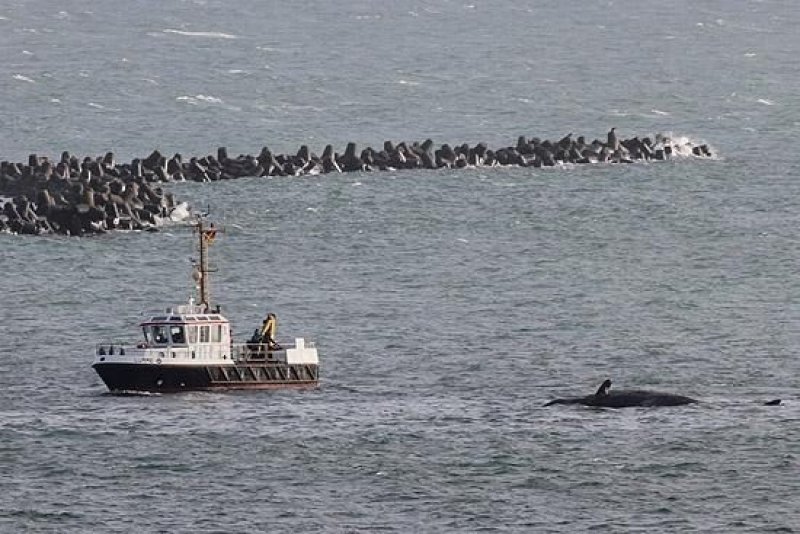
Sperm whales off Heligoland (c) Jochen Dierschke
Bài viết này được dịch tự động và có thể chứa một số lỗi nhỏ; vui lòng tham khảo bản gốc tiếng Anh nếu có thắc mắc.