Dolphins Found To Breathe Fast And Furious
environmentbreath controldolphinsmarine mammalsresearch
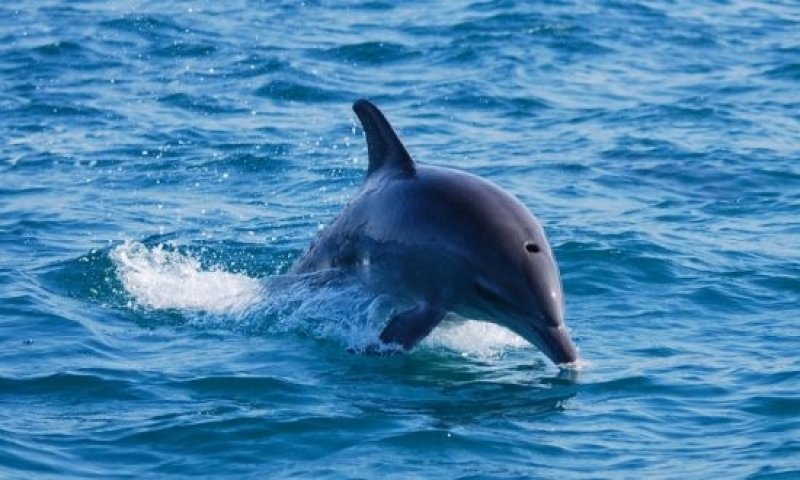
Dolphin (c) Andy Schumacher, Archiv Taucher.Net
Dolphins Can Empty Their Lungs In Milliseconds
A new study has proved that dolphins are world champions in 'speed-breathing', exhaling up to 137 litres of air in just one second!
Since the 1940s, it has been theorised that the ability to survive underwater is based on the speed at which marine mammals can reduce their lung capacity (thus increasing the pressure within the lungs) and then expand it again. So, those who can do this fast would have a better chance at survival.
Now, a research team led by Dr Andreas Fahman from the Texas A & M University has proved this theory to be accurate, with the help of pneumotachometer, a device that measures exhaled air volume.
Working with six dolphins at the Dolphin Quest Oahu in Hawaii for nine months, the researchers determined that the dolphins inhaled a maximum of 33 litres per second and exhaled at 137 litres per second. This was two to three times higher than the capacities measured in horses, which were the world record holders on land in this category.
In addition, it was also discovered that dolphins could deflate their lungs completely in just 200-300 milliseconds. This speed allows dolphins to reduce their time out of the water...
During the research, an emphasis had been placed on the composition of the dolphins' breath and oxygen content, and their behaviour. Such information can be used to help stranded dolphins in the future.
Although the study has concluded, the team will continue to work on improving the pneumotachometer, so that it can be used to examine the respiratory function of blue whales and killer whales.
Bài viết này được dịch tự động và có thể chứa một số lỗi nhỏ; vui lòng tham khảo bản gốc tiếng Anh nếu có thắc mắc.