New Red List: Hope for whales
environmentmarine conservationoverfishingendangered speciesiucn red list
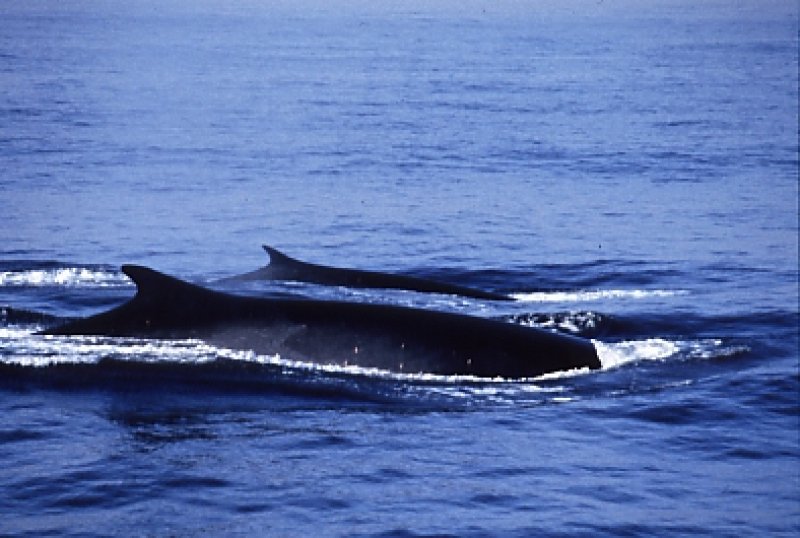
The fin whale (Balaenoptera physalus), formerly classified as "threatened", is now considered vulnerable (c) NOAA
Overfishing: Diverse fish species threatened Nature protection measures have given new hope to fin whales, according to the update of the IUCN Red List of Endangered Species. The fin whale has improved its status from "threatened" to "endangered" after whaling has been banned. But there are a number of fish species that are massively threatened by overfishing. Overall, the IUCN Red List now includes 96,951 species, of which 26,840 are threatened with extinction.
Whale populations are growing The fin whale (Balaenoptera physalus), formerly classified as "threatened", is now considered vulnerable, as the species' worldwide population has approximately doubled since the 1970s. Reason for recovery are international bans on commercial whaling in the North Pacific and Southern Hemisphere, which have been in place since 1976 - and significant decreases in North Atlantic catches since 1990. The status of the Western gray-whale population (Eschrichtius robustus) has also improved from "endangered" to "critically endangered". "Fin Whales and Western Gray Whales have been greatly decimated by the hunt, and it is a relief to finally see their populations rising as these whales largely recover thanks to the ban on commercial whaling; International agreements and various conservation measures continue until the population is no longer threatened," says Randall Reeves of the IUCN. The almost complete protection of fin whales across their natural habitat has resulted in a total population of around 100,000 adult whales. Western gray whales have been protected from commercial whaling in almost all their natural habitats since 1980, but only recently has there been clear evidence of an increasing number in the western Pacific, particularly off the island of Sakhalin, Russia. Five states of the gray whale living environment - Japan, the Russian Federation, the Republic of Korea, the US and Mexico - have signed a Memorandum of Cooperation on Conservation Measures for the Western Gray Whale population.
Fish species threatened by overfishing Nine percent of the 458 fish species studied in Lake Malawi are critically endangered. Three of the four cichlid species (Oreochromis karongae, Oreochromis squamipinnis, Oreochromis lidole) - Malawi's most economically valuable fish - are at high risk. The fishery is now close to a collapse. More than a third of Malawians depend on Lake Malawi, the third largest lake in Africa, for their food and livelihoods. The situation in the Victoria Lake Basin is not any better: three quarters(!) of all endemic freshwater species are threatened here. The local livelihoods in several East African countries, which depend on the resources of these lakes, are threatened by unsustainable fisheries. The first revaluation of all 167 groupers - an economically valuable species of sea bass that is widely distributed in the Atlantic, Caribbean and Indo-Pacific regions - confirms that 13% are at risk of overfishing. Particularly affected are local communities in developing countries in tropical and subtropical countries. Improved information on population trends confirmed, for example, that the Nassau Grouper (Epinephelus striatus) is under greater threat than previously thought. This species is highly prized throughout the Caribbean, but overfishing has led to a local decline of over 80% since the 1980s. "While some commercial marine fisheries are managed sustainably, there are few such examples for groupers, with population growth leading to increased demand for livestock and niche market species, which has a significant impact on the affordability of fish throughout the World and reduces food security for the millions of people who depend on livelihood and small-scale fisheries," explains Yvonne Sadovy of IUCN. More information: https://www.iucnredlist.org

Oreochromis squamipinnis. Nine percent of the 458 fish species studied in Lake Malawi are critically endangered. (c) Haplochromis/Wikimedia
บทความนี้ได้รับการแปลโดยอัตโนมัติและอาจมีข้อผิดพลาดเล็กน้อย โปรดอ้างอิงจากฉบับภาษาอังกฤษต้นฉบับหากมีข้อสงสัย