Hard corals: Limits of adaptation
coral reefsenvironmentclimate changemarine biologyocean acidification
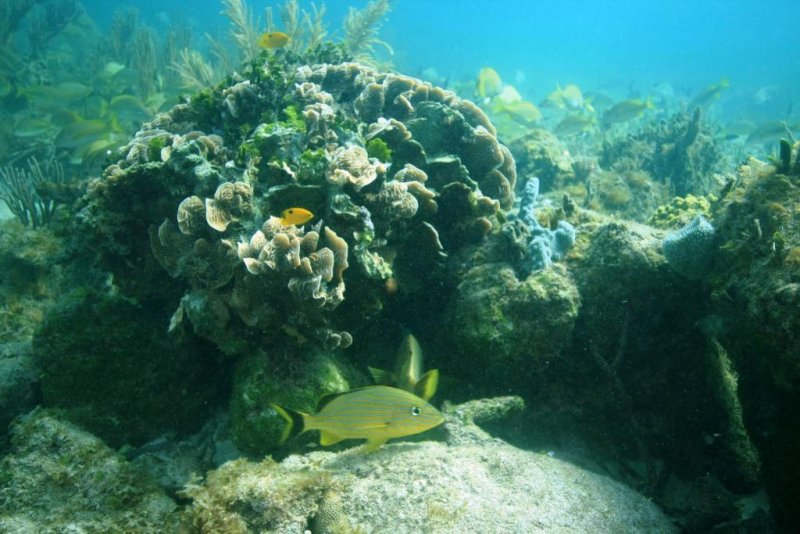
Coral reefs off the coast of Mexico's Yucatan Peninsula near groundwater sources (Ojos) (c) Elizabeth D. Crook
New study on coral growth in times of climate change Corals have been master builders of the seas for millions of years. With their limestone skeletons, they create diverse reef structures. It is well known that ocean acidification, which is increasing as climate change progresses, is increasingly affecting coral growth. The question of whether and how corals can adapt to the changes has now been answered in part by scientists, who have gained important further insights into the regulation processes of calcification. Corals fascinate: small polyps, which extract lime from the seawater in the course of their life and build up their sometimes gigantic skeletons. However, climate change, with rising water temperatures and ocean acidification, is changing the coral life at an unprecedented rate. Whether they can keep pace with these changes and adapt is an open question. Now, researchers from the GEOMAR Helmholtz Center for Ocean Research Kiel and the University of California are providing a part of the answer with a study on Porites astreoides stony corals, which of course live at low pH and high dissolved carbon content. The results have now been published in the international journal Nature Communications. Corals have experienced and coped with significant environmental changes in millions of years. Their skeletons, like growth rings of trees, are an ecological archive that allows researchers to gain insight into past times. From the smallest differences in the chemical composition of coral skeletons, conclusions can be drawn on formerly prevailing environmental conditions. However, many details on the control processes of the skeletal structure of corals are still open. To learn more about these processes, the researchers used a natural laboratory off the Mexican East Coast. From nearly circular holes in the seabed, so-called Ojos, groundwater exits there. This has previously been dissolved in the subsurface of the Yucatan peninsula lime. It is more acidic in relation to normal seawater, but contains more dissolved carbon, resembling the seawater of the future. Despite these unfavourable conditions, the stone coral Porites astreoides has settled here. It grows more slowly than its relatives outside the Ojos. "Unlike corals, which in laboratory experiments are only exposed to such an acid environment for a few weeks to months, the corals we study live under such conditions right from the start," says Prof. Dr. med. Adina Paytan of the University of California Santa Cruz, co-author of the study. For the study, samples of corals living at different distances from the Ojos were taken. This allowed the researchers to study corals of the same species with varying changes in seawater composition. From previous studies, it is known that the ratio of boron and carbon isotopes in the coral limestone gives information about the chemical properties of the calcifying liquid at the time of skeletal formation. The investigations showed a nearly constant chemical composition of all samples. "From this we can conclude that each skeletal polyp produces a calcifying liquid that is largely independent of the surrounding seawater conditions," explains GEOMAR marine biologist Dr.-Ing. Marlene Wall, first author of the study, "but even small changes in the two parameters studied can have an impact on calcification." Modelling for coral growth based on chemical data reflects the decline in growth measured in the field. In a lower pH environment, the corals on the Ojos have to expend more effort to raise their pH to the observed level. This process will likely cost you more energy. As corals have to distribute their energy reserves to many essential functions such as food acquisition, digestion or disease defence, they grow slower overall. Other influences, such as the calcium concentration in the lime-forming fluid or the role of coral symbionts, still offer the potential for further research. "The study has also shown that we do not yet understand all the connections between the changes in seawater and coral growth," summarises Dr. Wall.
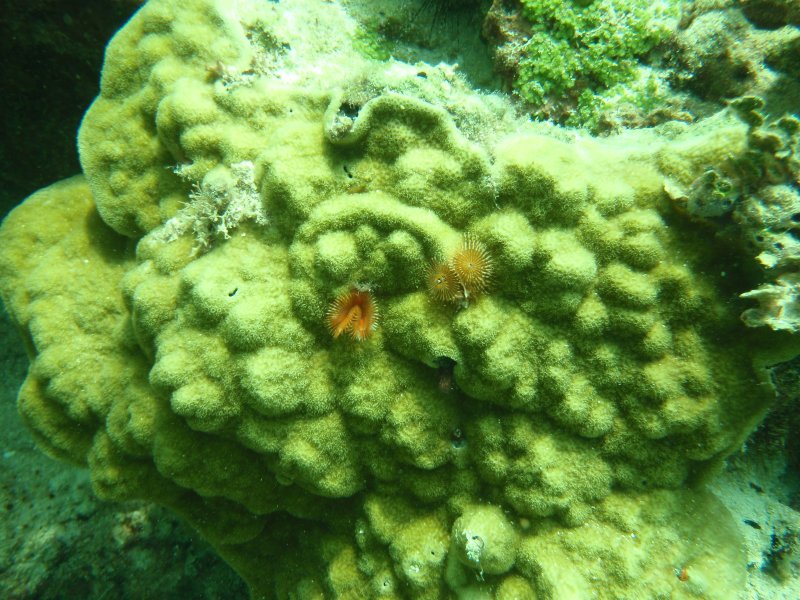
Close-up of corals of the species Porites astreoides (c) Elizabeth D. Crook
이 기사는 자동 번역되었으며 약간의 오류가 포함될 수 있습니다. 의심스러운 점이 있으면 원문 영어 버전을 참조하십시오.