Travel stress can train bioinvasors
environmentssiinvasive speciesbioinvasionmarine organismsenvironmental stress
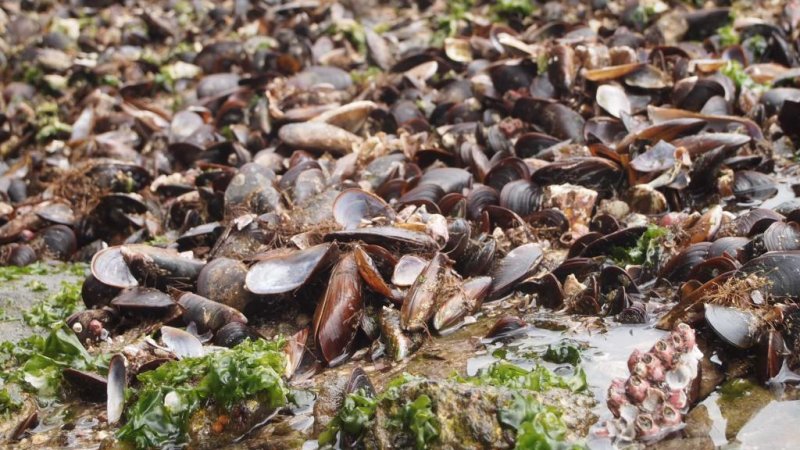
Mussels of the species Perna perna are native to Europe, Africa and South America, but have now also conquered North American waters. As part of the global GAME experiment, they were examined in Brazil. (c) Felipe Ribeiro
Study identifies new factor for the invasion success of introduced species The global movement of goods, with its many ship movements across oceans, is helping more and more species to migrate to foreign ecosystems. Students of the GAME program at the GEOMAR Helmholtz Center for Ocean Research Kiel have now found evidence that ships not only serve as means of transport, but that they can even train organisms to conquer new habitats. The American crab jellyfish in the Baltic Sea, the Mediterranean mussel in South Africa or the Australian barnacle in the North Sea - again and again conquer species habitats in which they were not native until then. This inherently natural process is significantly accelerated by humans. Especially marine organisms travel in or on ships around the world. But not all species manage to assert themselves in the target regions. Which species where and why are successful, has not yet been finally clarified. As part of the GAME (Global Approach to Modular Experimentation) international research and training program at GEOMAR Helmholtz Center for Ocean Research Kiel, students have now shown that heat stress during travel can make a population more resilient and potentially more successful at resettlement. "This factor has not been considered in the study of bio-invasions so far," explains Dr. med. GEOMAR's Mark Lenz, GAME coordinator and first author of the study, now published in the journal Biological Invasions. Previous studies have shown that invasive species often tolerate environmental stress better than related but non-invasive species that occupy similar ecological niches. "However, it remained unclear whether this stress tolerance is intrinsically inherent in the invasive species, or whether it has been trained on the way from the region of origin to the new homeland," explains Dr. Lenz. To investigate this question, the participating students simulated with several species from the family of mussels (Mytilidae) in laboratories in Brazil, Chile, Finland, Germany and Portugal a several-week ship transport, where the mussels were exposed to heat stress. Such stress phases must pass through organisms that travel in or on ships that come from temperate zones and traverse tropical seas. In the laboratory experiments, the mussels, which had survived the first heat event, later experienced a second stress phase. The students compared the response to the responses of individuals of the same species who had not previously experienced a heatwave. The results were quite different, with some species showing no difference between the double-stressed groups and the control groups. However, the mussels of the species Semimytilus algosus, which was examined in Chile, as well as the common mussel Mytilus edulis from the western Baltic Sea showed after the first heat stress a greater tolerance to another heat stress. "This difference was even greater in Mytilus edulis than in the South American species." explained Lenz. For these two species, the experiment thus shows that stress during ship transport can train a group of organisms for other stress events - for example those that occur during the invasion into a new area of distribution. Dr. Lenz summarized the study as follows: "In some species, humans are not only transporters with their technology, but also trainers for bio-invaders. This must be taken into account in further investigations on this topic." Link zur Studie: https://doi.org/10.1007/s10530-018-1762-8

Overview of the sites involved in the study.
(c) Mark Lenz / GEOMAR
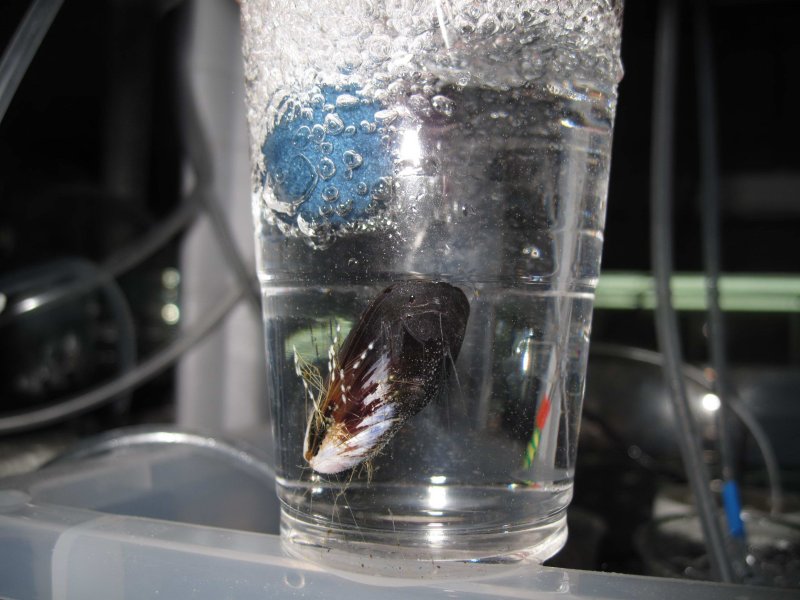
The Mediterranean Mussel Mytilus galloprovincialis in the laboratory in Portugal. Originally native to the Northeast Atlantic and Mediterranean, it is now also found in Australian, Chilean, New Zealand and South African waters.
(c) Marie Garcia