Youths in Hamburg say no to microplastics in cosmetics
environmentgreenpeacemicroplasticscosmeticsyouth activism
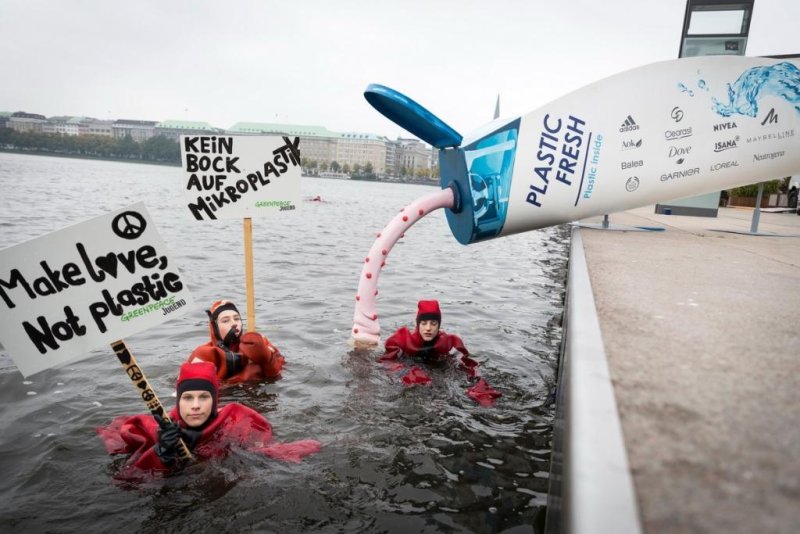
No plastic in cosmetics © Daniel Müller / Greenpeace
On 15 October 2016, accompanied by a three-metre long cosmetic bottle
made of wood, about 70 youths took a dip in the Binnenalster in Hamburg
to call for a ban on plastic in the manufacture of cosmetics. The
tagline "#Wallmachen für Meeresschutz: No plastic in cosmetics" can be
read on the five by 2.5 metre banner floating on the river.
We do not want plastic — not on our bodies, not in our rivers and
seas, " said Sarah Niknamtavin, 17. This summer, after trying in vain to
persuade cosmetics manufacturers to voluntarily stop using
microplastics, Greenpeace has shifted its focus on the youth. Last
weekend, they organised a protest at the Binnenalster (Inner Alster
Lake) in Hamburg where the youth were seen asking the public for
signatures to petition Federal Environment Minister Barbara Hendricks
to legislate a ban on plastics in cosmetics.
Every day, plastics from exfoliating agents, shower gels and other
cosmetic products pass through our sewage into rivers and seas. Such
items contain tiny plastic particles like abrasives, filming or filling
agents. Liquid and waxy plastics are also used in cosmetics and
personal care products, despite the availability of alternatives.
"Natural cosmetics don't have plastics. For other cosmetic products,
you have to check the ingredients listing on the packaging carefully to
identify those products with plastics. Who wants to smear plastics in
their face?" said Niknamtavin, pointing to the list of common plastics.
Beside her, other youths were busy distributing the list to passers-by.
Plastic is not biodegradable and remains in the environment for decades
or even centuries. At the same time, they accumulate on pollutants
which are already present in the water. Thus, microplastics is
physically and chemically the problem. Over time, they will break down
into smaller particles called microplastics. In the food chain,
scientists have already detected the presence of microplastics, not
only in the smallest zooplankton, but also in fish and seafood such as
tuna, cod, mackerel, mussels and North Sea shrimp. A recent Greenpeace
report summarises the current state of research ( as we reported here
).
See here for more information
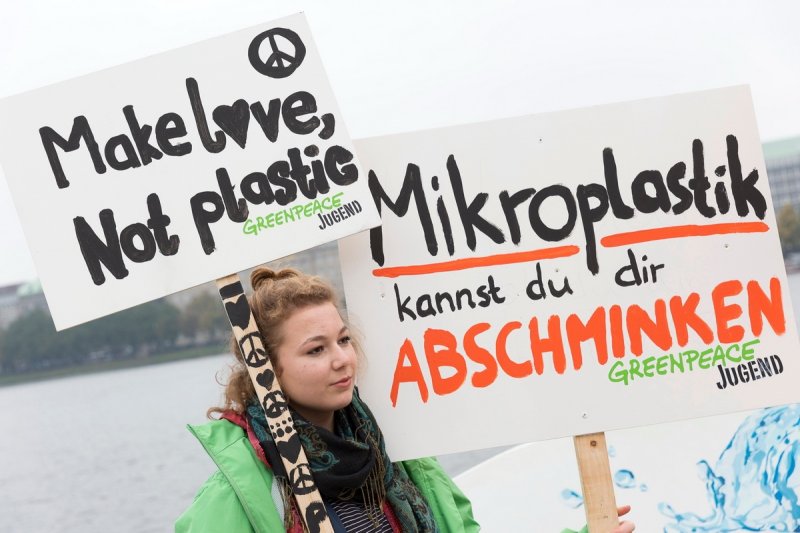
No plastic in cosmetics © Daniel Müller / Greenpeace
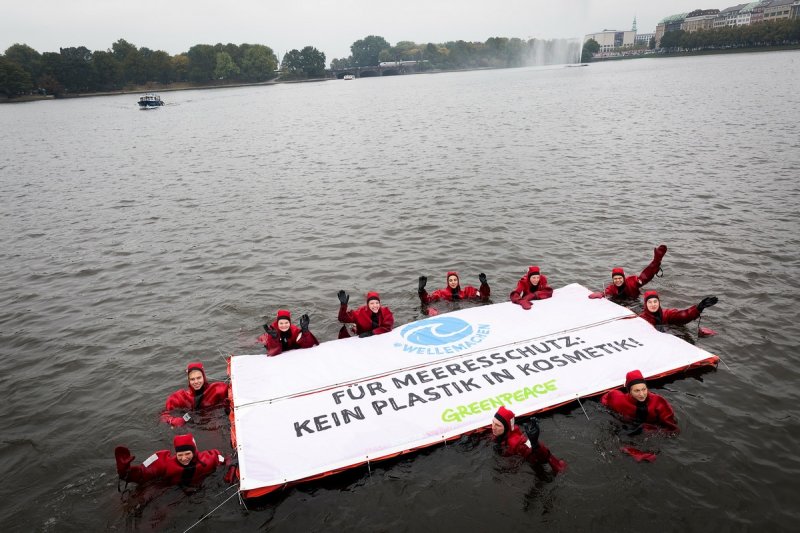
No plastic in cosmetics © Daniel Müller / Greenpeace
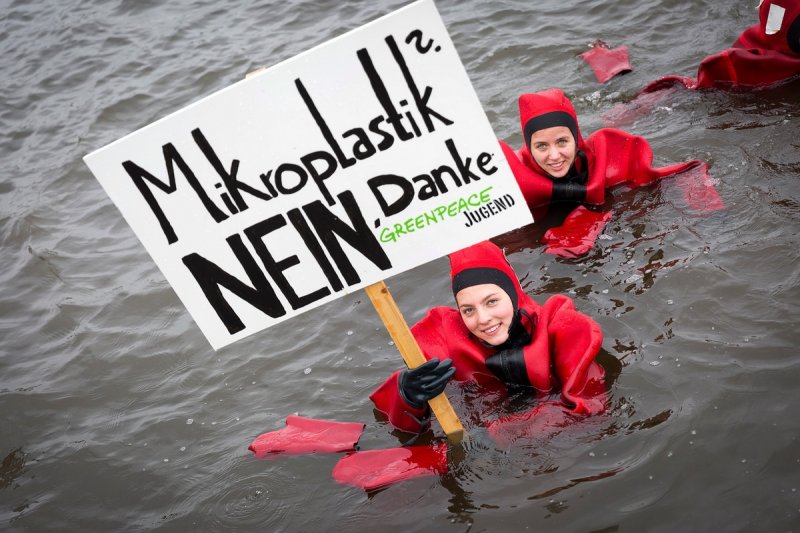
No plastic in cosmetics © Daniel Müller / Greenpeace
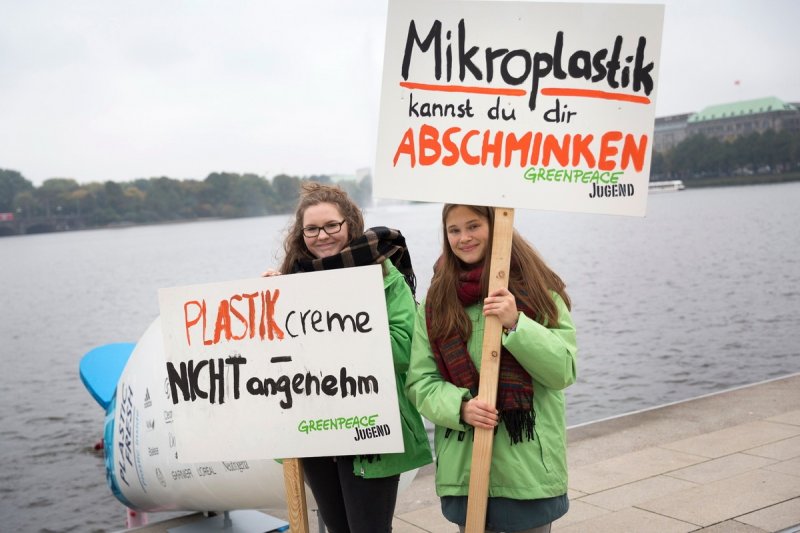
No plastic in cosmetics © Daniel Müller / Greenpeace
Cet article a été traduit automatiquement et peut contenir des inexactitudes mineures ; veuillez vous référer à la version anglaise originale en cas de doute.