Tagged tuna sends data from Ireland
environmentoceanmarine sciencebluefin tunasatellite tracking
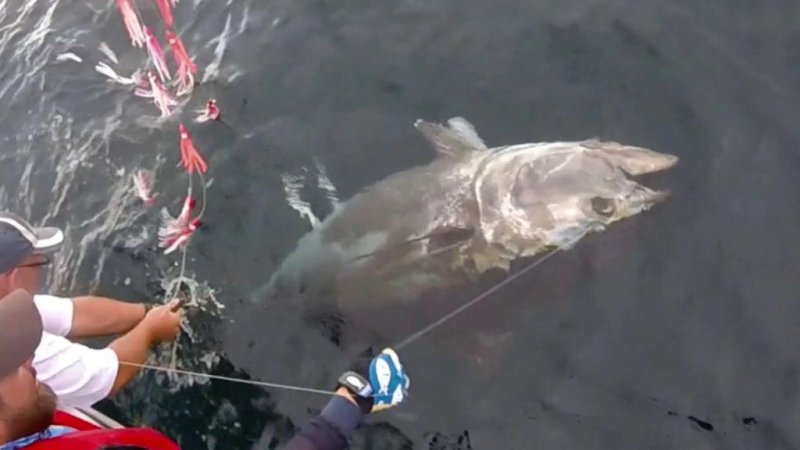
A tuna is caught and provided with a transmitter (c) Robert Martinsen / Havforskningsinstituttet
33 days of invaluable knowledge about bluefin tuna Last year, marine scientists succeeded in providing a 250 kg bluefin tuna (Thunnus thynnus - also called bluefin tuna), in the Øygarden west of Bergen with a satellite transmitter. Now, signals west of Ireland have been received. The scientists were able to tag two tuna with satellite transmitters. This has never happened before in Norwegian waters, the northernmost habitat of fish. The first tuna died shortly thereafter, but the second transmitter was attached to a robust and healthy bluefin tuna. The transmitter broke away from the tuna earlier than planned, but that is not unusual, we can see that the bluefin tuna was still alive. The transmitter data shows surprising data: the fish travelled down to incredible 487 meters below sea level and water temperatures from 3.5 to 17.2 degrees Celsius have been recorded, " explains Keno Ferter, the oceanographer responsible for the project. After leaving Øygarden, the bluefin tuna probably headed south before returning to the Norwegian coast. Then he crossed the North Sea and passed through the northern shores of the Shetland Islands before heading south to Ireland, where the transmitter broke away and floated to the surface and transmitted the stored data. We now have 33 days of in-depth first-hand knowledge of the travel routes and behaviour of a big bluefin tuna ," said Ferter. The largest tuna in the world will move to Norway in the summer again; the northern border of their range to feed there. Due to overfishing of tunas prey this was not the case for a long time. The data from the Norwegian project complement a large international dataset on bluefin tuna. The Atlantic Tuna Commission (ICCAT) relies on research to ensure the sustainable management of endangered species. And we want to make an even bigger contribution, and we've just secured funding for another transmitter project next year, " says Ferter. More Information: https://www.hi.no.

Project Manager Keno Ferter (c) Erlend A. Lorentzen / IMR
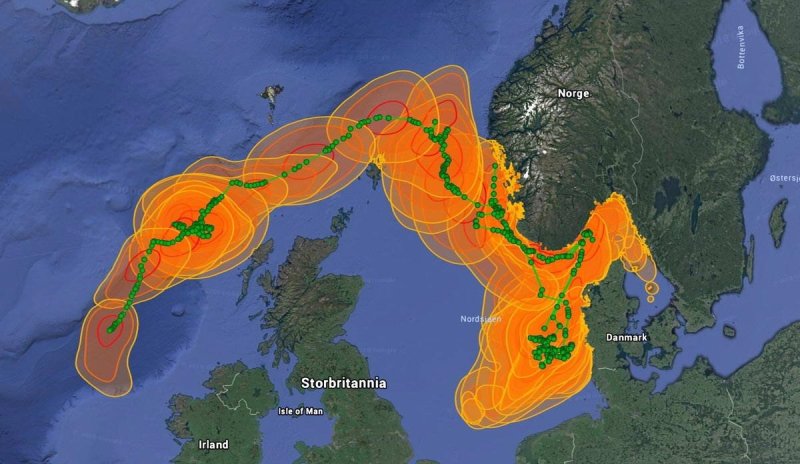
The most likely route of bluefin tuna. It was calculated from the data transmitted by the transmitter (c) Keno Ferter, Google Earth
Cet article a été traduit automatiquement et peut contenir des inexactitudes mineures ; veuillez vous référer à la version anglaise originale en cas de doute.