Marine litter in remote regions
environmentmarine lifeplastic wastemarine pollutionocean currents
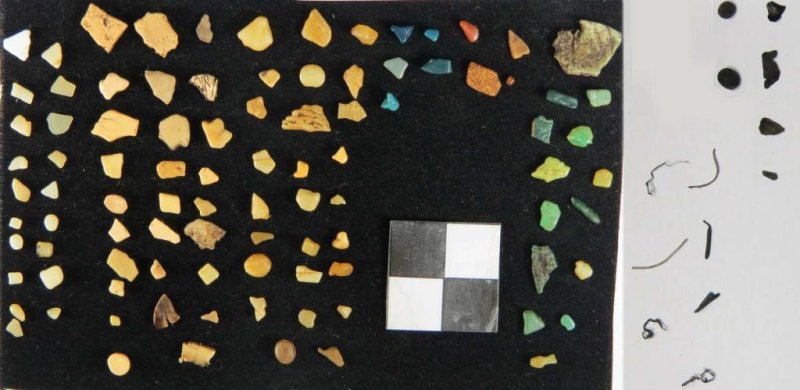
Plastic particles from the stomach of a Christmas shearwater (Puffinus nativitatis) found dead on the island of Salas y Gómez
(c) Matías Portflitt Toro
Scientists show impressive effects on the marine ecosystem The Easter Island in the South Pacific is one of the most remote regions of the earth. Thousands of miles away from the continents, the waste of human civilization can be detected in the form of plastic, as in the entire South Pacific. For several decades, plastics have dominated many product and packaging sectors. Unfortunately, more and more of these very durable products are entering our oceans. With the ocean currents they drift into the remotest corners of our planet. There, they are ingested by many marine organisms as impressive images of a scientific study show. The results of the study have now been published in the journal Frontiers in Marine Science. Researchers from various institutions (Ecology and Sustainable Management of Oceanic Islands, GEOMAR Helmholtz Center for Ocean Research Kiel) have collected and documented water samples on several South Pacific expeditions between Easter Island and the South American mainland. They documented also that almost 100 different species have been affected by the pollution of the oceans with plastic. Particularly high (micro) plastic concentrations were found around Easter Island and up to 2000 kilometers off the coast of Chile " Martin Thiel, lead author of the study by the Universidad Católica del Norte in Coquimbo, Chile, explained. In addition, researchers have evaluated reports of marine organisms caught in larger pieces of plastic such as old fishing nets. " This is more common in the coastal, heavily fished regions of the Humboldt Current, whereas in the open ocean we tend to see organisms ingesting smaller pieces of plastic," Thiel continued. The study shows very clearly that the particles concentrate in the area of subtropical vortices, adds the German marine biologist, who has been living in Chile for many years and is committed to the pollution of the oceans. The burden of plastic waste becomes particularly clear when one looks at what marine life ingests from it. " We have studied nearly 100 different species from the Southeast Pacific. Among them are 20 species of fish, more than 50 seabirds and almost 20 marine mammals ," explains Dr. med. Nicolas Ory, co-author of the GEOMAR study. " In the stomachs are all sorts of plastic fragments, sometimes in alarmingly high concentration, " Ory continues. These at least impair or weaken the living beings and can lead to an increased mortality in the long term. This is not good news, " says Martin Thiel. " The garbage problem in the ocean is global and it has already arrived in the most remote regions of the world. " The study also confirms microplastic measurements during the recent Volvo Ocean Race, which was attended by Drs. Ory at GEOMAR had initiated - we reported. Link to the study: doi.org/10.3389/fmars.2018.00238
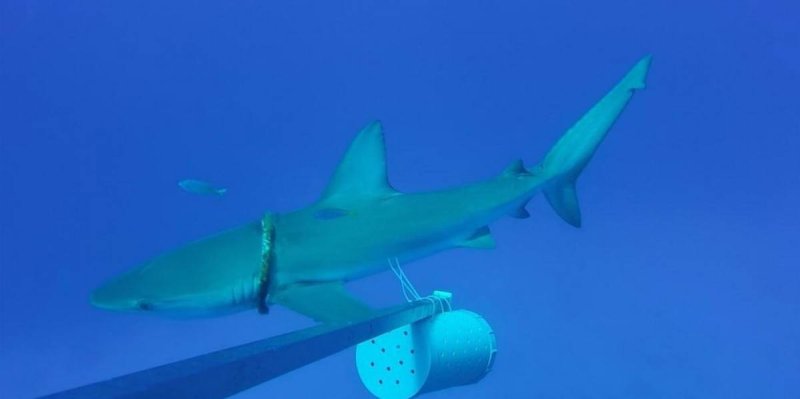
A Galapagos shark caught in a plastic ring
(c) Naiti Morales
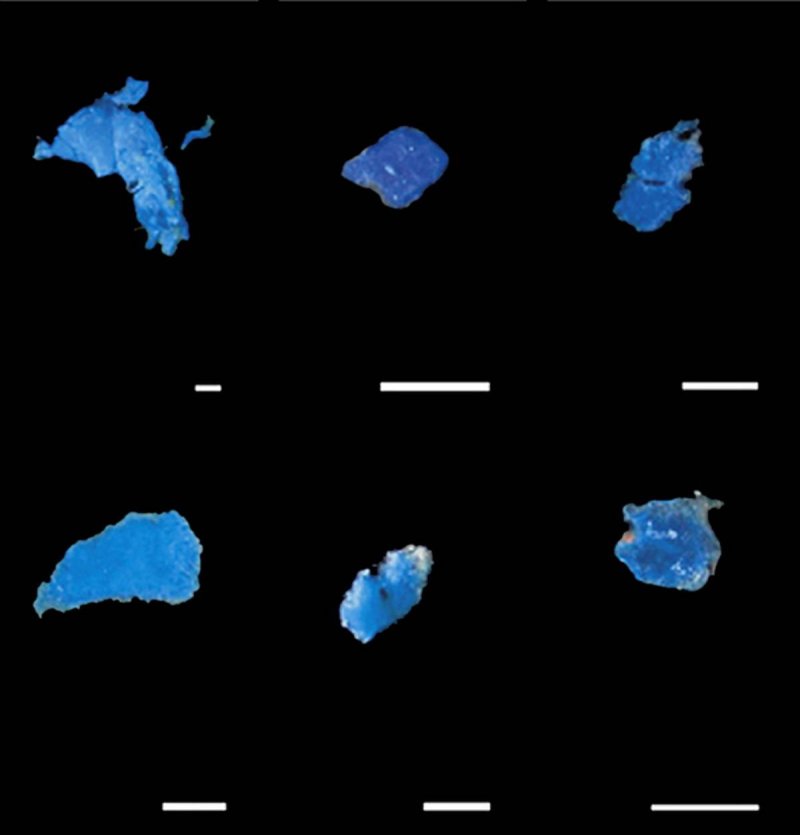
Plastic particles from the stomach of amberstripes scads (Decapterus muroadsi), caught at Rapa Nui
(c) Nicolas Ory / GEOMAR
Cet article a été traduit automatiquement et peut contenir des inexactitudes mineures ; veuillez vous référer à la version anglaise originale en cas de doute.