Wreckdiving: The Salsette
scuba divingwreck divingextended rangeunderwater explorationsalsetteenglish channel
Diving the Salsette Wreck
(c) Steve Jones
A Fallen Champion One of the busiest shipping zones in the world, the English Channel, is littered with hundreds upon hundreds of wrecks. The fierce Atlantic storms, coupled with two World Wars have ensured that many a proud ship has met their fate here and many a sailor has lost his life. Several of the wrecks however, stand out from the others and the Salsette is one such ship.
She was an ocean liner, often described as one of the most beautiful steamers ever built, and she was a very fast ship. Commissioned in 1908, she broke the Marseilles-to-Bombay record on her maiden voyage, going on to break several other world records. Having a top speed of 20 knots, the Salsette was powered by no less than a 10,000 Horse Power engine.
Capable of comfortably outrunning any of the U-boats of the time, when World War 1 broke out she was put to use transporting supplies to the Indian continent.
Her speed however, was not enough to save her. On 20 July, 1917 her crew failed to spot the periscope of U-Boat UB-40 observing them within the calm waters of Lyme Bay in the South of England. It was only when the white tail of a torpedo was seen streaking towards their ship that the alarm was sounded. It was too late for the Salsette.
She was hit on her starboard side and a huge explosion occurred. Detonating amidships, the torpedoes damage was fatal. Despite the ships watertight compartments being sealed, the captain later recounted that he knew his ship was lost: "She felt as though she was collapsing like a pack of cards" he said. Within 28 minutes she was gone, sinking in 45 metres of water 10 miles west of Portland Bill in Dorset. Fourteen sailors lost their lives on the Salsette that fateful day.
Still a proud ship... Ninety one years later and the waters in Lyme Bay are again calm just as on that fateful day in 1917. Actually they are calm everywhere except immediately in front of our dive boat, for here the waters are boiling as small waves break the surface all around us. This phenomenon is being caused by the tide: the currents are encountering a very big obstruction under the water causing the surface water to churn up or "boil".
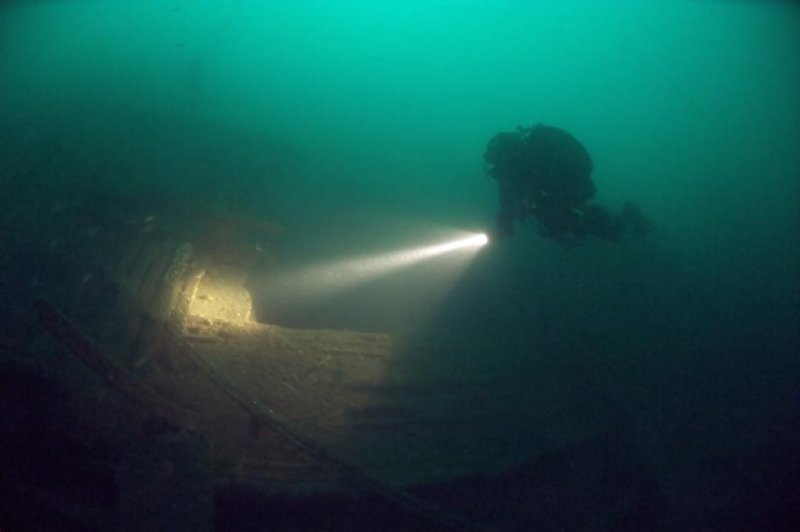
At last our anticipation is over and we enter the deep emerald green water just as slack water arrives. Following a 30 metre descent down the shot line, I feel my heart rate speed up with excitement as the massive hulk of the wreck looms before us. The Salsette was a large ship at nearly 135 metres in length and she now lies, hull intact, at a 45 degree angle on her port side. We hover above the wreck at 34 metres to get our bearings, the seabed still over 10 metres below us. Visibility is around 6 metres today, and it's by no means dark. We can see the vastness of the wreck stretch away into the distance - we are near the stern of the ship. Time to move. We don't have long at this depth, even with the 80% nitrox mixes we carry in our stage cylinders for accelerated decompression stops. I look on with envy at the 2 closed circuit rebreather divers who've just descended beside us. They will still be on the wreck when we are well into our decompression stops and still reach the surface before us!
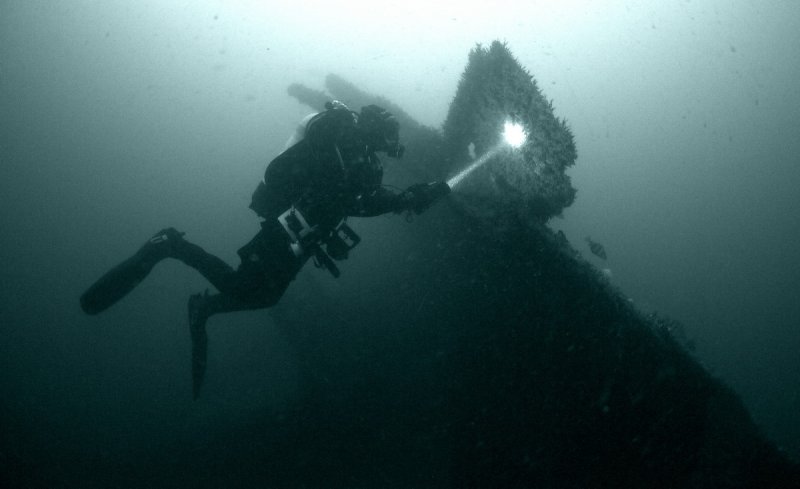
We make our way over the ships hull to the giant starboard propeller shaft. The propeller has long since been removed by salvage divers, although the port side still has it’s giant bronze propeller attached, lying in a tidal scour at 48 metres depth. I fumble with my camera, and feel the effects of nitrogen narcosis as I set the controls: even simple tasks on land require great concentration at this depth. We make our way around the stern and are dwarfed by the vastness of this wreck as we hover near the ships rear deck structure. Immediately we see one of the few structures still surviving intact on the deck of the ship: A stark reminder of the times when she met her fate, a 120 mm gun still protrudes menacingly from her rear deck. It was rumoured that the gun was never fired in anger since the Salsette always relied on her speed to keep her away from trouble.
It's impossible to cover the whole length of this ship in one dive: she is so immense we know we will need several dives even to get a glimpse so we take our time. Moving along the decks at the rear of the ship it is easy to picture her in her former glory. Unlike many wrecks of this age, she is still very much recognisable for what she was. It is swimming along these upper decks that form the most interesting part of the dive so far.
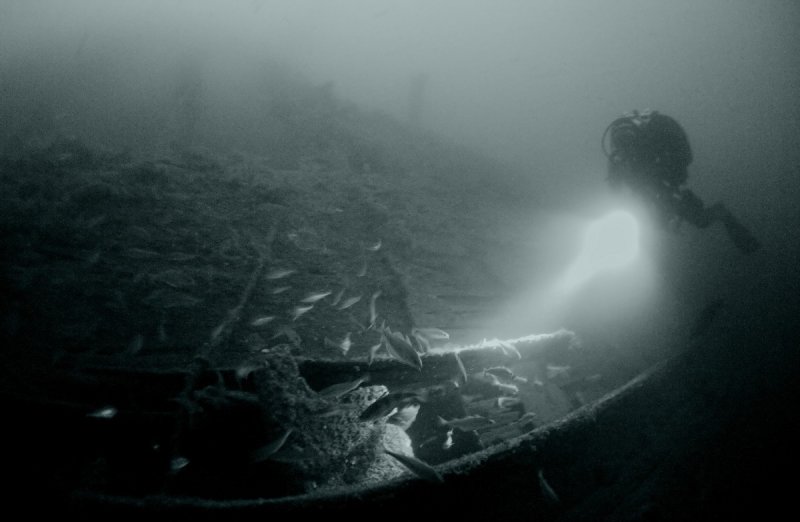
I see the sharp beams of HID torches approaching. As they illuminate the wooden decking of the ship, the eerie atmosphere of this dive is enhanced further as schools of fish part before the approaching divers. The upper structures of the ship have long since rotted away into the sea bed and moving down the ship there are cavernous holds beckoning further exploration. I peer inside one of the multiple entrances to the lower decks, and feel adrenalin surging. I want to see what lies down these dark corridors. I check myself: now is not the time, wreck penetration at this depth is suicidal without proper planning. For now I need to be content with what the outside of the ship offers.
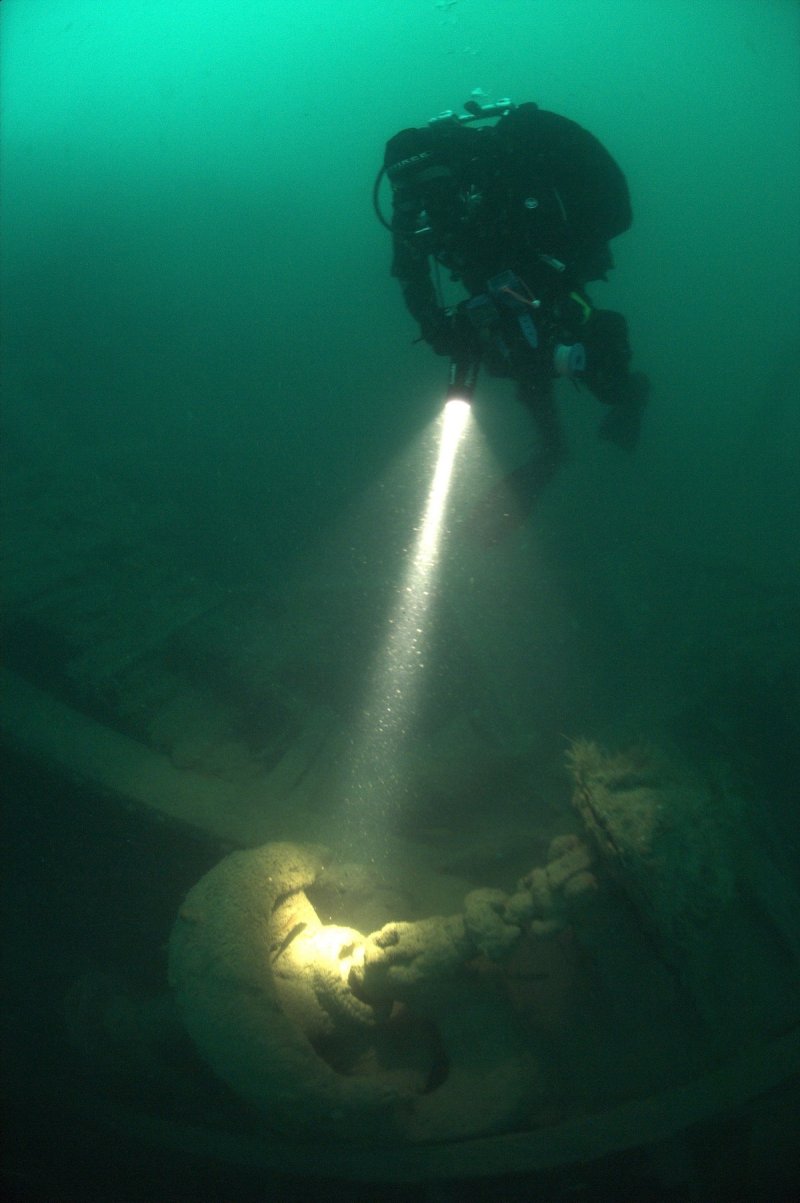
All sorts of recognisable debris is strewn between the decks and the seabed. My buddy illuminates a winch with his powerful lamp and we recognise a crane amongst the debris lying near the seabed. Another cavernous hold appears, with the remains of walkways around the edges. This seems to be the entry into the engine room. Again I resist the overwhelming urge to enter the bowels of the wreck and we continue our way down the length of the ships deck, slowly making our way up to the shallower waters of the starboard rail of the ship in some 34 metres of water.
All too soon our time is up and we arrive at our jumping off point, not far from the area where the torpedo struck the ship its fatal blow. It is said that a passage exists through the engine room to the hole the torpedo made, but that adventure awaits for another day. We have barely covered a third of the ships length: there is simply so much more to see. Delayed marker buoys are released and I look down one more time as I slowly drift away from this, in my eyes, still beautiful ship. It will be another 60 minutes before we reach the surface.
The Salsette has become one of the most talked about wrecks in the UK. Despite the multitude of sunken ships in these waters, Ocean Liners are a rarity within readily diveable depths and to see such a well preserved piece of history is a special experience. She can be dived year round however summer months are best due to the exposed location to the weather and prevailing South Westerly winds. It is an advanced dive, most divers making use of rich nitrox mixes to accelerate the decompression obligation that a reasonable bottom time will incur. Due to it’s sheer size, multiple dives will be needed to see the entire wreck: one dive on the Salsette is simply not enough.
With many thanks to Steve Jones for images and script
Salsette (Wreck) on YouTube
Diving the Salsette Wreck
(c) Steve Jones
Diving the Salsette Wreck
(c) Steve Jones
Diving the Salsette Wreck
(c) Steve Jones
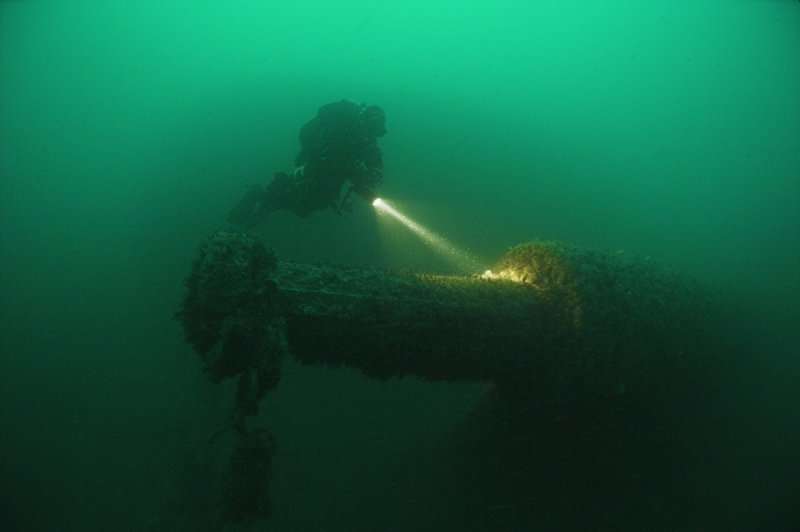
Diving the Salsette Wreck
(c) Steve Jones
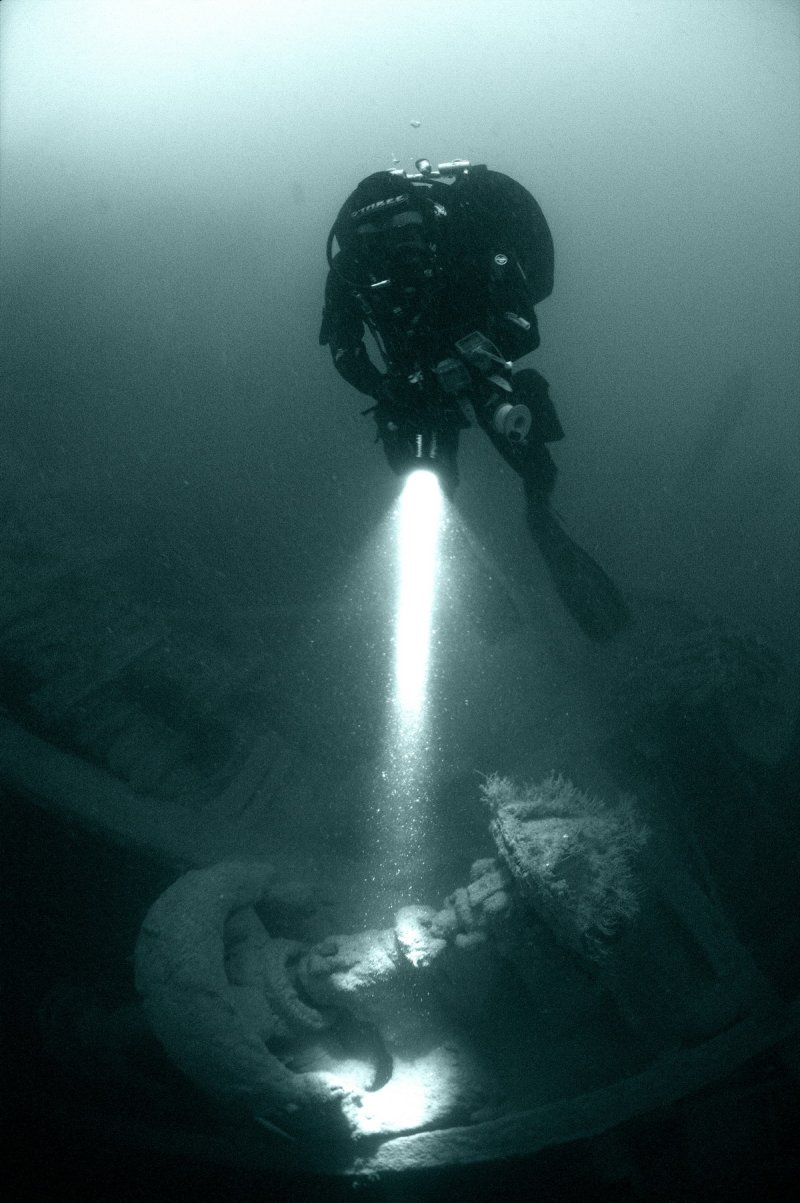
Diving the Salsette Wreck
(c) Steve Jones
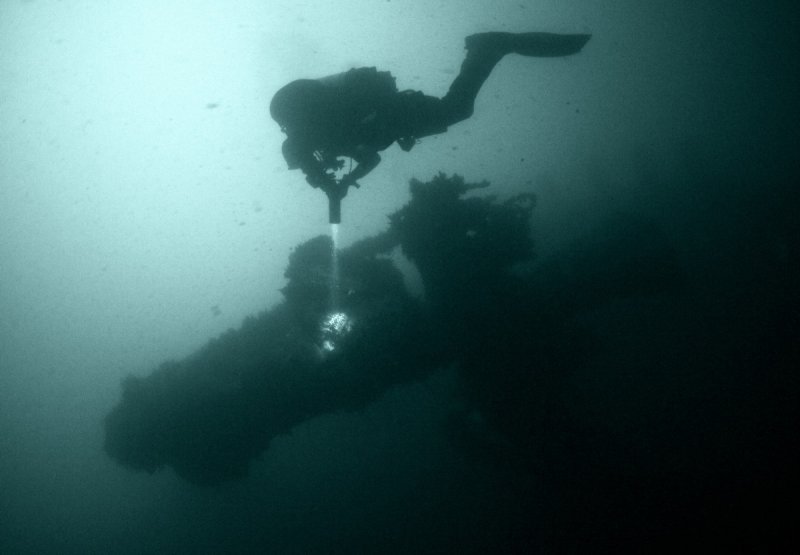
Diving the Salsette Wreck
(c) Steve Jones
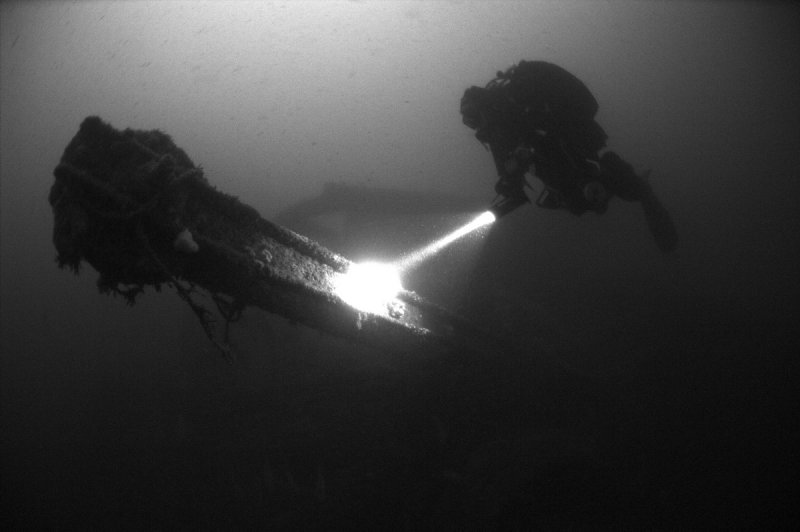
Diving the Salsette Wreck
(c) Steve Jo
Bài viết này được dịch tự động và có thể chứa một số lỗi nhỏ; vui lòng tham khảo bản gốc tiếng Anh nếu có thắc mắc.