Visual Markers: Brightly coloured coral reef butterflyfishes
environmentmarine lifemarine conservationcoral reefbutterfly fish
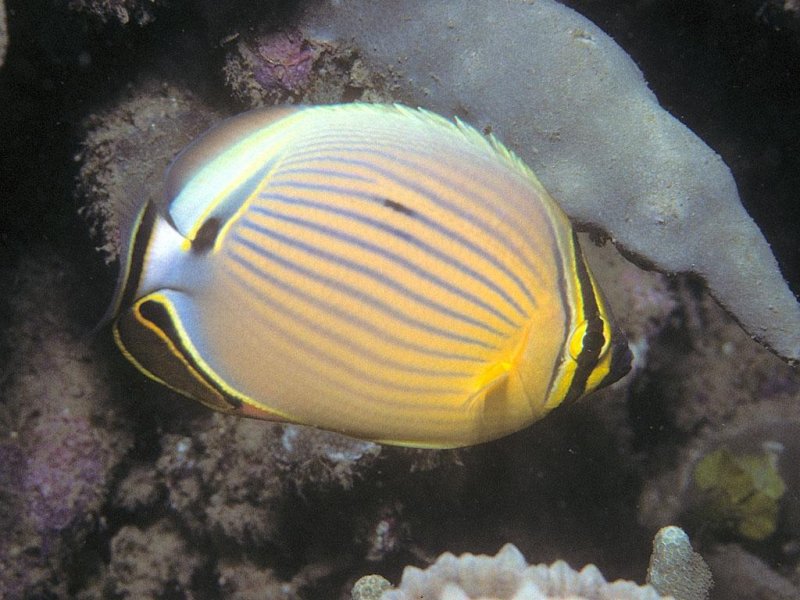
Butterflyfish (c) BernardP, Wikimedia
Researchers have solved the mystery of the colour patterns of reef fish Scientists have now discovered why some closely related species of a legendary reef fish have very different colour patterns, while others look very similar. A team of researchers led by the ARC Center for Excellence in Coral Reef Studies at James Cook University investigated the differences in appearance of 42 species of butterfly fish. The scientists found that the differences in colour patterns between two closely related butterfly species are most obvious when they occur side-by-side on reefs. Using high-resolution photos, the team quantified the colour patterns and examined how they were influenced by evolutionary processes. Our results show that butterfly fish have developed the greatest variety of visual markers in millions of years when they live in the same area as other closely related species, and only if number of individual fish within both species is similar ", said Christopher Hemingson, lead author of the new study, recently published in the journal Ecology Letters. If the distribution area of one species is much larger than that of neighbouring species, it is the other way around, and then the colour patterns of the overlapping species are less different, " says co-author Peter Cowman. Co-author David Bellwood noted that this was the first time that geography dynamics had proven to be an important indicator of colour differences between marine species. " This research is the first of its kind to simultaneously quantify colour and pattern differences between butterfly species. Our research also shows that colour pattern differences between species can develop very quickly (within 300,000 years) - but then remain stable over millions of years, " says Bellwood. Colour is not just about looking different than other species, it also depends specifically on what other species are present and our research can help explain why reef fish are so colourful, " explains Hemingson. Link to the study: https://onlinelibrary.wiley.com/doi/abs/10.1111/ele.13180
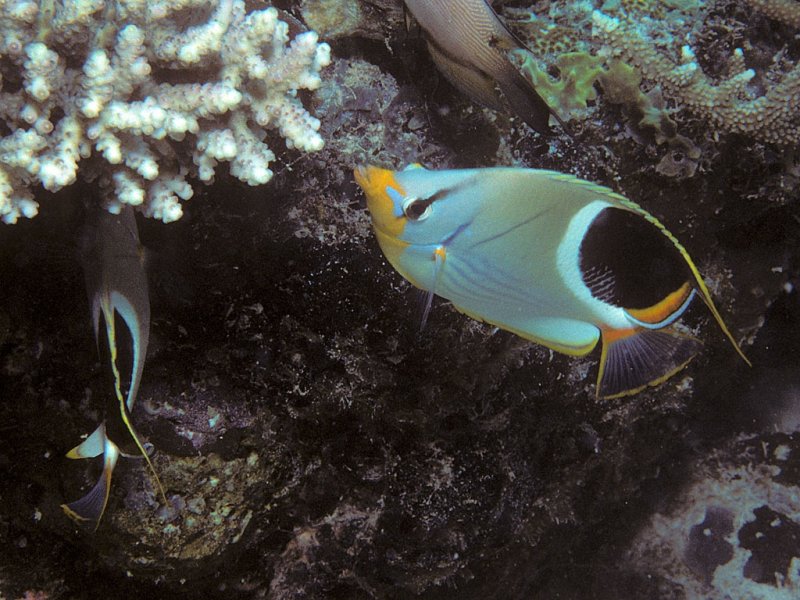
Butterflyfish (c) BernardP, Wikimedia
Bài viết này được dịch tự động và có thể chứa một số lỗi nhỏ; vui lòng tham khảo bản gốc tiếng Anh nếu có thắc mắc.