Mission "German Baltic 2019" recovers ghost nets near Rügen
scuba divingenvironmentmarine conservationbaltic seaghost nets

Recovery of a large ghost net near Rügen (c) Cor Kuyvenhoven
A total of over half a ton of ghost nets salvaged Divers of the German Baltic 2019 mission, which started on 10 June 2019, now salvaged a trawl net over 30 meters in length from the bottom of the Baltic Sea. All in all, more than half a ton of lost fishing nets have been recovered from the coastal waters near Prora (Rügen) The mission "German Baltic 2019" is supported by the Society for the Salvation of Dolphins (GRD – Gesellschaft zur Rettung der Delphine e.V.) and the Dutch Ghost Fishing Foundation (GF). Ghost nets - underestimated threat Lost or deliberately disposed fishing nets are ghost nets. Due to their material properties, they might kill sea animals of all kinds for many decades. Even whales and big sharks can get tangled up in them and die. According to estimates by the United Nations Environment Program (UNEP), ghost nets, with more than 640,000 tons, account for about ten percent of the new waste in the oceans each year. In the Baltic Sea alone, several thousand net are lost every year. Meanwhile, ghost nets even pose a threat to (commercial) shipping. In the Baltic Sea, porpoises, gray seals, seals and sharks and rays are threatened by ghost nets. Only 500 porpoises live in the German Baltic Sea. This makes them the most endangered small cetaceans in Europe. Ghost nets directly threaten the survival of the population. Ghost Nets - Fishing industry is responsible "For the preservation of marine biodiversity, it is crucial to recover ghost nets. But in the future this task should also be carried out or at least financed by the polluters," says Verena Platt-Till, graduate biologist at GRD. The nets and net remnants now recovered from complaints are then recycled. More Information: https://www.delphinschutz.org/projekte/geisternetze/mission-deutsche-ostsee-ruegen

Recovery of a large ghost net near Rügen (c) Cor Kuyvenhoven
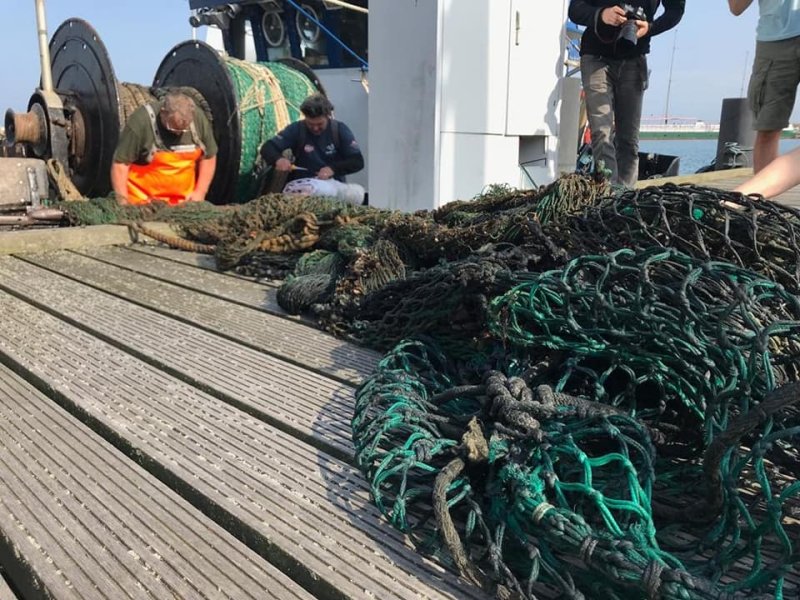
Recovery of a large ghost net near Rügen (c) GRD
Bài viết này được dịch tự động và có thể chứa một số lỗi nhỏ; vui lòng tham khảo bản gốc tiếng Anh nếu có thắc mắc.