Diving – a matter of the heart?!
scuba divingssifreedivingextended rangetravelheart attackmedical emergencyaqua med
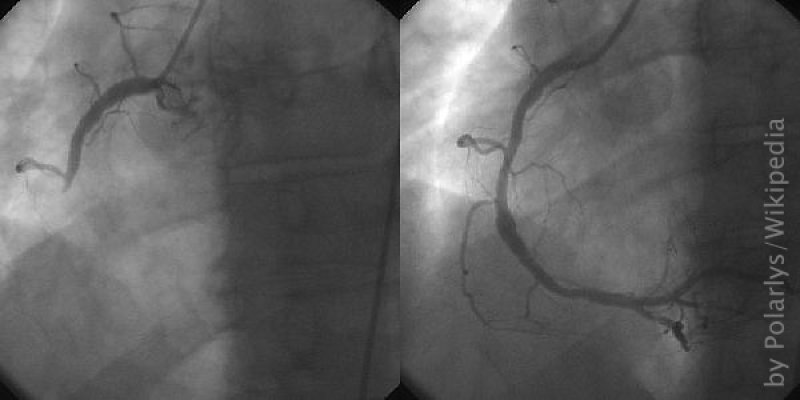
Coronary catheterization- a minimally invasive procedure to access the coronary circulation and blood filled chambers of the heart using a catheter
(c) Polarlys, Wikipedia
In March 2016, 55-year-old Stefan R. (who lives in southwestern Germany near Mannheim) and his wife go on a journey to Java in Indonesia. The couple wants to discover the islands of Indonesia on an exciting backpacking trip. The next stop is Bali where Stefan, an experienced diver, spontaneously decides to join a liveaboard for two days. I hadn't planned on a diving holiday, because my wife does not dive. But if you're already in Indonesia as a passionate diver, you just have to take a peak underwater, " says Stefan with a smirk.
On the first day, he completes two dives with compressed air, then takes a one-day break in order to do two more dives on the third day. At depths of 25 and 20 meters, both the dives are not particularly remarkable and nothing out of the ordinary happens. Stefan feels a slight burning sensation in the throat and chest area, but isn't especially concerned about it.
In the evening, Stefan walks to a nearby supermarket to buy some water. It is very hot and extremely humid. Stefan notices that it is harder and harder to walk and that he has problems breathing. "I thought I hadn't had enough to eat or drink during the day and had circulatory problems as a result," Stefan remembers. But the pressure on his chest only increases and he starts sweating excessively. The walk back to the hotel seems like an eternity...
Are the symptoms related to the dives? Does Stefan have DCS? Do symptoms of DCS feel like this? Questions upon questions. Although I had already learnt a lot and taught about DCS and its symptoms as a diving instructor, it is hard to evaluate your own symptoms if you have never had to deal with them before ," says Stefan.
His wife also gets more and more worried. The couple decides to go to a restaurant to eat something. On the way there, walking becomes more difficult with each step for Stefan; he is short of breath and only advances very slowly. A local notices that Stefan doesn't feel well and has a hard time walking and breathing, and offers to lend the couple his scooter. Stefan and Patricia thankfully take him up on his offer.
In the restaurant, they meet one of Stefan's dive buddies. He cannot explain Stefan's symptoms, but decides to get some oxygen from the diving school right away. Unfortunately, the oxygen doesn't relieve Stefan's complaints. Back at the hotel, Stefan decides to call the aqua med emergency hotline. After describing his symptoms and the dives, a DCS cannot be ruled out, although the symptoms are rather unusual. The hotel then calls a local doctor who measures Stefan's blood pressure, listens to his heartbeat and checks his pulse. But he cannot find anything wrong with Stefan.
Although a DCS is the most obvious conclusion, the aqua med doctor on call tells Stefan to go to the hospital to get further tests, because he is not getting any better. Breathing is becoming harder and there is a burning sensation located behind his sternum, especially when he walks fast. The interdisciplinary doctors from aqua med now suspect something far worse... The next morning, Stefan and Patricia go to the local hospital. There, Stefan's blood is drawn and his lungs x-rayed. A DCS is definitely ruled out at this point. But what is the reason for these extreme symptoms? The results are sent to aqua med's medical board and aqua med's medical head is brought on the case. After an intensive review by the doctors, they agree: Stefan probably has a heart attack. They tell Stefan to go to the hospital again to get an ECG and get his blood tested for cardiac enzymes.
The doctor at the hospital discloses that the ECG shows "anomalies", but does not diagnose a heart attack. After Stefan and the doctors from aqua med urge the hospital to do so, a cardiologist is called, who can be at the hospital only seven hours later, according to the hospital. The results from the blood test also have to wait until the next day. At this point, there is doubt about the quality of the medical care of the hospital.
As a result, it is decided that Stefan and his wife go to a hospital in Denpasar, the capital of Bali, which is more touristic and offers better medical care. Meanwhile, Stefan is in constant contact with the aqua med hotline.
The next morning, they arrive at the hospital in Denpasar, a highly modern (private) hospital, where further tests are immediately done. Even after the first ECG, the treating physician confirms – Stefan, in fact, did have a heart attack! The doctors in Denpasar seem very competent in their exchanges with Stefan and the aqua med doctors.
Before flying back to Germany, a coronary catheterization is arranged. With this procedure, a narrowing of the blood vessels can be determined and sometimes revised right away. Right after the procedure, it is clear that a stent, an inner vascular support, needs to be placed in an operation. Without an operation, the flight back would be fatal because of the low cabin pressure in the plane. The operation can even be done directly in the hospital. In the meantime, the medical reports are sent to aqua med and evaluated by the aqua med doctors – cooperation is smooth and without complications.
The coverage of costs for the operation is issued, but the treating cardiologist only has an opening for the operation in seven days, which is too long to wait! After the aqua med doctors intervene again, an earlier date is arranged.
The operation is done while Stefan is fully conscious. The plan was to put one stent in and be done with the operation after half an hour ", Stefan remembers. But during the operation the doctors tell Stefan that he needs four more stents. " I could watch the whole operation on a screen. I could see that some of the arteries in my heart had collapsed, which was pretty disturbing, " says Stefan. Now, there are stents in place of the collapsed arteries.
Two nights in a hospital follow. Stefan's condition improves significantly, due to the effective medication. The flight back a week later can be undertaken as planned.
In the meantime, aqua med sees to it that Stefan gets an appointment with a cardiologist as soon as possible when he gets home. The cardiologist confirms the good treatment on Bali and takes over Stefan's further treatment. After three weeks in a physical rehabilitation centre, Stefan is fine today.
Looking back, Stefan says: " It was very calming for me after my heart attack to have the German doctors from aqua med that I could talk to 24-7. What aqua med did for me was a lot more than you'd expect. I don't know what would have happened if I hadn't had that direct contact to the doctors on the hotline, who can determine whether or not you are experiencing symptoms from a diving accident. If I had only spoken to a clerk over the phone – as it is the case with normal insurance companies – the essential and swift treatment of my heart attack would not have happened.
So, a big thank you to the doctors at aqua med, the team in Bremen and the humanity with which you supported Patricia and I every step of the way
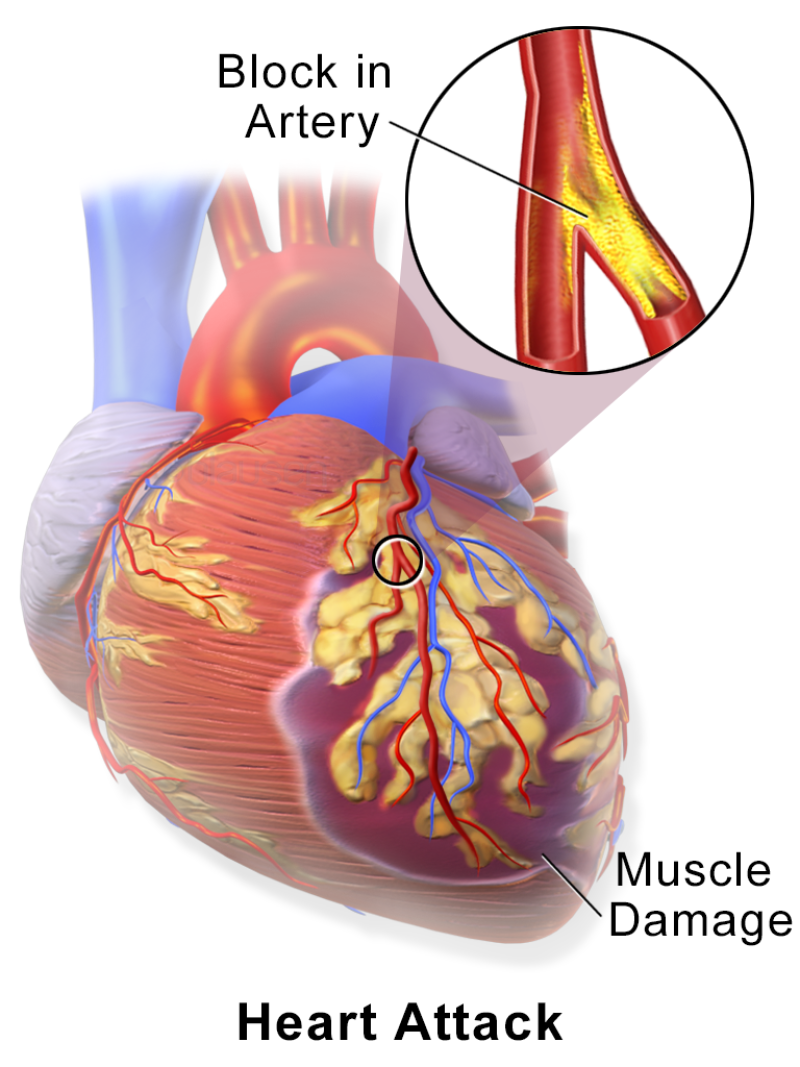
Heart attack
(c) Blausen Medical Communications, Inc.
Bài viết này được dịch tự động và có thể chứa một số lỗi nhỏ; vui lòng tham khảo bản gốc tiếng Anh nếu có thắc mắc.