Squid: profiteers of climate change?
environmentmarine lifeclimate changeocean acidification
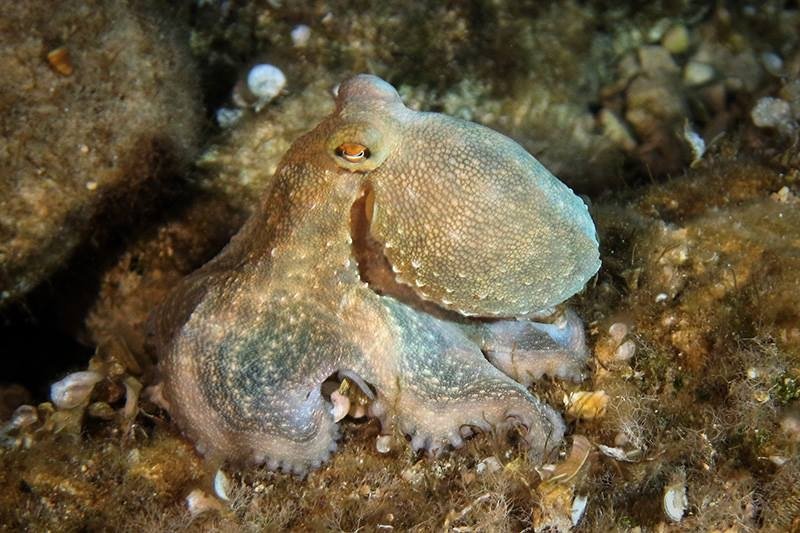
Squid - (c) Horace Pinker (taucher.net)
Cuttlefish are resistant to ocean acidification Cuttlefish will probably survive climate change and can thrive even in the worst scenarios of ocean acidification, according to a recent study recently published in the journal Conservation Physiology Dr. Blake Spady from the ARC Center of Excellence for Coral Reef Studies (Coral CoE) at James Cook University (JCU) led the study. "The blood of cuttlefish is very sensitive to changes in the acidity of the ocean, so we expected the future acidification of the oceans to negatively affect their aerobic performance," explained Dr. Spady. Atmospheric CO2 concentrations have risen from 280 ppm (parts per million) before the Industrial Revolution to more than 400 ppm today. Scientists predict that atmospheric CO2 - and thus CO2 in the oceans - could exceed 900 ppm by the end of this century, unless current CO2 emissions are reduced. When the research team at the JCU's research aquarium tested two species of squid, exposing them to the end-of-century CO2 estimates, it was a surprise: the animals were able to cope with even the highest levels of CO2 predicted for the end of the century were not limited in their performance. Dr. Spady explains that ocean acidification may become an asset to squid, as both some of their predators and some of their prey have been shown to lose their ability to perform under the predicted climate change scenarios. "We believe that squid have a high adaptability to environmental changes due to their short lifespan, their fast growth rates and their large populations" said Spady. He said that the work is important because it provides a better understanding of what future ecosystems might look like under increased CO2 conditions. "We'll probably see that certain species are well-suited to succeed in our fast-changing oceans, and these species of squid might be one of them, and what will most certainly be created will be a completely different world," concludes Dr. Spady. Link to the study: https://academic.oup.com/conphys/article/7/1/coz024/5512142
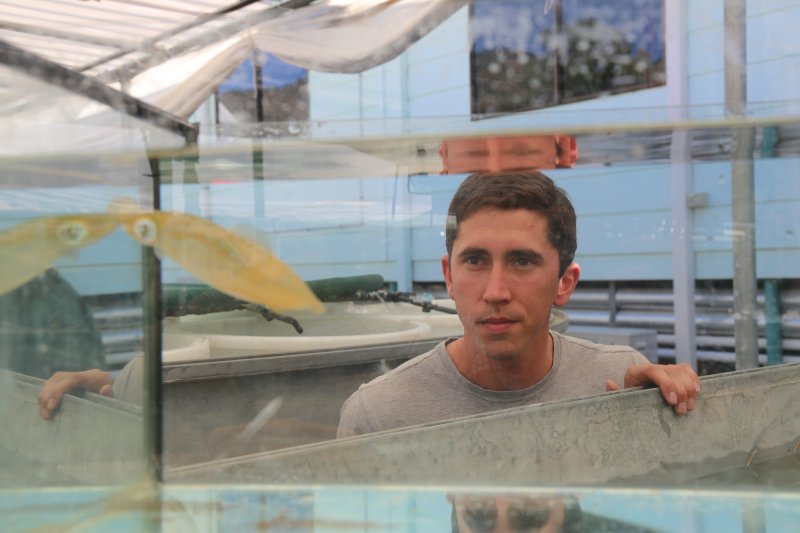
Cuttlefish show resistance to ocean acidification, (c) Blake Spady
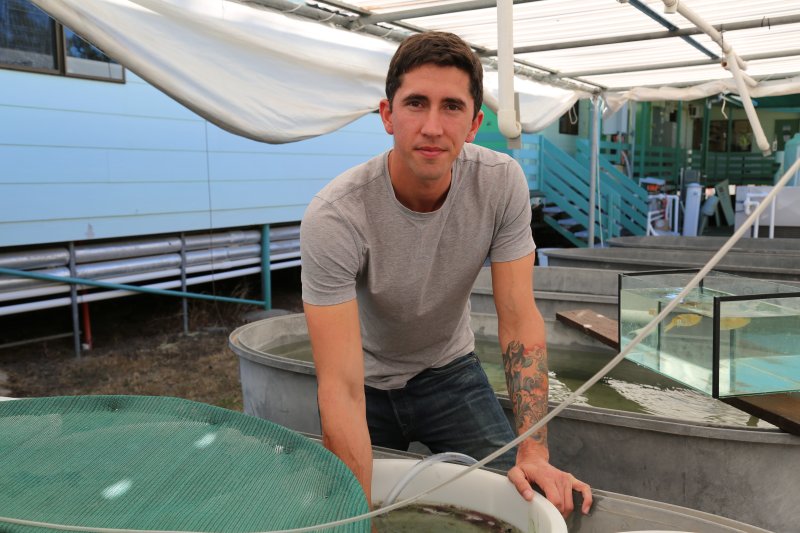
Biologist Blake Spady experiments with squid, (c) Blake Spady
บทความนี้ได้รับการแปลโดยอัตโนมัติและอาจมีข้อผิดพลาดเล็กน้อย โปรดอ้างอิงจากฉบับภาษาอังกฤษต้นฉบับหากมีข้อสงสัย