Remaining vaquitas still threatened by extinction
environmentmarine conservationextinctionvaquitagillnet ban
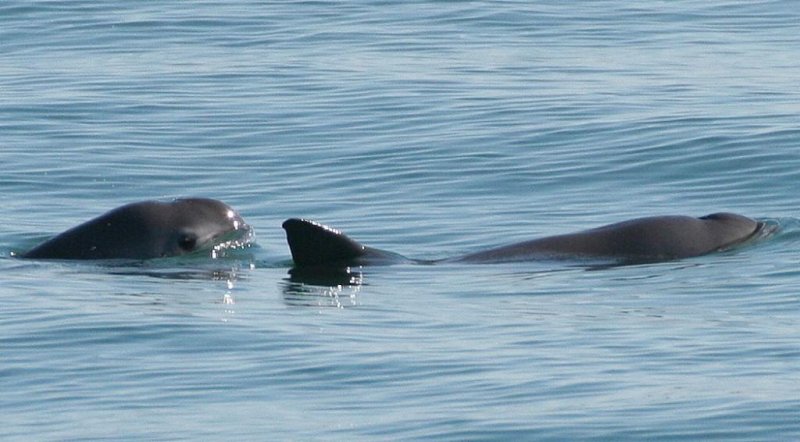
Vaquitas in the Gulf of Mexico
(c) NOAA
New agreement imposes permanent ban on gillnets
The vaquita, the world's smallest cetacean, remains under the threat of extinction.
This situation is unlikely to improve as a result of the recent extension of a ban on gillnet fishing in the Gulf of Mexico, a measure announced by the Mexican government at the end of May 2017. According to the WWF, this is because the gillnet ban is simply ineffective.
However, a new agreement involving the Mexican government, the Leonardo DiCaprio Foundation and the Carlos Slim Foundation was signed last week in a bid to improve the vaquitas’ chances.
Among other things, it imposes a permanent ban on gillnets, the removal of abandoned ghost nets as well as support for the development of vaquita-friendly fishing gear.
Stephan Lutter, a whale protection expert at the WWF Germany, said in German, "So far, the ban has been poorly enforced and would not be enough. In addition, the Mexican authorities should also impose penalties on the ownership, storage and sale of gillnets. Having a few less gillnets will not save the vaquita – its habitat must be completely free of these deathtraps."
Gillnets are the only known threat to vaquitas in their habitat. Their echolocation senses cannot detect the fine-meshed nets, so they unknowingly swim right into the nets. When this happens, they get entangled and drown.
In this way, the unfortunate cetaceans end up as bycatch in the fishing nets meant for totoaba, a fish that is also threatened with extinction.
The swim bladders of the fish are smuggled from Mexico to China via the US, and sold at high prices in China. "We are calling on Mexico, China and the US to put a stop to this illegal trade," said Lutter.
Indeed, time is running out for the vaquita, with the population having shrunk to just 30 individuals in recent years. Between 2015 and 2016, the population had dropped by 50 percent (as we had reported).
"The survival of the entire species depends on every individual vaquita. If we do not take decisive steps to protect this species, the last living vaquita may drown in an illegal fishing net before the end of this year," said Lutter.
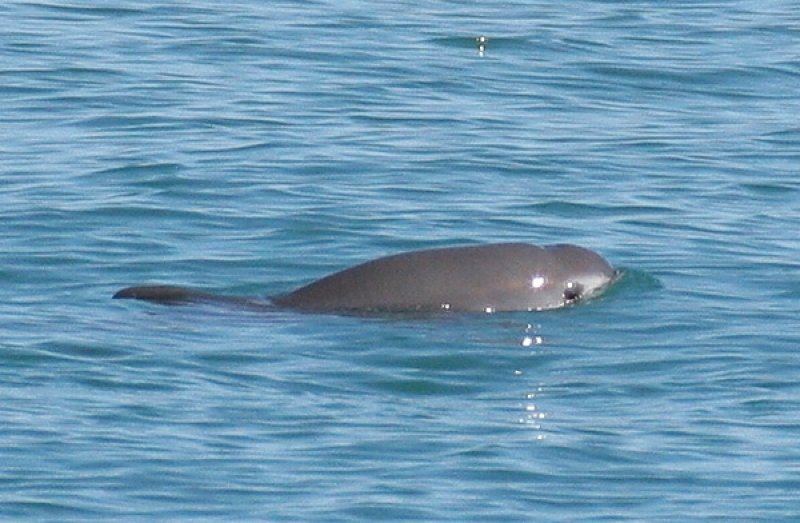
Vaquitas in the Gulf of Mexico
(c) NOAA
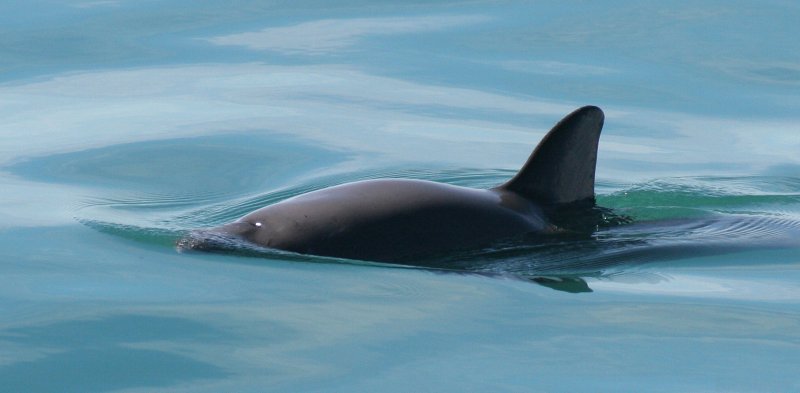
Vaquitas in the Gulf of Mexico
(c) NOAA
この記事は自動翻訳されており、多少の不正確な点が含まれている可能性があります。不明な点がある場合は、元の英語版を参照してください。