MOSES hunts Ocean Eddies
environmentmarine conservationocean researchenvironmental monitoringocean eddies
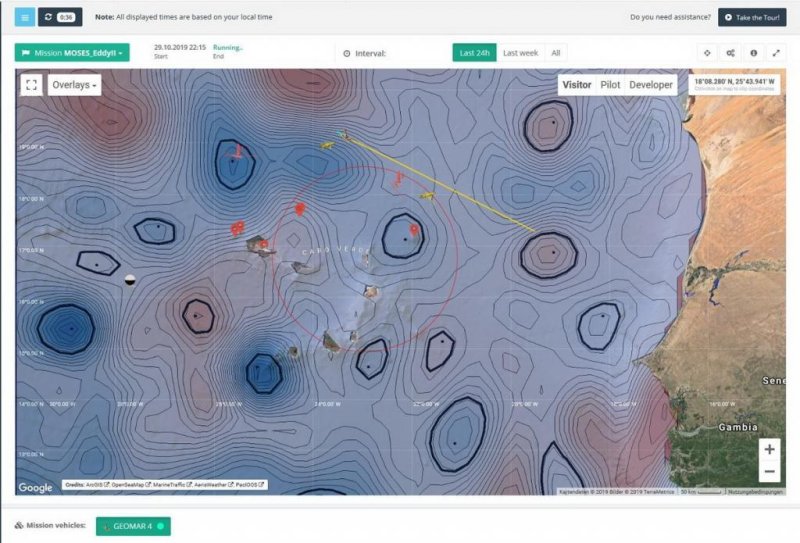
Current screenshot from the GEOMAR Navigator. On waveglider.geomar.de the devices used in the vortex hunting can be followed in real time. An overlay shows the oceanic vortex around Cape Verde
Researchers want to study mobile oxygen minimum zones The nets are in place: As part of the Helmholtz environmental monitoring program, MOSES researchers from the GEOMAR Helmholtz Center for Ocean Research Kiel and the Helmholtz ZentrumGeesthacht Center for Material and Coastal Research (HZG) want to study extremely low-oxygen eddies in the tropical Atlantic. Even now, autonomous devices around the Cape Verde Islands can look for suitable vortexes for the sampling. On 23 November 2019, the research vessel "METEOR" leaves the port of Mindelo. A research aircraft will support the search from the air. In 2010 marine researchers in Kiel were very surprised. The Cape Verde Ocean Observatory (CVOO), a long-term observation station operated by them north of the Cape Verde island of São Vicente, recorded very low oxygen levels in the seawater that had never before been measured in the Atlantic. A measurement error? No. Satellite data and further observations revealed that an oceanic vortex with a diameter of 100 kilometres had just passed the observatory. In its interior, apparently, extreme conditions prevailed. In 2014, a team from GEOMAR and the Kiel research network "Future Ocean" succeeded. Now looking at new messaging campaign wants to answer open questions on the phenomenon and the role of swirling in system ocean. They are part of the Helmholtz Association's environmental observation program MOSES. This time, the Helmholtz-ZentrumGeesthacht Centre for Materials and Coastal Research (HZG) is also part of the team. The HZG has already carried out similar investigations on smaller coastal eddies as part of the "Expedition Clockwork Ocean". The complementary expertise of both research institutions is now brought together in the "MOSES Eddy Study II". The core of the new measuring campaign is an expedition with the German research vessel "METEOR", which starts on 23 November 2019 in the port of Mindelo (Cape Verde). The researchers on board get additional support from the air. The Aachen University of Applied Sciences is stationing the research motor glider "Stemme S-10 VTX" on Cape Verde Island. "The more research you do on eddies in the ocean, the more you realize that they have an important and, until now, inadequate understood role in the distribution of energy, oxygen, or even nutrients, and can affect the physics and biogeochemistry of entire ocean basins," says Prof Dr. med. Arne Körtzinger from GEOMAR, scientific leader of the expedition. The sampling of the vortex in 2014 and the subsequent analysis of the data showed that this had not been previously observed in the Atlantic. This includes the natural production of greenhouse gases due to special biochemical processes in the oxygen-depleted zones. "This changes our idea of elemental circulation in the Atlantic, which ultimately has an impact on our ocean and climate models," emphasized Körtzinger. His colleague Prof. Dr. Burkard Baschek, director of the Institute for Coastal Research at the HZG, confirms this. During the "Clockwork Ocean" expedition in the summer of 2016, coastal researchers from Geesthacht measured short-lived eddies near the coast from their formation to their collapse. "We could prove that cold water inside the vortex is transported quickly upwards. The small vortices bring nutrients from deeper levels of the water column up to the surface. When they come close to the sunlight, we have ideal conditions for algae growth and thus for the beginning of the food chain and life in the sea. Now we want to measure and understand the interaction of the little eddies with the big ones," says Baschek.
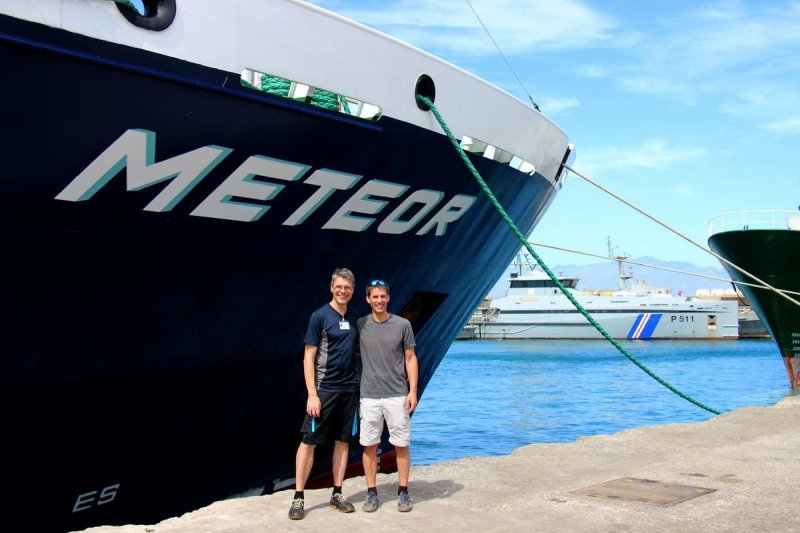
Prof. Dr. Arne Körtzinger (GEOMAR) and Prof. Dr. med. Burkard Baschek (HZG) in front of the research vessel "METEOR" in the port of Mindelo, photo: © Björn Fiedler / GEOMAR
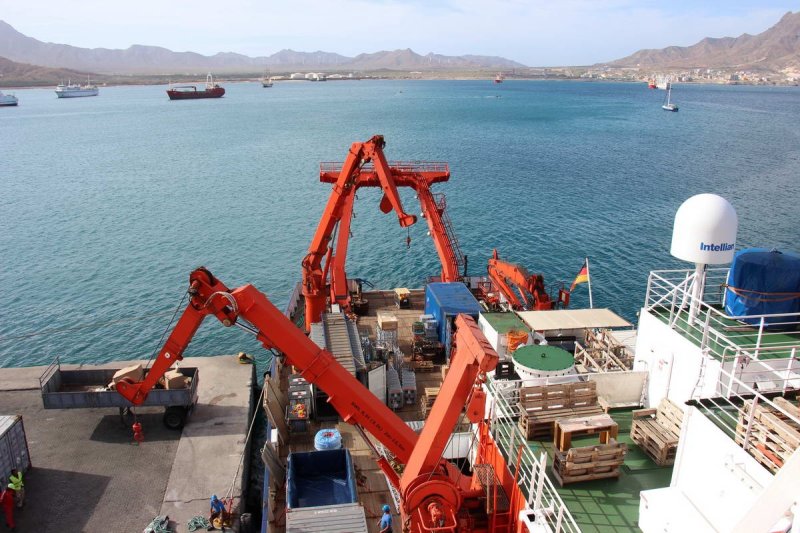
Currently, the research ship "METEOR" is being loaded in the port of Mindelo for the expedition to the eddies, photo: © Arne Körtzinger / GEOMAR
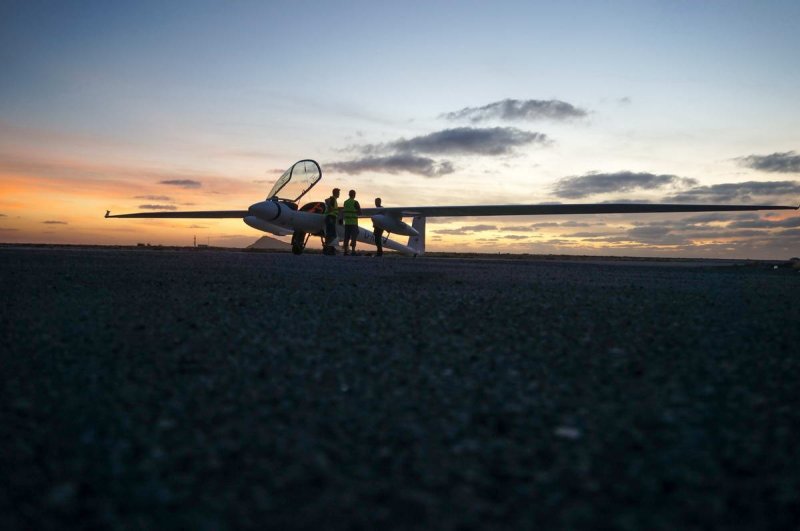
The island of Sal will form the basis for the research aircraft "Stemme" in the next few weeks, photo: © Burkard Baschek / HZG
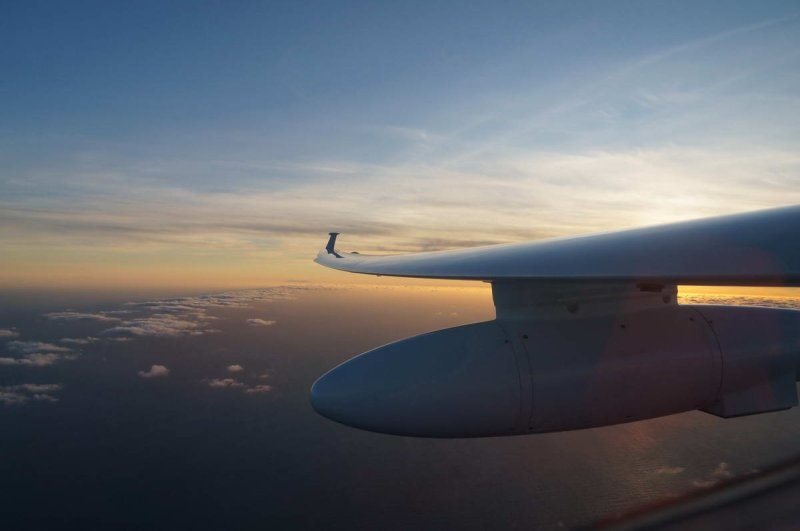
View from the research aircraft "STEMME" over the Cape Verd
この記事は自動翻訳されており、多少の不正確な点が含まれている可能性があります。不明な点がある場合は、元の英語版を参照してください。