Lack of oxygen in marine snow
environmentmarine ecosystemsocean researchnutrient cyclenitrogen budget
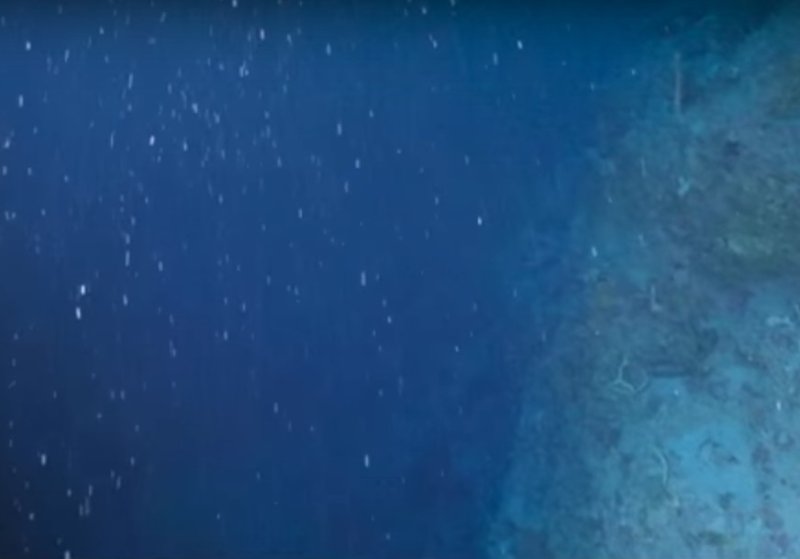
Marine snowfall
(c) NOAA
Global nutrient losses outside the oxygen minimum zones of the ocean The productivity of the ocean is largely determined by the availability of nutrients. In oxygen-free areas of the ocean - nitrate is often consumed, which is thus removed from the nutrient cycle for a long time. The authors of an international study involving the GEOMAR Helmholtz Center for Ocean Research Kiel show that even in so-called "marine snow" micro-niches can occur in which this nitrate respiration takes place to a great extent. It has been known since the 19th century that plant growth is limited by the nutrient with the lowest concentration (so-called minimum law). As in the garden, nitrogen in the form of nitrate is one of the most important nutrients in the sea at all times. The global nitrogen budget is therefore of outstanding interest for our understanding of marine ecosystems and the role of the oceans in our climate. However, in oxygen-free areas of the ocean, nitrate serves as an alternative to oxygen and is consumed by microorganisms. Nitrate is lost and gaseous nitrogen is released. Until now, it was thought that this process takes place only in limited areas of the ocean (mainly off Peru, the Arabian Sea and the Bay of Bengal, but also in the Baltic Sea and the Black Sea), in which there is virtually no oxygen in the water is. However, recent research shows that even in small particles formed in the water column, when e.g. clump dying algae into snow-like aggregates, form oxygen-free zones. This is because these marine snowflakes are colonized by bacteria, which often breathe oxygen faster than it can be replenished. In a study now published in the journal Nature Geoscience, an American-German research team involving GEOMAR has simulated the distribution of these anoxic micro-niches globally. Researchers have discovered that significant amounts of nitrogen can also be lost outside areas of extremely low oxygen concentrations. " Our model calculations show a doubling of the previously assumed rates. In our view, this not only has implications for the global nitrogen budget, but also means that the dynamics of other nutrient cycles, such as those of zinc, cadmium, and probably iron, must be re-analyzed, " Dr. Rainer Kiko, co-author of the study. These nutrients are likely to migrate from the dissolved to the solid phase in the micro-niches and are therefore not available to organisms. Global warming is unlikely to lead to an increased occurrence of micro-niches in the opinion of the authors. But in northern latitudes, especially in the northern Pacific, it is expected that these more frequent and associated higher nutrient losses will occur. This would lead to reduced biological productivity in these regions. How this process affects the affected ecosystems, how exactly the model fits in with reality, or how the microbial processes in the micro-niches work out exactly, are issues that the international research community needs to pursue further, " Dr. Rainer Kiko concludes. Link to the study: https://doi.org/10.1038/s41561-018-0081-0
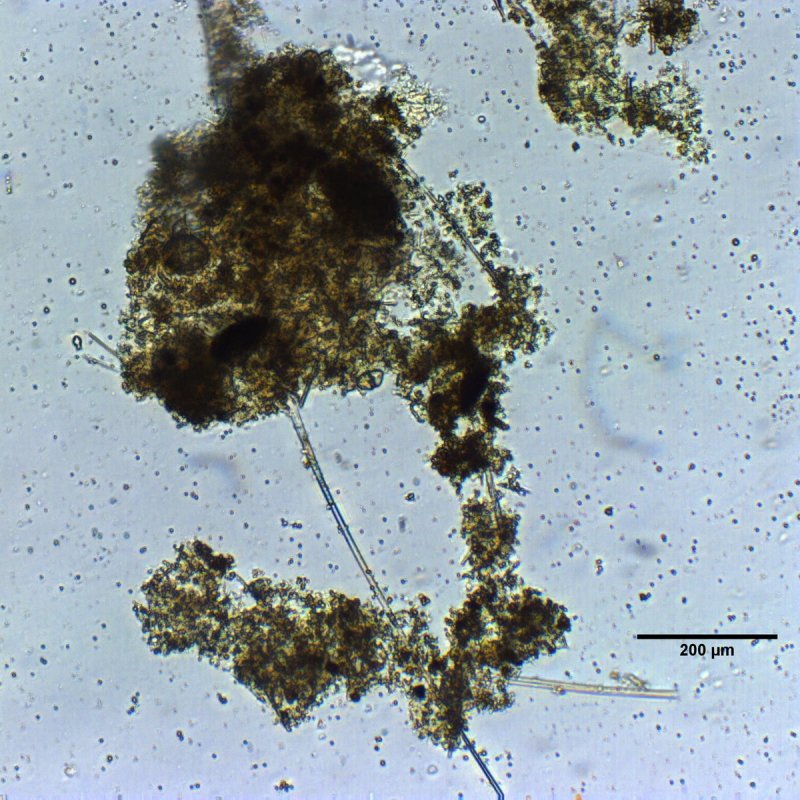
Microscopic image of marine snow
(c) Morten Iversen / AWI
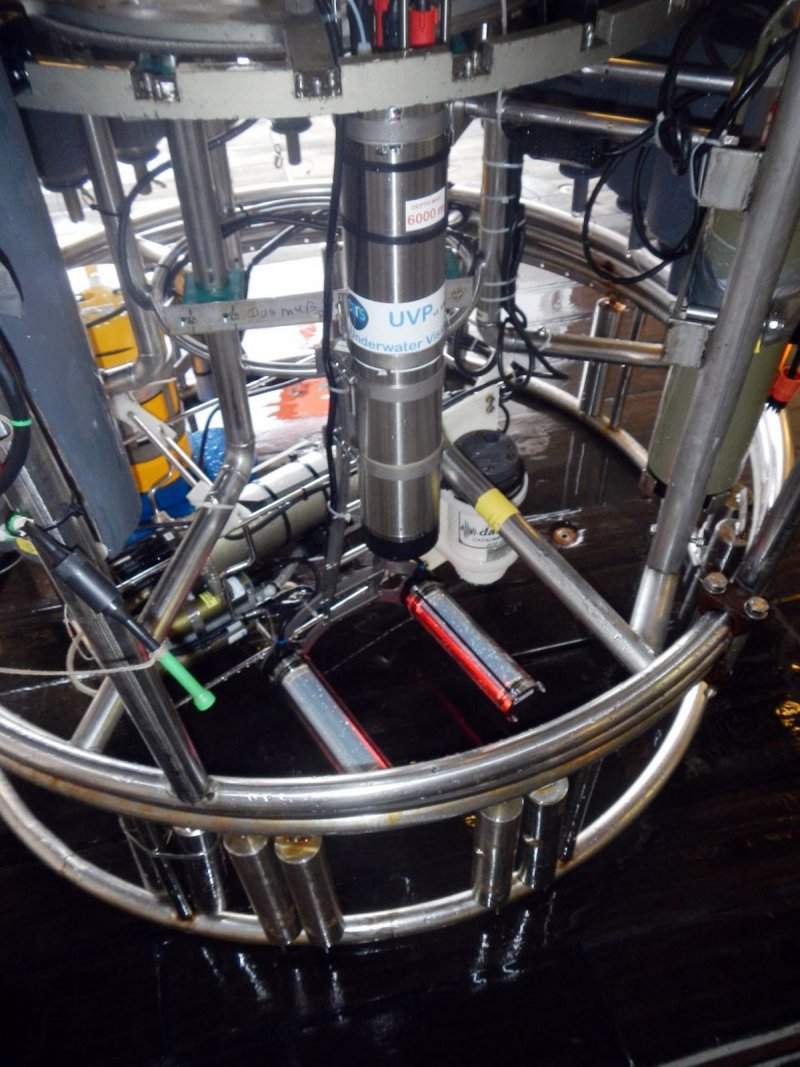
Detail of the EIA as part of a wreath water creator
(c) Rainer Kiko/GEOMAR
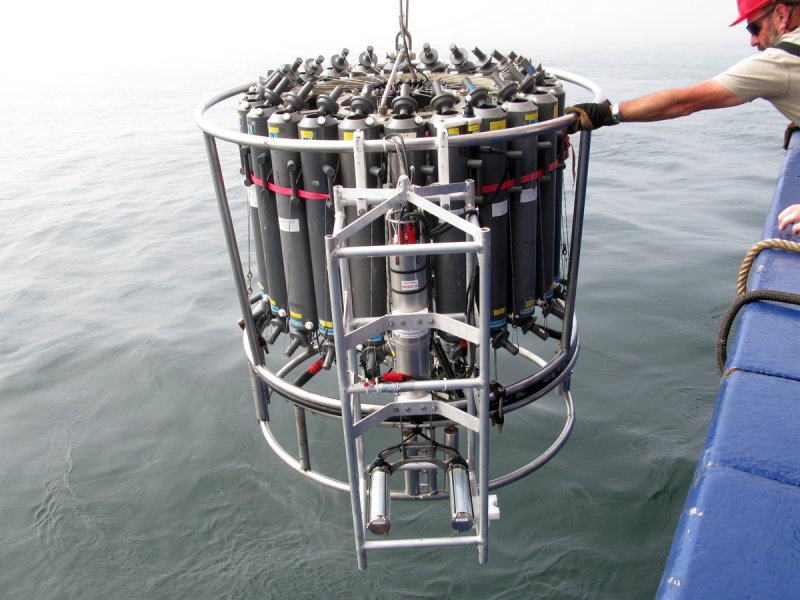
Using a Underwater Vision Profiler (UVP) attached to a wreath water creator, researchers from Kiel study the distribution of particles in the water column
(c) Rainer Kiko/GEOMAR
Questo articolo è stato tradotto automaticamente e potrebbe contenere piccole imprecisioni; in caso di dubbi, consulta la versione originale in inglese.