The secret life of the sponges
scuba divingenvironmentmarine lifeoceanunderwater ecosystemsea
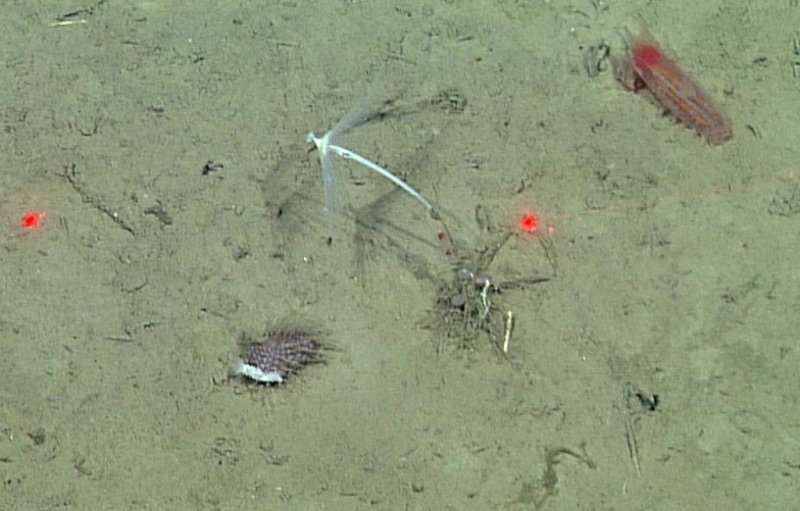
The carnivorous sputnik sponge, Cladorhiza kensmithi, retracts its parasol-like filaments when it has caught its prey. (c) 2015 MBARI
Time-lapse photos expose movements You might think that deep-sea sponges are about as active as cleaning sponges. But this is not the case: Time-lapse photos show that certain seabed animals that were once considered stationary are actually expanding, contracting, tumbling and rolling over the seabed - only very slowly… In a recent study, former MBARI postdoctoral researcher Amanda Kahn and her team describe these behaviors in nine sponge and anemone species at a long-term study site called "Station M". "Station M" is 4,000 meters below sea level and about 220 kilometers off the coast of Central California. Kahn, co-author Paul McGill, and other researchers watched time-lapse videos of the ocean floor when Kahn saw something unexpected. " Everyone saw sea cucumbers and sea urchins snuffling around on the sea floor, but I saw the sponge. And then the sponge changed its size. We didn't know beforehand that we should look at the sponges, " said Kahn. Kahn and co-author Clark Pennelly analyzed the recordings and found that several sponges of glass contracted and expanded rhythmically over time for no apparent reason. The cycles of contraction and expansion lasted from hours to weeks. Previous studies have shown that a sponge's natural filtering properties diminish when it contracts. The sponges at "Station M" had contracted in 30 to 50 percent of the ocean floor recordings. Since sponges typically filter large quantities of particles out of the water, this means that their contractions could significantly affect the nutrient cycle in the deep sea. The team also observed the actions and retreats of other seabed animals over time. A type of sponge known as the Sputnik sponge, Cladorhiza kensmithi, took its umbrella-like threads out and back in. This species is known as a carnivore, which uses its filaments to catch its prey. Similarly, a colony of tiny sea anemones, like a chain of small flowers on a stem, has rhythmically withdrawn its tentacles and then opened them again. Another small sunflower-shaped anemone showed similar behavior. These movements are likely related to the anemones feeding on particles and microscopic animals that swim close to their filaments. There is a precedent for sponges that contract and expand, " explains Kahn. Her co-author, Sally Leys, has documented the behavior seen in freshwater sponges that react to particles in the surrounding water. When the sponges are irritated by these particles, they slowly expand the channels in their body and then contract relatively quickly, causing the particles to be expelled. The entire process takes about 40 minutes and is similar to sneezing a person. Such behavior has never been observed in glass sponges that contain skeletal structures made of quartz glass. Although their name might suggest that sponges of glass are brittle and fragile, the glass structures in their bodies called spicules are similar to scaffolds that overlap and rest on each other but are not fused together. By changing the overlap of the parts, the sponges can contract or expand. Changes in size were not the only surprising behavior that Kahn witnessed. Another species of sponge, Docosaccus maculatus, was frequently swept across the sea floor by currents, like a tumbleweed in the wind. Similarly, another species, Hexactinellida sp.1, appeared to be riding the currents and rolling over the muddy plain for months. The deep sea is a dynamic place, but it works on a different time scale and with different stimuli than our world, " concludes Kahn. Her work shows that sponges and anemones are much more alive than the scientists assumed. They only live much more slowly than the people who examine them. Video: youtu.be/tx5HhgUjaiU
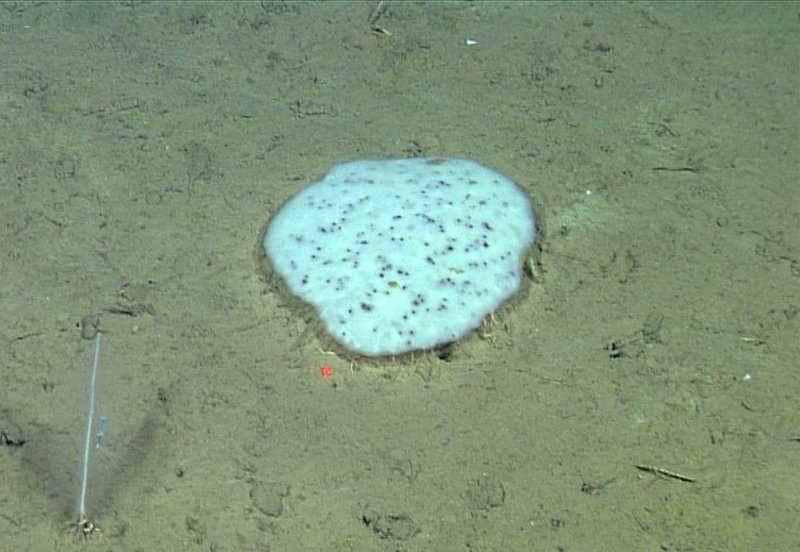
This "spotted biscuit sponge," Docosaccus maculatus, moved in and out of the field of view of a seafloor camera over several months. (c) 2015 MBARI
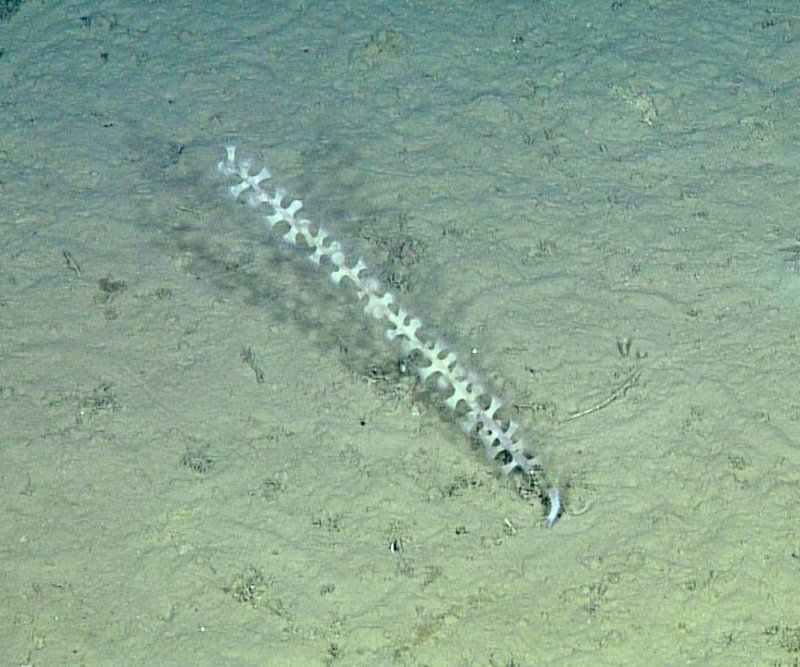
Epizoanthus stellaris looks a lot like a daisy chain, but is actually a colony of small, pale anemones that often colonize the stalks of sponges. Time-lapse images show the anemones extending and retracting their small rings of tentacles. (c) 2015 MBARI
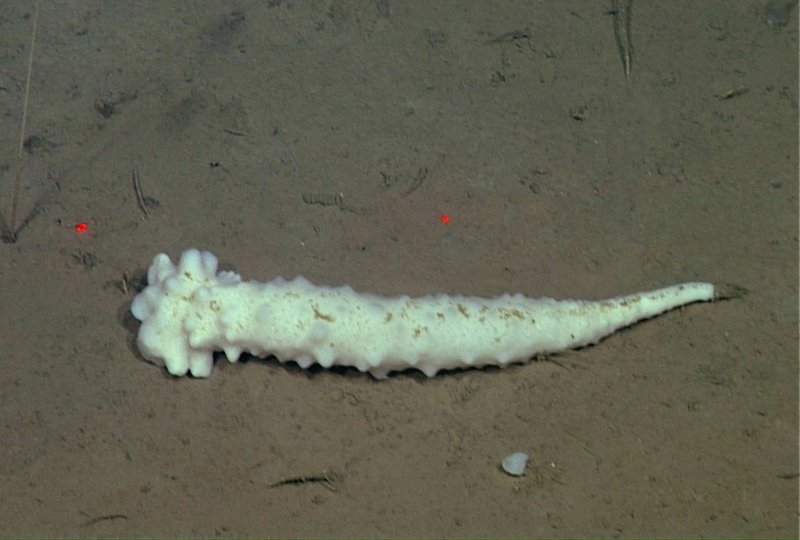
Pushed by currents, this trumpet sponge in the genus Hexactinellida, rolls across the muddy seafloor. (c) 2015 MBARI
מאמר זה תורגם אוטומטית וייתכן שהוא מכיל אי דיוקים קלים; אנא עיינו בגרסה המקורית באנגלית במקרה של ספק.