Ocean circulation in winter influenced by warm summers
environmentclimate changemarine scienceocean currentsglobal warming
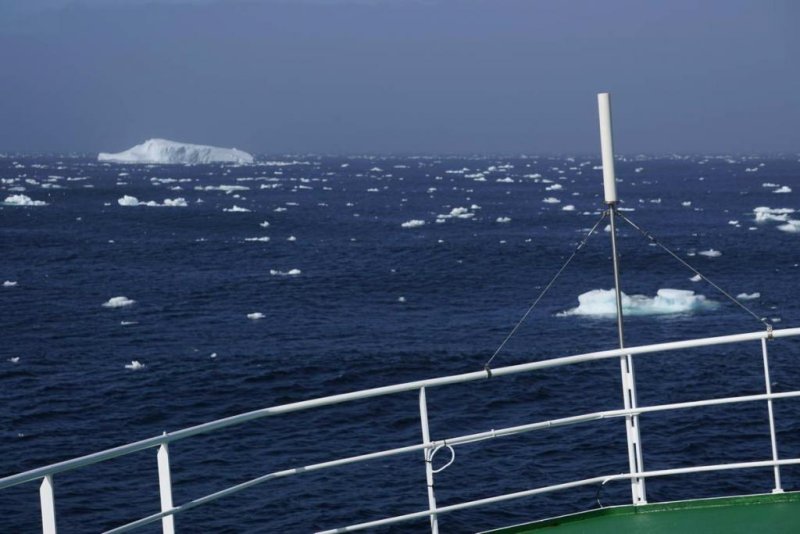
The Irmingersee, taken here by the research vessel "MARIA S. MERIAN", is one of the few regions in the world where new deep water is formed due to deep convection © Arne Bendinger / GEOMAR
Researchers show the influence of fresh water on deep water formation In the North Atlantic cold water sinks in winter from the sea surface into the depth. This so-called convection is one of the key processes in the system of global ocean currents. With the help of long-term observations, a team from the GEOMAR Helmholtz Center for Ocean Research Kiel has now been able to demonstrate the influence of fresh water that accumulates on the sea surface in summer on the deep water formation in winter. Temperature and salinity of seawater are crucial factors driving the system of global ocean currents. Hot and salty water, which reaches upper latitudes, cools down on the surface, becomes heavier and sinks into the depth. This process is called convection. In the depth, the water flows back towards the equator and draws new masses of water. Deep convection occurs only in a few regions, including the Irminger See east of Greenland and the Labrador See west of it. But what happens if additional fresh water, for example from melting glaciers, gets into this system? Model calculations show that the lower density of surface water could lead to a weakening of the flow system, but current observation data did not confirm this so far. With the help of long-term observations, GEOMAR oceanographers have now demonstrated for the first time a concrete influence of fresh water on convection. They publish their findings in the international journal Nature Climate Change. The new study is based on the analysis of data derived from anchored observation platforms in the Labrador Sea and the Irminger See and free-floating buoys, so-called deep drifters. In addition, satellite observations of the ocean surface and atmospheric data were included. "For various periods of time over the last 60 years, we have been able to combine important key processes: atmospheric fluctuations, such as the North Atlantic Oscillation, water and air temperatures, the appearance of fresh water layers and the duration of convection," explains Drs. Marilena Oltmanns from GEOMAR, first author of the study. The evaluation showed a clear correlation between atmospheric conditions, summer temperatures at the Irminger Sea, the amount of fresh water there and convection in the following winter. "When warmer summers with lots of fresh water occurred in warm periods, the ocean lost less heat the following winter. This meant that the fresh water layer formed in the summer remained stable for a longer time and therefore the convection started later, "Dr. Oltmanns. Typically, the fresh water is transported away by the convection in the depth. Since convection only started very late in a few years, a high proportion of fresh water remained near the surface and was supplemented in the following summer by fresh incoming fresh water. "This effect could add up in the long run, causing a significant weakening of convection - especially with global average temperatures rising," the oceanographer concludes.
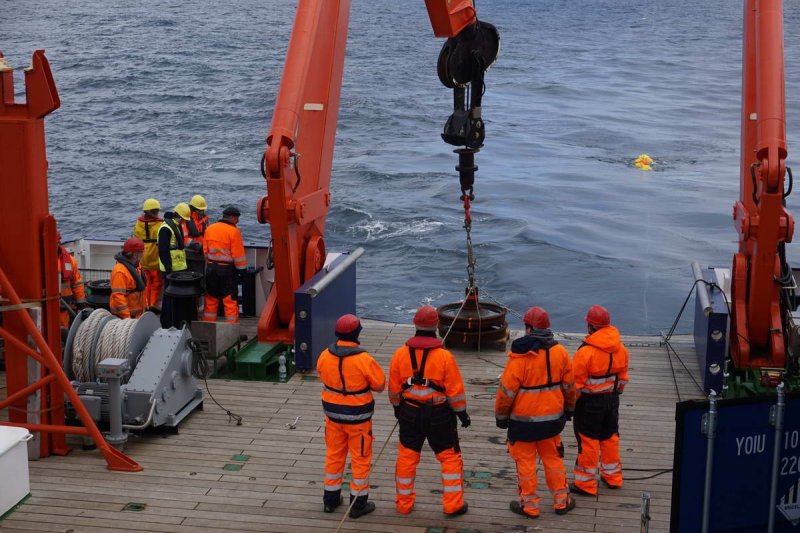
Anchors, such as those deployed here by the research vessel "MARIA S. MERIAN" into the Labrador and Irminger Sea, are used for the long-term observation of ocean currents © Arne Bendinger / GEOMAR
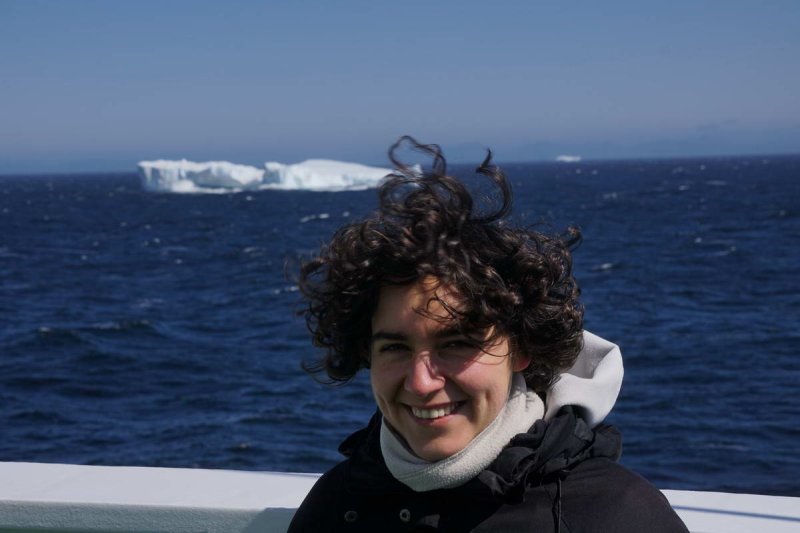
The oceanographer Dr. Marilene Oltmanns is the first author of the current study © Arne Bendinger / GEOMAR
Tämä artikkeli on käännetty automaattisesti, ja se saattaa sisältää pieniä epätarkkuuksia; katso alkuperäistä englanninkielistä versiota, jos olet epävarma.