Feed additions in aquaculture damage lobster
environmentmarine lifepollutionaquaculturecrustaceans
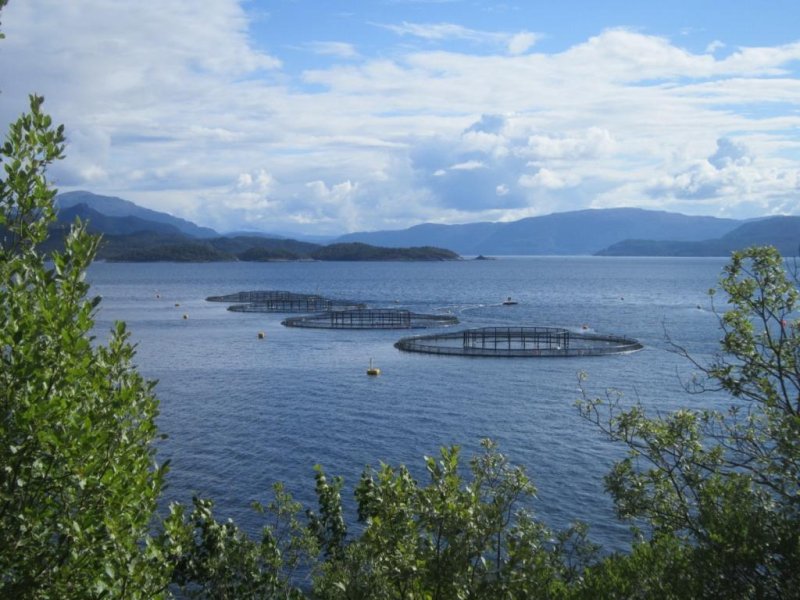
Aquaculture in Norway
© Brataffe / Wikipedia
Sea lice treatment has serious side effects Teflubenzuron is added to the feed of farmed salmon in some cases to treat sea lice infestation. The Norwegian Havforskningistituttet has found traces of the chemical on the seabed near fish farms and then examined how Teflubenzuron affects crustaceans such as lobsters Business with farmed salmon has considerable downsides, that's been known for a long time. The problems of salmon farms include the overfeeding with antibiotics against the spread of germs, which are due to an excessively high fish density in aquaculture. In addition, the farmed salmon are attacked by parasites. Sea lice are a problem especially in aquacultures in Chile. Aspects of animal welfare, the environment and health play only a minor role. The system strives only for profit maximization - we reported Norwegian researchers have now been able to detect the chemical teflubenzuron in the seabed around fish farms. The agent is a chitin synthesis inhibitor used in infestations with parasitic crustaceans - that is, sea lice. The agent inhibits the development of parasites by interfering with the synthesis of chitin, ie the formation of the shell, the scissors and the entire outer skeleton. The sea lice (Lepeophtheirus salmonis) are copepods from the family of crustaceans - just like lobster. The researchers hypothesized that the lobsters react to teflubenzuron. They expose young animals to the substance. "When lobsters consume teflubenzuron with their food for extended periods of time, they develop stiff joints and antennae after shell change, and they seem to be getting some kind of arthritis," marine analyst Ann-Lisbeth Agnalt explains. In one experiment, scientists put young lobsters in an elongated tank with a shelter at one end. They watched how long it took for the lobsters to find shelter and enter it. 19 lobsters were given teflubenzurone-containing food and 19 received normal food until two weeks before the experiment. The non-contaminated lobsters took just over five minutes to reach the shelter. The lobster contaminated with the delousing agent took over 18 minutes, two did not even find the shelter. The healthy lobsters used their antennas to move along the wall, exploring the entire room, finding the shelter, and going straight in. But lobsters that had been receiving teflubenzurone were not actively using their antennas; they took a few small steps forward before repeatedly turning around and returning to the starting point, " explains Alessandro Cresci, lead author of the recent study published in the journal Ecotoxicology and Environmental Safety. In the experiment, the young lobsters were fed with teflubenzuron over a period of eight weeks in concentrations that occur in the natural environment. Salmon are treated with the remedy for seven days, but salmon droppings and garbage remain on the seafloor, so lobsters and other animals ingest teflubenzuron much longer. eflubenzuron was found even as far as 1,100 meters from fish farms on the seabed, " says Ann -Lisbeth Agnalt. " The effects of delousing chemicals on behavior, spatial orientation and cognitive abilities can affect several species living on the seabed, " says Alessandro Cresci. Link to the study: https://doi.org/10.1016/j.ecoenv.2018.05.021.
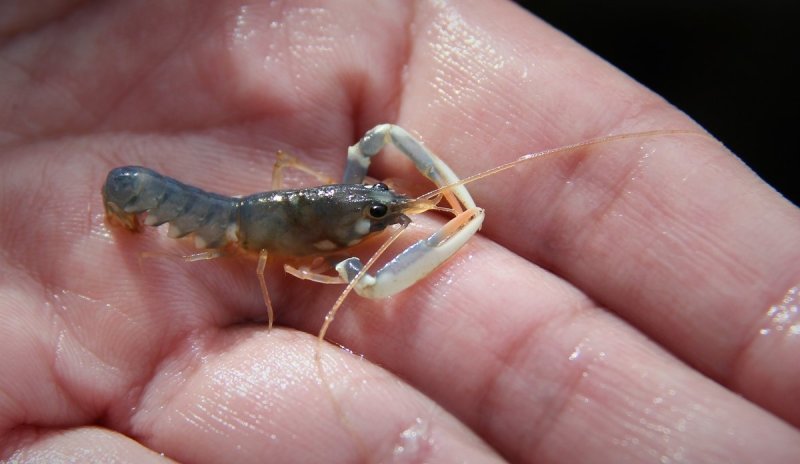
Young lobster, photo: © Eva Farestveit / Havforskningsinstituttet
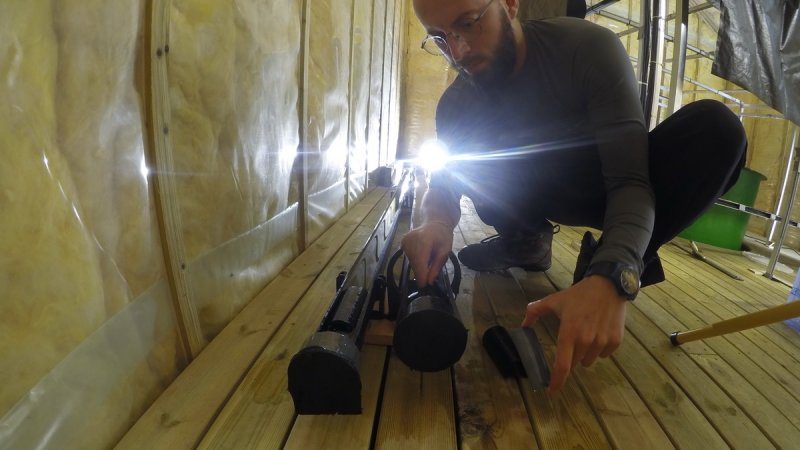
Alessandro Cresci places a lobster in the experimental setup, photo: © Alessandro Cresci
Este artículo se ha traducido automáticamente y puede contener pequeñas inexactitudes; en caso de duda, consulta la versión original en inglés.