Deep-Sea Research Exhibition
scuba divingenvironmentmarine lifetechnologydeep-sea research
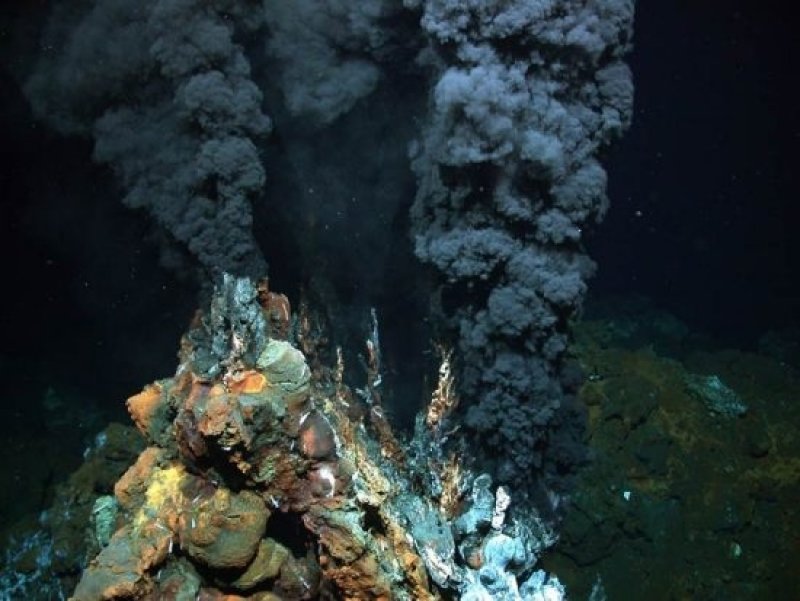
Black smoker, Mid-Atlantic Ridge / Southern Atlantic, 2,980 metres deep, "Meteor" expedition 2005 (c) MARUM - Center for Marine Environmental Sciences, University of Bremen
New Exhibition Showcases Development Of Deep-Sea Research And Technology
If not for technical breathing apparatus and underwater equipment, the true beauty and diversity of the underwater world would remain a mystery to us. Over the years, our technological advances have allowed us to penetrate into the depths of the oceans and uncover their secrets.
The German Oceanographic Museum in Stralsund is dedicated to the deep sea, and now has feature films showcasing the technical origins of deep-sea research and its related memorabilia.
Curator Dr Dorit Liebers-Helbig describes the Exploration of the Sea as dependent on technology. The new exhibition features original instruments from the 1930s, such as a thermometer with a "Sinkgewicht" (a special weight to sink e.g. instruments faster), a box corer for soil samples and a water sampler.
These were some of the measuring devices used during expeditions aboard the research vessels GAZELLE and VALDIVIA. There is also a cabinet containing charts with past itineraries, historical images of cephalopods drawn by Carl Friedrich Chun, who led the first German deep-sea expedition aboard the VALDIVIA in 1898 to 1899. His research had included cephalopods, and you can view various types of these in their original preparations. In addition, it is here that researchers in 1903 describe a hell vampire, which the new hall of the deep sea marine museum had recently acquired a life-like model.
There are also exciting short films that feature the current deep-sea research, as well as black smokers at the Mid-Atlantic Ridge and cold water corals in the Mediterranean. These films were taken by MARUM , the Centre for Marine Environmental Sciences at
Bremen University. About 100 short films about the research on the world's oceans can be seen, and these can also be viewed at the marumTV YouTube channel.
For many years, the German Oceanographic Museum has collaborated closely with MARUM. Both institutes are members of the German Marine Research Consortium (KDM; http://www.deutsche-meeresforschung.de/en/ ) and have worked together to develop the 'Exploration and Exploitation of the Sea' at the Ozeaneum.
Video: https://www.youtube.com/watch?v=39tDf5r2no0
Este artículo se ha traducido automáticamente y puede contener pequeñas inexactitudes; en caso de duda, consulta la versión original en inglés.