Ocean acidification: Experiment proves disturbance of the food web under high CO2 conditions
environmentmarine ecosystemsocean acidificationtoxic algaeco2 emissions
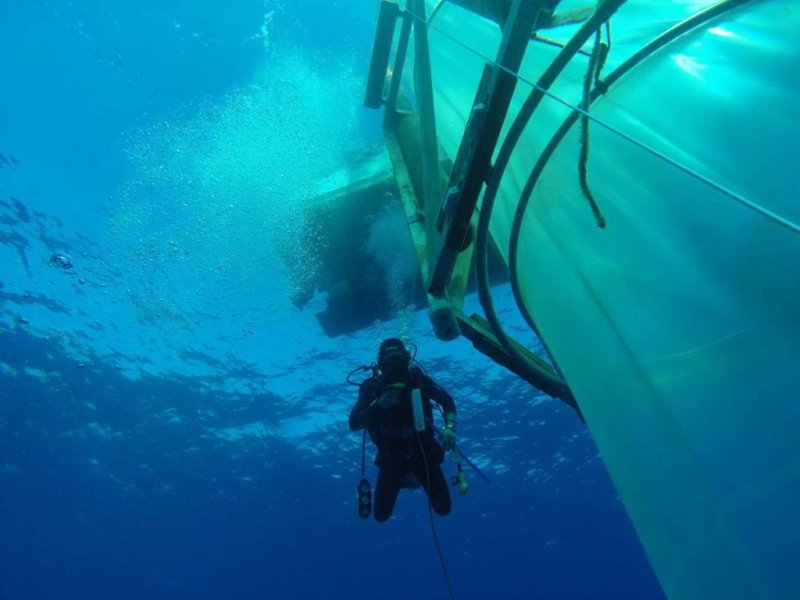
A diver next to a mesocosm off the coast of Gran Canaria. (c) Michael Sswat / GEOMAR
Ocean acidification stimulates mass development of toxic algae If carbon dioxide levels continue to increase in the atmosphere and consequently also in the ocean, this could favour the mass increase of toxic algae, with far-reaching consequences for the pelagic food web. This has been demonstrated by a long-term experiment off the Canary Islands, conducted by an international group of scientists led by the GEOMAR Helmholtz Center for Ocean Research Kiel Undoubtedly, global warming is the most prominent impact of rising greenhouse gas concentrations in the atmosphere. But she is not the only one. The higher the carbon dioxide (CO2) content in the atmosphere, the more CO2 the seawater absorbs. There, the gas triggers chemical reactions that lower the pH. This process, called ocean acidification, affects many creatures in the sea. The consequences for marine ecosystems can be very complex and research is still in the process of understanding them in all their scope. In a two-month field experiment off the Canary Islands, an international group led by GEOMAR has come to the rescue of a possible consequence of ocean acidification that could severely affect the marine food web. As the team now publishes in the international journal Nature Climate Change, the poisonous alga Vicicitus globosus increased significantly in the experiment from a carbon dioxide concentration above 600 ppm (parts per million), and went into mass development above 800 ppm. In our near-natural experimental environments, these algal blooms had a strong negative effect on the rest of the plankton community, especially the species-rich animal plankton. But these organisms are extremely important for the food web in the ocean. The collapse of the food chain has also influenced other important biologically driven processes, such as carbon transport to depth, " explains Prof. Dr. med. Ulf Riebesell, Professor of Biological Oceanography at GEOMAR and first author of the study. For the experiment, the team had deployed nine of the Kiel KOSMOS mesocosms off the Canary Islands. They each consist of a buoyancy frame on the sea surface, which holds a 15-meter-long plastic hose vertically in the water. This includes 35 cubic meters of natural seawater. In the water body with the natural community, separated from the rest of the ocean, the researchers then increased their CO2 levels to meet various future expected levels. Over 57 days, they have watched the development of the included plankton community. The plant and animal plankton in the mesocosms responded differently to increased carbon dioxide and thus lower pH conditions. However, the mass occurrence of the poisonous alga Vicicitus globosus from CO2 concentrations of 600 ppm was particularly clear. " This CO2 level could be reached in the next three to four decades if our carbon dioxide emissions are not declining rapidly ," emphasizes Ulf Riebesell. The exact cause for the success of Vicicitus globosus under high CO2 conditions is not yet clear. Either the algae benefit disproportionately compared to other competing species in their growth, so for example by increased photosynthesis rates. Or their toxicity increases with rising CO2 leves, so it is less eaten. " That has to be clarified by further detailed analyzes in the laboratory, " says Ulf Riebesell. It is also unclear whether the results of the study can be transferred to other toxic algae species. However, Vicicitus globosus is distributed worldwide, from temperate regions to the tropics. Blooms of the species have been repeatedly associated with fish kills in coastal waters and in aquaculture. " This is the first evidence from a field study that ocean acidification can promote toxic algal blooms. Another strong argument to drastically reduce CO2 emissions in the near future, " summarizes Professor Riebesell. Link to the study: https://doi.org/10.1038/s41558-018-0344-1.
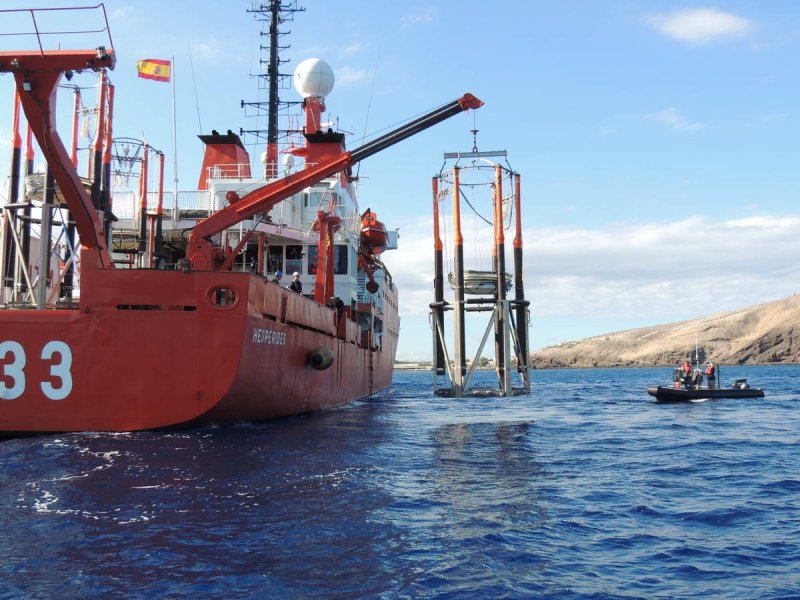
The Spanish research vessel HESPERIDES deploying the mesocosms, (c) Ulf Riebesell / GEOMAR (CC BY 4.0)
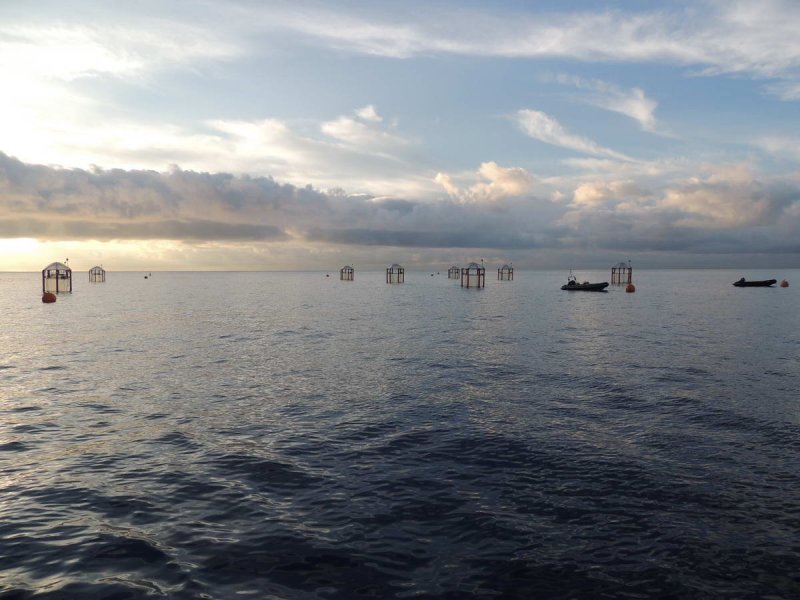
The mesocosms at sunrise off the coast of Gran Canaria, (c) Ulf Riebesell / GEOMAR
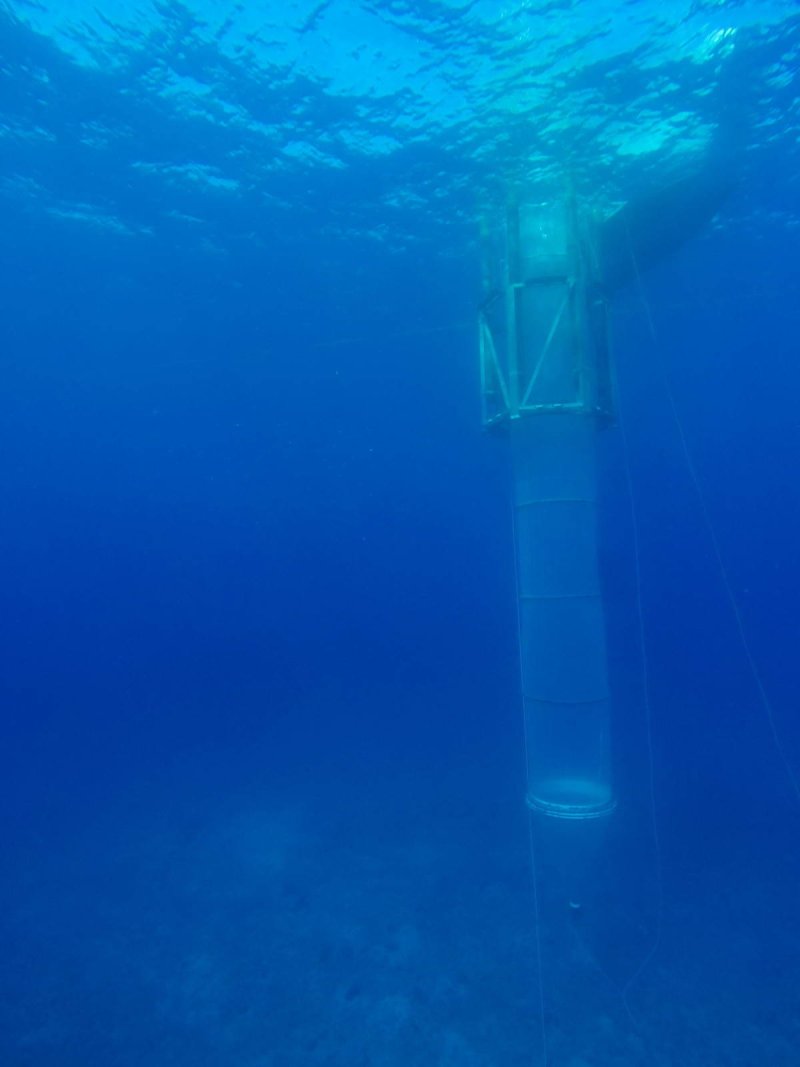
The mesocosms separate a 15 meter long water column from the rest of the sea water, (c) Michael Sswat / GEOMAR
تمت ترجمة هذه المقالة تلقائيًا وقد تحتوي على أخطاء طفيفة؛ يرجى الرجوع إلى النسخة الإنجليزية الأصلية في حالة الشك.