Shrimp with large pink claw named after Pink Floyd
environmentmarine lifeocean
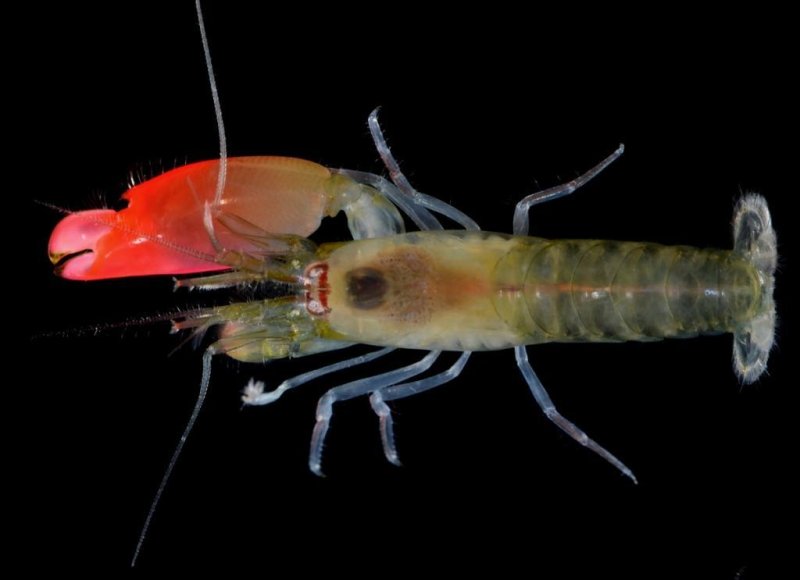
The newly discovered species of pistol shrimp: Synalpheus pinkfloydi
(c) Arthur Anker
Claw can generate one of loudest sounds in the ocean
Another shrimp in the wall...
With its large brightly pink claw, it isn't surprising to learn that this newly discovered species of pistol shrimp has been named Synalpheus pinkfloydi, after the rock-and-roll band Pink Floyd.
Not only that, the crustacean's unique way of catching its prey – by using its distinct claw to generate substantial amounts of sonic energy – makes it the perfect candidate to be so named.
To overpower a prey, the shrimp closes its claw at a very high speed to create a high-pressure cavitation bubble; the implosion of this produces one of the loudest sounds in the ocean. And this is so strong that it can stun or even kill a small fish.
This discovery led to the publication of its scientific description in the latest issue of Zootaxa. This report has been authored by Arthur Anker of the Universidade Federal de Goiás in Brazil, Kristin Hultgren of Seattle University in the US, and Sammy De Grave, of Oxford University Museum of Natural History.
Needless to say, the research team comprises a couple of Pink Floyd fans. In particular, De Grave admits to being a lifelong fan.
"I have been listening to Floyd since The Wall was released in 1979, when I was 14 years old. I've seen them play live several times since, including the Hyde Park reunion gig for Live8 in 2005. The description of this new species of pistol shrimp was the perfect opportunity to finally give a nod to my favourite band," he said.
Lead author Arthur Anker added, "I often play Pink Floyd as background music while I'm working, but now the band and my work have been happily combined in the scientific literature."
Discovered at the Pacific coast of Panama, the Synalpheus pinkfloydi is actually not the only pistol shrimp with such a distinctive claw. Its closely-related sister species Synalpheus antillensisspots a similar appendage. However, during their investigation, the researchers decided that the two species displayed considerable genetic divergence, thus allowing S. pinkfloydi its own species status.
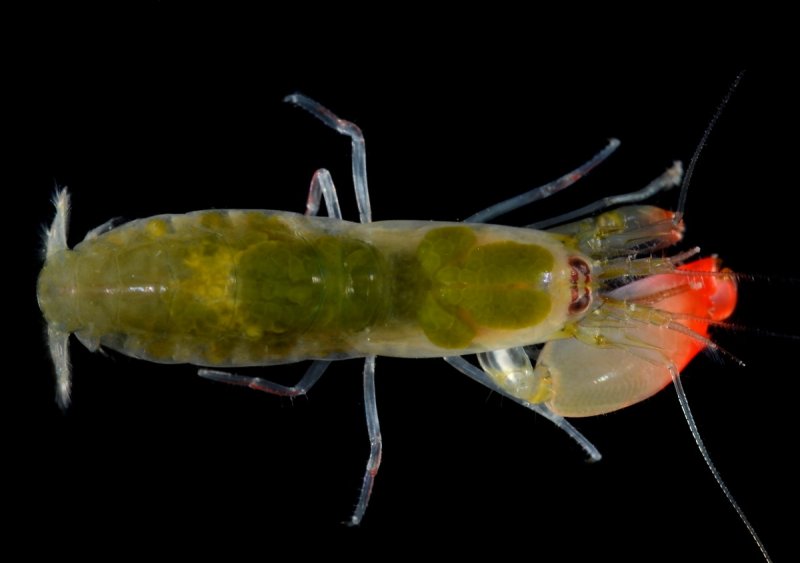
The newly discovered species of pistol shrimp: Synalpheus pinkfloydi
(c) Arthur Anker

Another illustration celebrates Synalpheus pinkfloydi
(c) Chris Jarvis
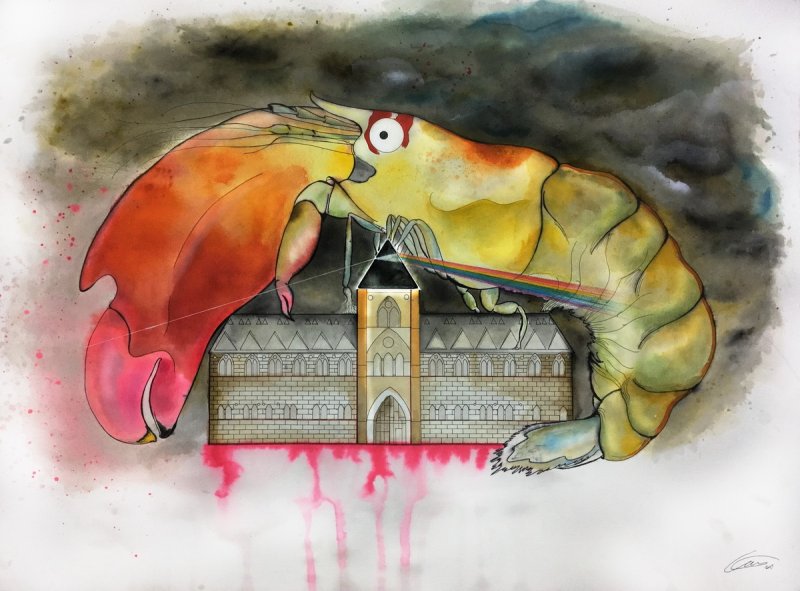
Another shrimp in the wall
(c) Kate Pocklington
Bài viết này được dịch tự động và có thể chứa một số lỗi nhỏ; vui lòng tham khảo bản gốc tiếng Anh nếu có thắc mắc.