Reef fish inherit tolerance to the warming of the oceans
environmentmarine lifeclimate changereef fishgenetic adaptation
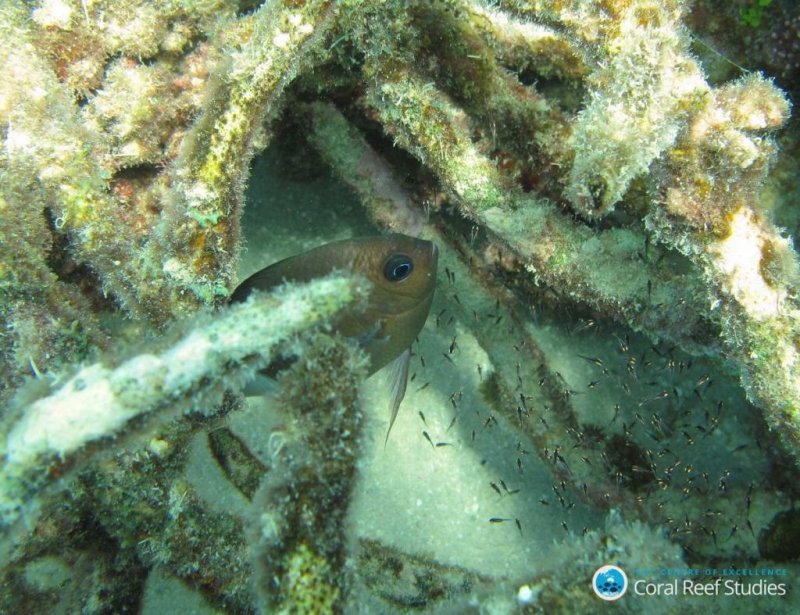
A spiny chromis hiding amongst coral rubble on the Great Barrier Reef.
von ARC CoE (c) Coral Reef Studies/ Jennifer Donelson
Thanks to mom and dad, baby reef fish can adapt to higher water temperatures In a rapidly changing climate, the decline in animal populations is a major problem. Now, an international research team has gained new insights into the adaptation of reef fish to global warming at the genetic level. Researchers at the ARC Center for Coral Reef Studies (Coral CoE) and the King Abdullah University of Science & Technology (KAUST) have found that reef fish can inherit the genetic tools to adapt to marine warming from their parents. The new study was published in the journal Nature Climate Change. We found that descendants of parent-fish who experience a rise in water temperature have improved their performance under these otherwise stressful conditions - by selectively modifying their epigenome, " explains lead author Prof. Philip Munday of Coral CoE. Epigenetic change refers to chemical changes in DNA signalling the on or off of genes. A number of factors, including illness, famine or heat stress, can stimulate these subtle changes. For the study, scientists exposed parents and offspring to the same elevated water temperatures. They observed responsive changes in the epigenome of the progeny through selective DNA methylation, which enhanced the next generation's ability to cope with the new, warmer temperatures. We raised two generations in water with three different temperature levels, which were up to three degrees Celsius above today's ocean temperatures, and the next generation appeared to be favoured by parental exposure to elevated temperature. Simply said, this is known as 'acclimatization' and allowed them to maximize oxygen consumption and energy consumption, " says co-author Prof. Timothy Ravasi of KAUST. Acclimation can protect populations against the effects of rapid environmental change and provide time for genetic adaptation, " said Prof. Munday. The authors of the study conclude that while this is good news for reef fish, the decline in their habitat as a result of climate change will continue to be a priority issue for their survival. Link to the study: www.nature.com/articles/s41558-018-0159-0
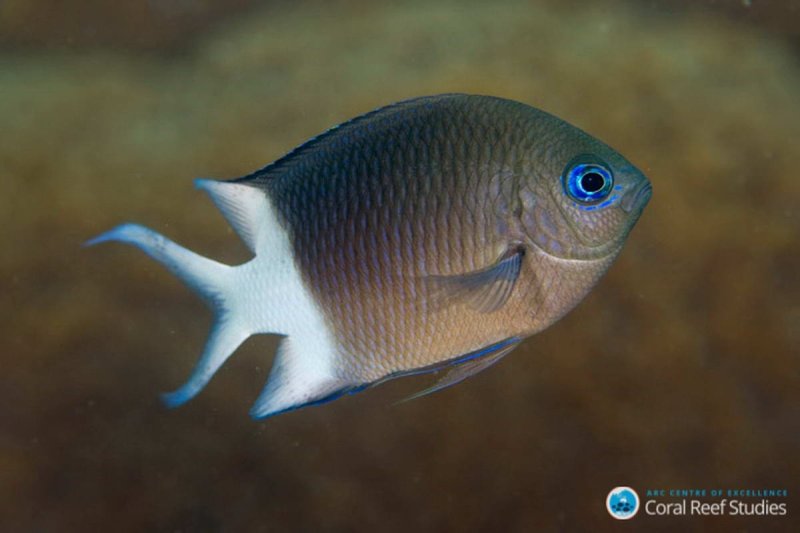
A close up of a spiny chromis (Acanthochromis polyacanthus).
(c) Joao Krajewski
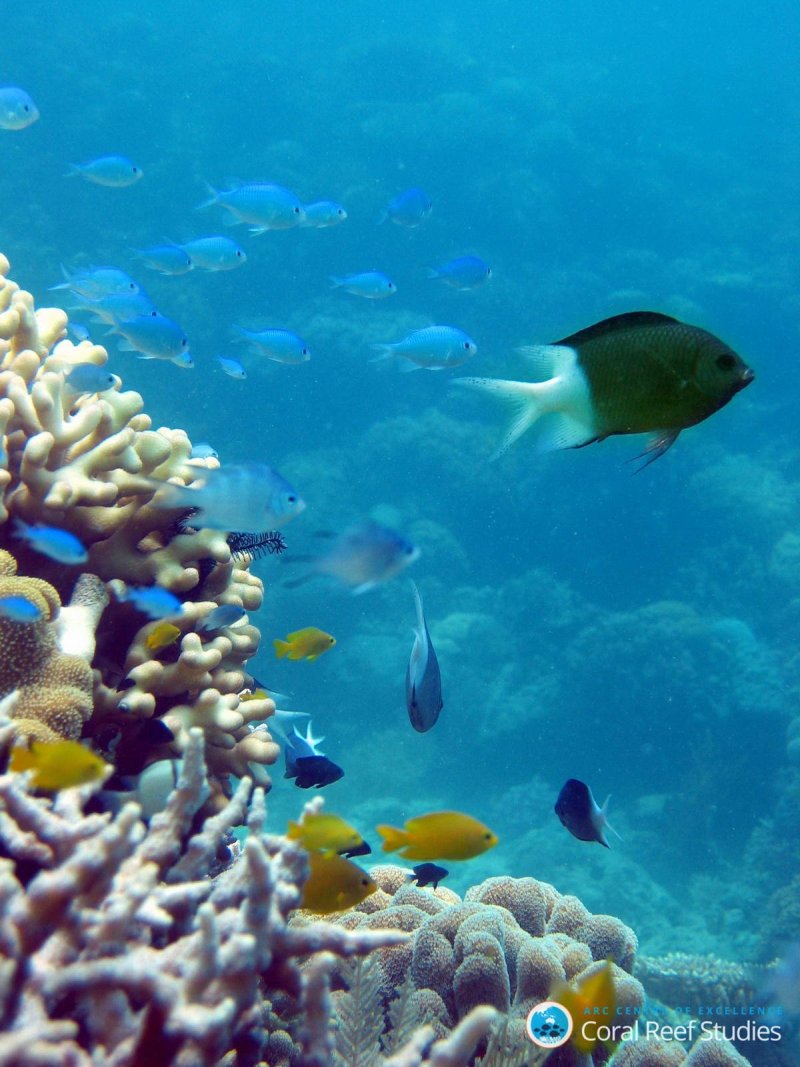
A mature Acanthochromis polyacanthus (spiny chromis) on the Great Barrier Reef.
von ARC CoE (c) Coral Reef Studies/ Mark McCormick