„Measuring Fever“ in the Arctic
environmentclimate changearctic researchoceanographypolar expedition
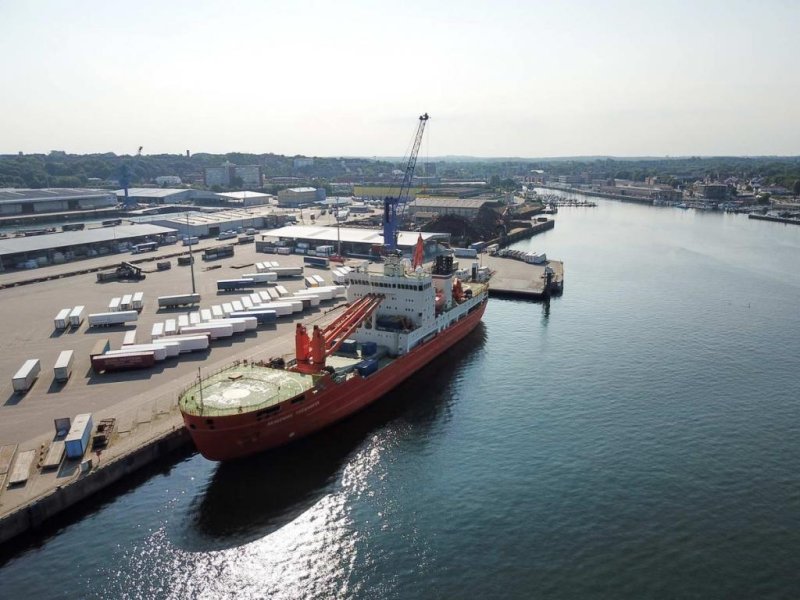
The AKADEMIK TRYOSHNIKOV in early August in the Kiel "Ostuferhafen". (c) Jens Klimmeck / GEOMAR
Two-month expedition into the Laptev Sea started Recently, the Russian research icebreaker "AKADEMIK TRYOSHNIKOV" came to Kiel on a special mission. The more than 130 meter long flagship of the Russian polar research fleet loaded equipment for a two-month expedition to the Siberian Arctic Sea. On August 18, 2018, the trip started with an international research team in Arkhangelsk. Scientists from the GEOMAR Helmholtz Center for Ocean Research Kiel, the Christian-Albrechts-Universität Kiel and the Alfred Wegener Institute, Helmholtz Center for Polar and Marine Research Bremerhaven (AWI) are among the participants. The expedition focuses on investigations into global warming in the key region for Arctic sea ice formation and preparatory work for the wintering campaign MOSAiC with the German research icebreaker Polarstern, which will start in autumn 2019 under the direction of AWI - we reported. Winter temperatures prevail in the Siberian Arctic. Even in midsummer, snow and ice are not uncommon. But even there it has become warmer, and clearly. This is shown by the long series of measurements that the GEOMAR researchers have gained over many years in the Siberian Laptev Sea. Among other things, the forthcoming expedition will seek to gain further insights into how this region, which is important for the formation of sea ice throughout the Arctic, is changing. As part of the Russian-German research project 'CATS - The Arctic Transpolar System in Transition', a consortium of ten German and Russian research institutes and universities is investigating how climate change affects the extremely sensitive Arctic habitat and to what extent the changes are affecting Europe's climate concern, " explains Dr. Heidemarie Kassens from the GEOMAR, who is leading a section of the now launched expedition. During the expedition, oceanic long-term observation stations, so-called anchorages, are being serviced, as well as sampling in the water column. " We are especially interested in the behaviour of the circum-arctic rim current, which carries large amounts of heat along the continental slope that could potentially melt the entire Arctic sea ice cover if it penetrates near-surface layers, " Dr. Kassens. In addition, preliminary work will be carried out as part of the expedition for the wintering campaign of the German research icebreaker "Polarstern", which will start in the autumn of 2019 in this region. " We will be taking measurements in the region a year earlier, where 'Polarstern' will begin her expedition through the Arctic ice next year, " said Dr. Benjamin Rabe from the AWI, acting scientist for this section of the journey. For this purpose, the research icebreaker will travel further north through the Arctic ice and deploy autonomously measuring buoy systems. The systems anchored in the ice are designed to carry out measurements in the near-surface atmosphere, the ice and the upper ocean over a year on similar paths as the Polarstern within the framework of MOSAiC. Researchers will also measure ice and snow thickness and oceanographic measurements in the water column in the region. More information: https://www.transdrift.info.
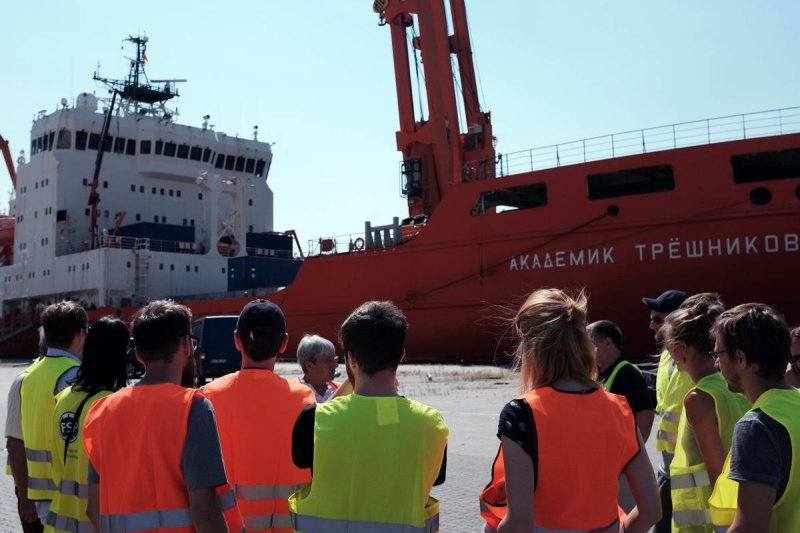
The expedition team took the opportunity to visit the accommodation and work spaces on board in Kiel. (c) Jan Steffen / GEOMAR
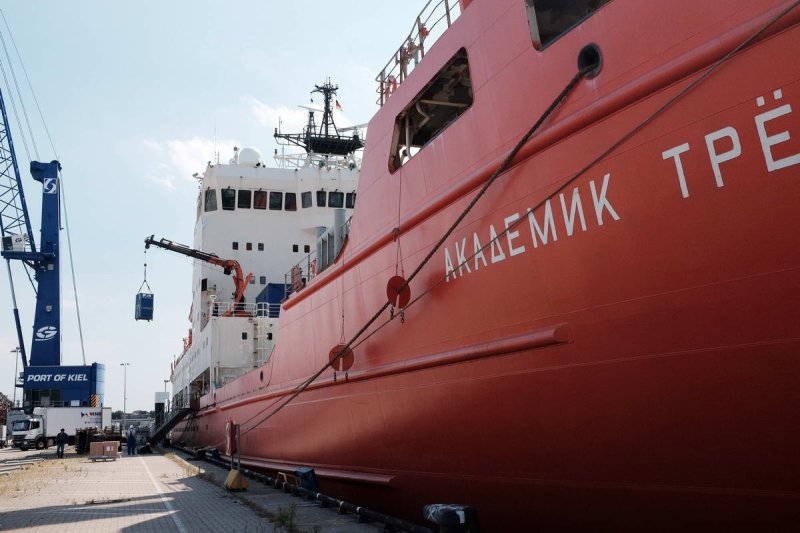
In Kiel, the equipment for the almost two-month expedition has already been loaded. (c) Jan Steffen / GEOMAR
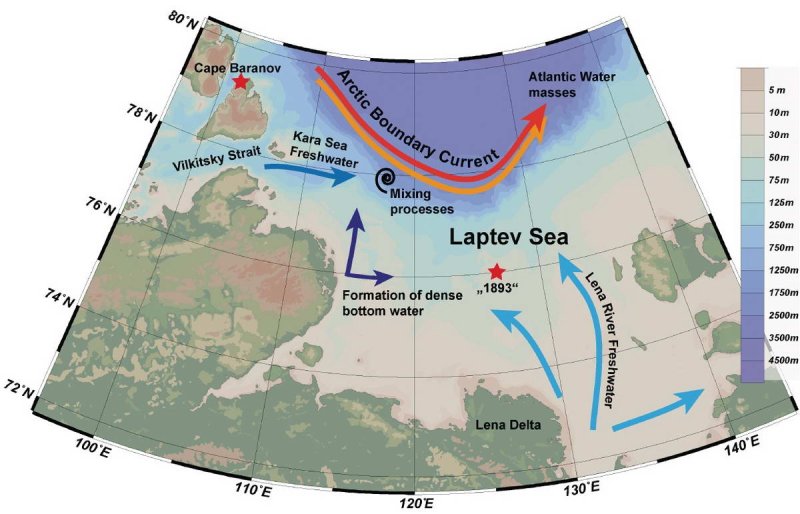
The field of work of the now beginning expedition lies among other things in the East Siberian Laptev Sea. Graphic (c) GEOMAR
Bài viết này được dịch tự động và có thể chứa một số lỗi nhỏ; vui lòng tham khảo bản gốc tiếng Anh nếu có thắc mắc.