Sharks sanctuary or slaughter – contradiction in paradise
scuba divingenvironmentmarine conservationtourismsharks

Fishing boat fished shark out of the water, pulled onto the deck, including larger species such as adult copper sharks, with iron grab hooks.
(c) Jens Höptner
South Africa: What are you doing?
South Africa is blessed! There is hardly another country on Earth that has so much untouched beauty and such spectacular biodiversity.
The Republic of South Africa is committed to preserving its valuable resources through protected zones and national parks, and by engaging ranger units to rigorously monitor and control poachers that hunt for ivory, rhinoceros horn or coveted animal skins.
The "Big Five" make their home here, attracting thousands of tourists year after year amidst the beautiful nature of the Cape region. Elephants, rhinoceros, buffaloes, lions and leopards make up the core components of a profitable industry: tourism.
Actually, a focal point of national parks' marketing now even involve the "Big 7", which includes sharks and whales.
It's a well-known fact that the great white shark is generally not well liked by people (even its name is a metaphor for a bloodthirsty individual)– except for divers. Nevertheless, the fact that this majestic animal is mercilessly slaughtered every year – often illegally – for their fins is no longer tolerated in the public.
Contrary to all the findings, it does not fit at all into the picture of the "paradise" of South Africa, with official licences for shark fishing on its shores being issued, thereby jeopardising its own good reputation and flourishing diving tourism.
In addition, as game fishes, mako and blue sharks are not protected. Either species can be fished by anyone who buys a licence through the mail for six Euros. This also applies to tiger sharks and other shark species.
It is only in the MPAs (Marine Protected Areas) are all animals are protected. However, South Africa appears to have contradicted its own environmental stand by allowing limited fishing within the Tsitsikamma Marine Protected Area – the country's oldest MPA – for political reasons since 2016.
Jens Höptner is one of many South Africans in the large European dive community. He feels a special attraction to the Sardine Run and to the species-rich waters of South Africa's eastern coast, around Port Elizabeth.
Already, the 51-year-old certified engineer from Warnemünde has been to South Africa seven times. Surfing, scuba diving and the wonderful nature are an alluring combination for this dedicated conservationist. Having just returned to the Baltic Sea, the memory of his experiences has been firmly etched in his memory – images that shocked him and shattered his belief in man's rational insight:
" We were on the road with RainerSchimpf from Expert Tours. Went out to sea on the boat in search of sardine swarming and to snorkel with whales and dolphins. It is an indescribable feeling to be escorted by hundreds, maybe thousands, of dolphins gliding over the sea. You can even watch orcas when they hunt or witness the spectacular Sardine Run," Höptner enthused about his experiences on South Africa's eastern coast. Unfortunately, he also witnessed a very different spectacle during one of the trips. About 45 kilometres off the coast in the Algoa Bay area, a South African fishing boat fished shark out of the water. Captured with the longline, young sharks were pulled onto the deck, including larger species such as adult copper sharks, with iron grab hooks – completely uninhibited and without being bothered by the 'astonished dive tourists'. Why, this spectacle was actually quite legal, with official state approval. "It was a cruel act and I will never ever forget those images," said Höptner. Schimpf further clarified: "Fishing licences are awarded for certain types of ground sharks. The fact that, in the case of longline fishing, larger sharks of other species – of course, completely intentionally – end up as 'bycatch' on board the fishing boat is quietly accepted. "
The extent of damage to the shark population caused by this "use of the marine resource" is controversial. More and more divers are seeing sharks swimming around with hooks and lines – or even steel hooks – in their mouths. Such images destroy the strong spirit and raw beauty of this massive creature.
Höptner dipped his fingers deeper into the wound. "Ilove this country and recommend South Africa as a destination. Only, what is happening at the coasts does not at all reflect what the friendly people, the wonderful nature and the state of South Africa have so far to offer as its unique qualities," said the enthusiastic diver and surfer.
To remedy the situation, he wrote letters to the relevant authorities in South Africa. His mails to the tourism and fishery authorities of the eastern Cape region remained unanswered. Later, he received a concise explanation that the vessel in
question had a licence for the long-line fishing of dogfish and was by no means acting illegally.
Even TUI, the big tour operator in South Africa, did not reply. Only after repeated tries did the active conservationist get a response from the TUI headquarters in Hanover: "Wehave learnt about the permits for shark hunting. In this context, we would like to draw attention to the findings of the TEEB study assessing and explaining the value of maintaining the ecosystem and biodiversity for a destination and its inhabitants," wrote Mike Brauner, TUI's Senior Manager Sustainability.
A clear statement looks different; but after all, the problem at TUI is clearly understood. It would have been possible to briefly explain that it has been proven that the economic value of a strong shark population is significantly higher than the total sale of slaughtered sharks in the form of meat or fins. On the other hand, sustainability, resource protection and respect are concepts that are quite different from the actual animal.
And so, this contradiction in paradise will probably persist, in this land of wonderful sunsets, with herds of elephants, buffaloes, zebras, antelopes and gazelles crossing the savannahs. Don't forget the lions, cheetahs, hyenas and vultures that are constantly following them, looking for their next meal. And, of course, the sharks off the coast of South Africa, which leave bloody traces on the sides of fishing trawlers, being the victims of a species fuelled by a greed that violates all laws of reason.
Further information:
TEEB
Article on the economic value of a strong shark population.
South Africa: Sardine Run Adventure 2017
For those who love the beautiful coasts of South Africa, Rainer Schimpf from Expert Tours offers a special introductory trip there, with seven more places for special conditions. Interested? Click here
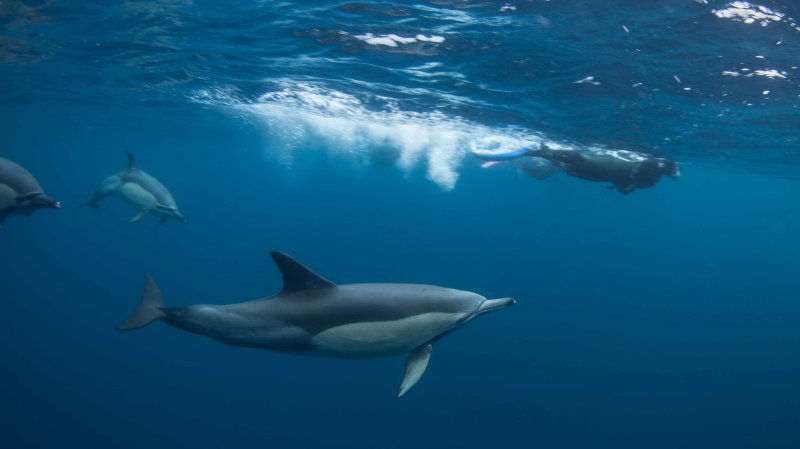
Sardine Run: Snorkelling with Dolphins
(c) Rainer Schimpf
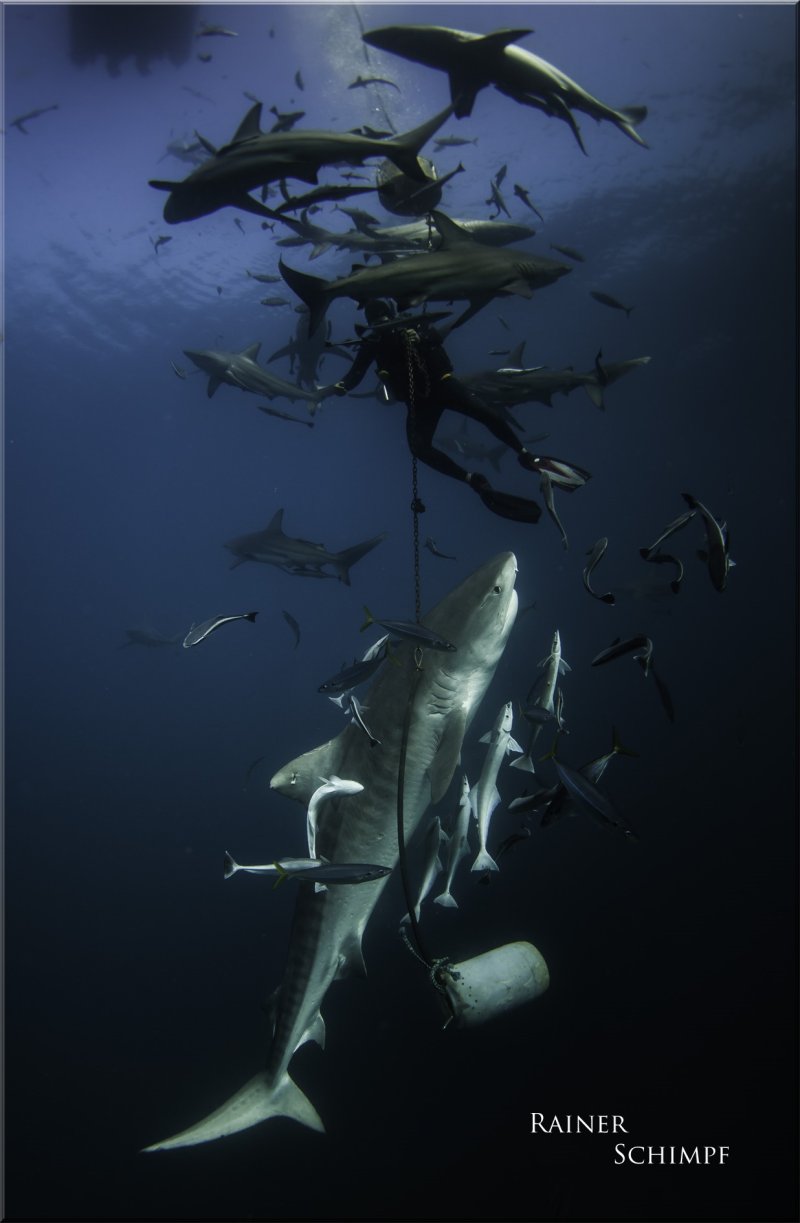
Sharks everywhere (c) Rainer Schimpf
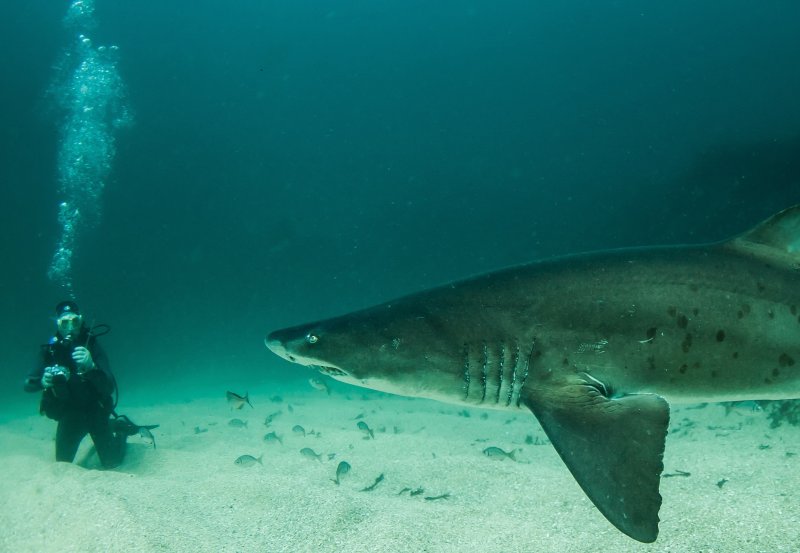
Sand tiger shark
(c) Rainer Schimpf
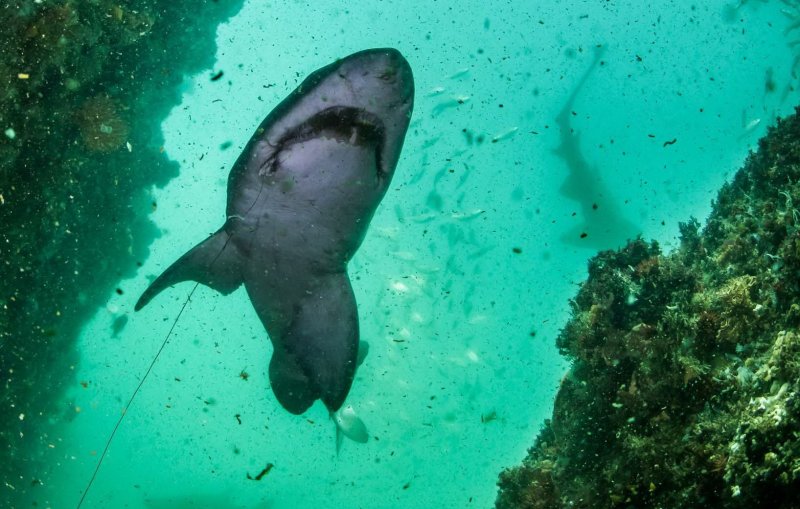
Sand tiger shark swimming around with a hook and line in his mouth (c) Rainer Schimpf
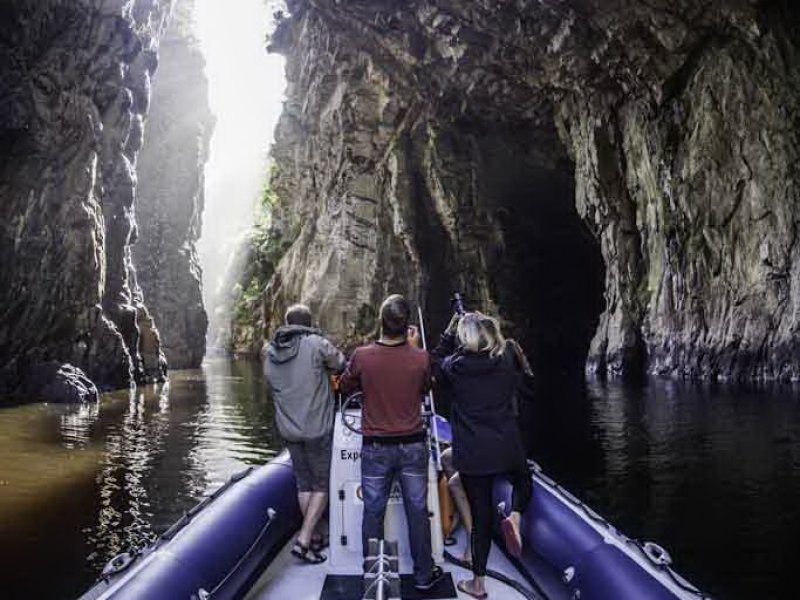
The marine nationalpark MPA "Tsitsikamma" (c) Rainer Schimpf

The fishing boat with
Ця стаття була автоматично перекладена та може містити незначні неточності; у разі сумнівів зверніться до оригінальної англійської версії.