Four newly discovered species of flatworms named
environmentmarine lifemarine biologydeep-sea explorationevolution
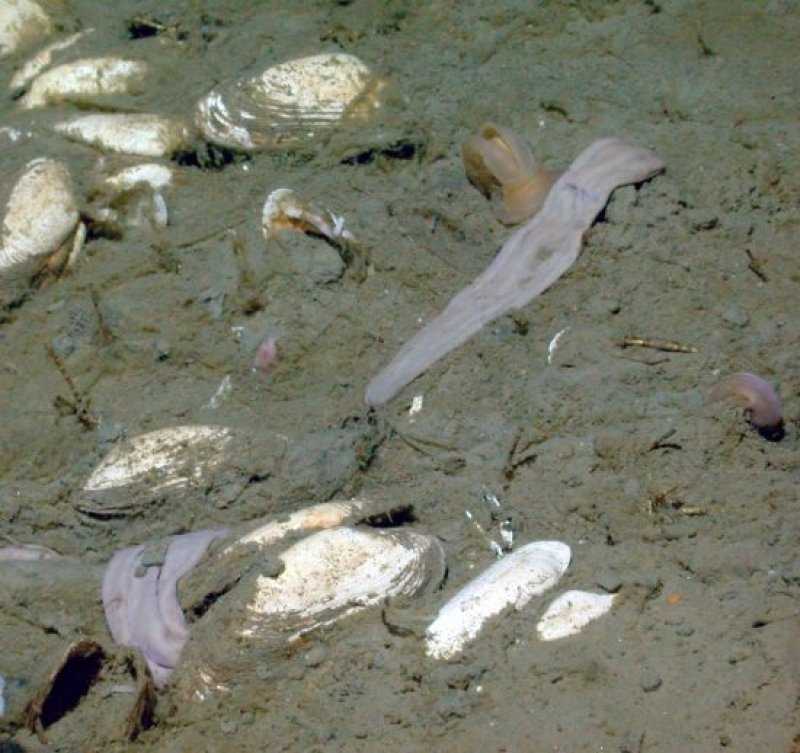
The number of animal species known to us just been increased by four, thanks to MBARI (Monterey Bay Aquarium Research Institute) molecular biologist Robert Vrijenhoek and his team. Vrijenhoek's recent paper, published in Nature, describes four newly named flatworm species in the genus Xenoturbella. Discovered in Monterey Bay and the Gulf of California, they turned out to be one of the most primitive animals with bilateral symmetry, and had mouths, but no eyes, brains, stomachs or anuses. Way back in 1950, the first (and only previously known) species of Xenoturbella was discovered in the waters off Sweden. Biologists at that time couldn't determine which phylum it belonged to, but the DNA studies had suggested it was a a primitive mollusc. However,
this was refuted, as it turned out that the analysis had been based on the worm's stomach contents, and not the worm itself. Subsequently, it was suggested that the animal could have been part of a group of animals that included acorn worms and sea stars. This would imply that its body plan had actually become simpler over time, as it does not have many of the body features found in other animals in these groups. Vrijenhoek's study, based on the analysis of 1,200 different genes, places Xenoturbella and another group of flatworm-like animals (acoelomorphs) as the closest relatives to all other animals with bilateral symmmetry. Doing so means that these animals never evolved brains or other organs, prompting Vrijenhoek to say that the worms provides a glimpse into one of the earliest body plans in animal evolution. In the course of their research, lead author of the study Greg Rouse (from the Scripps Institution of Oceanography) used ROVs to collect the flatworms during dives in Monterey Bay and the Gulf of California. All the four species of worms had been found near deep-sea cold seeps and hydrothermal vents where they are believed to have fed on clams and other molluscs. The deepest of the four species Xenoturbella profunda, had been found 3,700 metres below the surface of the Gulf of California, at a hydrothermal vent in the Guaymas Basin. The second species, Xenoturbella churro, was discovered at a cold seep in the Gulf about 1,700 metres deep; it was so named because the researchers thought it looked like a type of Mexican pastry. The other two species had been discovered deep in Monterey Canyon. Incidentally, all four species were purplish gray. As Vrijenhoek recounted, "When Greg first spotted these worms gliding through a clam field in Monterey Bay, we jokingly called them purple socks. Hence, the third species was named Xenoturbella monstrosa. The fourth species found in Monterey Canyon was named Xenoturbella hollandorum, after evolutionary biologists Linda and Nick Holland. Co-authors of the study are Vrijenhoek, Jose Carvajal of Scripps and Nerida Wilson of the Western Australian Museum. In the animal tree of life, these worms may slither at the bottom. However, they may hold the key to a greater insight into evolutionary biology. For example, they may help us discover how internal organs like intestines and brains (which they lack) evolve over time. Not a bad destiny for a creature that looks like a purple sock!
Este artigo foi traduzido automaticamente e pode conter pequenas imprecisões; em caso de dúvida, consulta a versão original em inglês.