Breath hold: Relaqua the idea of relaxation in the water
freedivingapneayogarelaxationmeditation
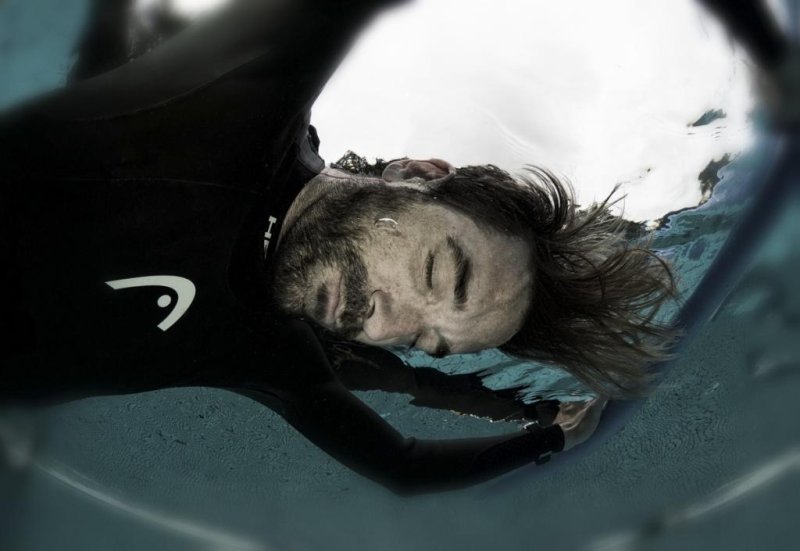
There are people who dive hundreds of feet, deep and over ten minutes with just one breath. Nik Linder is such a diver who has broken some world records in the discipline of Dynamic apnea under ice in his career. Nik is an apnea diver and tries to dive as far, deep or long as possible with one breath.
But why should that help me to feel better? What use is it to hold your breath for a long time or in other words "what can we learn from the freedivers"?
The most important skill of the freediver is to be able to relax; indeed relax to the point. He uses techniques from meditation, autogenic training, progressive muscle relaxation and pranayama - the breathing part of yoga. Apnea divers must achieve their performance with as low a pulse as possible. If the pulse is too high, then the body consumes too much oxygen. The freediver relaxes to perform.
He manages to use his lungs optimally. While breathing rather shallowly in everyday life, he can consciously use his breathing to lower his pulse, get into meditation, cleanse the lungs, concentrate better and much more. Due to the increased attention to the respiration, he notices faster when he has stress and thereby the breathing changes.
In addition, he uses a body-own relaxation mechanism, the so-called dive reflex. When you put your face in the water, the pulse immediately is lowered, which relaxes body and mind. In addition, due to this effect, the lungs and the brain experience a luxury circulation - oxygenated blood is transported to the vital organs.
Incidentally, freedivers and yogis do not talk about holding their breath, but of "respite" - when we are no longer distracted by breathing, this opens a window to the inside. We are even more open to meditation. The meditation is particularly good to experience in the water, because here we are weightless and meaning reduced. The normally dominant senses, such as listening and seeing, come to rest. We take ourselves better. As a result, we may experience our slow heartbeat or even have a moment of "no mind" - a time when we do not drown in thought.
Nik Linder was a successful apnea athlete and at some point wondered why, in times of mental fatigue, depression and burnout, no one had the idea to use the knowledge of freediving to relax – no thought about records or performance – just the idea of relaxing. This is how the "Relaqua" concept developed, which he developed in parallel with the apnea diving. In the book "Apnea and Meditation", the reader learns how to easily integrate breathing and meditation into everyday life. In his courses and workshops that he and his coaches offer worldwide, every beginner can have this experience or pass it on after a trainer course.
More Information: www.relaqua.de
Este artigo foi traduzido automaticamente e pode conter pequenas imprecisões; em caso de dúvida, consulta a versão original em inglês.