Nanoplastics in the sea causes brain damage in fish
environmentmarine lifefishnanoplasticsbrain damage
Smallest plastic particles in the food chain
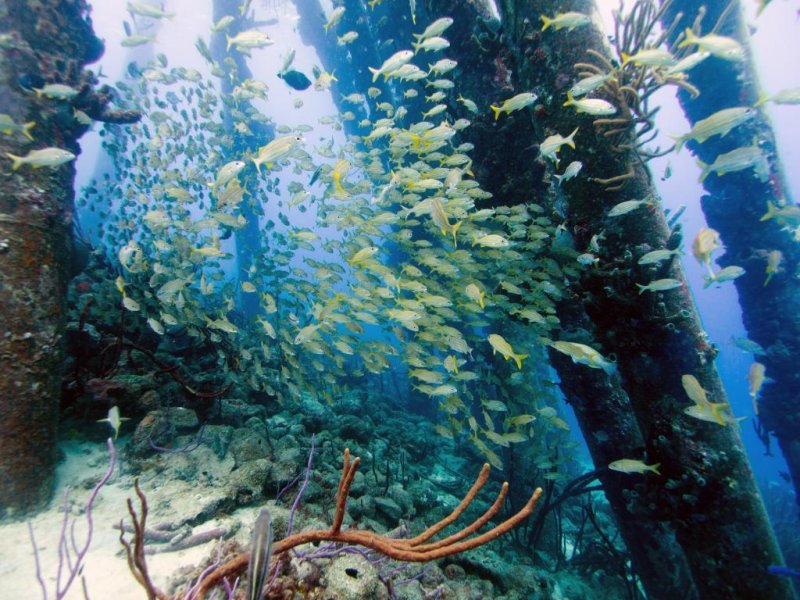
A study by the University of Lund in Sweden shows that plastic particles in the water can eventually end up in the brains of fish. There, the so-called nanoplastics can cause brain damage and lead to behavioural problems in the fish.
Around ten percent of all plastics produced worldwide end up in the oceans. This plastic pollution is one of the most serious environmental problems, but few scientific studies have investigated the effects of tiny plastic particles, called nanoplastics, which are even smaller than the oft-cited microplastics.
"Our study is the first to show that nanoparticle particles can accumulate in fish brains," says Tommy Cedervall, a chemist at Swedish University Lund and lead author of a study published in the journal Nature.
The researchers investigated how nanoplastic particles can be transported by various organisms in the aquatic ecosystem, i. about algae and animal plankton to larger fish. Tiny plastic particles in the water are eaten by animal plankton, which in turn is eaten by fish.
Scientists have studied how plastic of different sizes affects aquatic organisms. Above all, they provide evidence that tiny particles can actually cross the blood-brain barrier in fish and thus deposit themselves in the brain tissue of the fish.
In addition, the researchers have demonstrated the occurrence of behavioural problems in fish affected by nanoplastics: they eat more slowly and explore their surroundings less. The researchers believe that these behavioural changes may be associated with brain damage caused by the presence of nanoplastics in the brain.
Another result of the study is that animal plankton dies when exposed to nanoplastics, while larger plastic particles do not affect it. Overall, these different effects can affect the entire ecosystem.
"Nanoplastics are likely to have a more dangerous ecosystem impact than larger plastic parts," says Cedervall.
So far, the researchers see no evidence that nanoplastics also accumulate in the tissue of the fish and thus could potentially be transmitted by eating on humans.
Information: https://www.lunduniversity.lu.se.
Link to the study: https://www.nature.com/articles/s41598-017-10813-0.
Ten artykuł został przetłumaczony automatycznie i może zawierać drobne nieścisłości; w razie wątpliwości zapoznaj się z oryginalną wersją angielską.