Methane as basic food: Special ecosystem discovered in Mexico's water caves
scuba divingenvironmentfreedivingextended rangecave divingmethaneecosystem
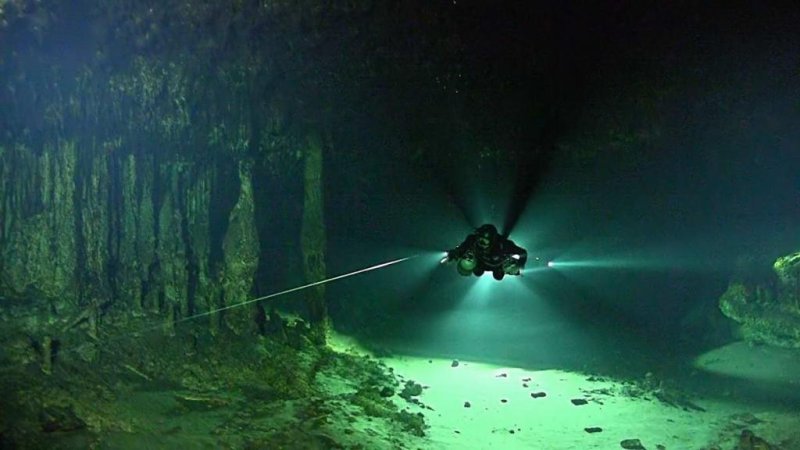
Diver (Bil Phillips, cave explorer) in Ox Bel Ha Cave System in the Yucatan Peninsula.
(c) HP Hartmann
Methane forms foundation of the food chain in caves of Yucatan In subterranean rivers and caves on the Mexican Yucatan Peninsula, scientists have found an ecosystem that they did not expect. The basis for life in this dark environment is methane and the bacteria that feed on it. Similar ecosystems have so far only been known from methane sources of the oceans and deep lakes.
An international research team with the participation of the University of Basel reported on this special collaboration in the journal Nature Communications.
Among the barren, calcareous soils in the northern Yucatán area, there is a widely ramified cave system with numerous underground water passages. The flooded caves contain layers of both fresh water from precipitation and saltwater from the nearby ocean.
The funnel-shaped sinkholes that provide the population with access to fresh water are also widespread. The Mayans saw the sinkholes as entrances to the underworld and sometimes used the caves as places of worship and sacrifice.
Researchers dive The most recent study of the vast Ox Bel Ha Cave Network in the northeast region of the peninsula – arguably the largest contiguous such system ever – is considered the most detailed of its kind so far.
The field expeditions and sampling were conducted by scientists from the US and Mexico. The main authors of the study – David Brankovits, a doctoral student at Texas A & M University, and John Pohlman from the United States Geological Survey – had been trained specifically in cave and mixed gas diving.
Particularly in the Yucatán Caves, the methane formed under the forest soils migrates downwards, so the methane-rich and oxygen-free water layer is at the top; in deep lakes, it is usually the other way round.
Dr. Helge Niemann and Prof. Dr. med. Moritz Lehmann from the Department of Environmental Sciences at the University of Basel are now able to prove the foundation of the food chain in the caves: methane as an energy source and microorganisms that feed on it.
The researchers gained their insights through mass spectrometry analyzes of the carbon isotope ratios of the fatty acids from cave shrimps that absorb methane and microorganisms.
Survival in the dark Crustaceans, found in astonishing variety in this otherwise low-food environment, feed on the methane; in fact, it can comprise up to a fifth of their diet.
"Little was known about the carbon cycle in these dark, enclosed cave systems," Lehmann commented. "Now it becomes clear why living things in such caves can survive in crystal clear water with no visible traces of food."
Previously, it was assumed that most of the organic matter in the subterranean caverns came from the detritus of vegetation, which were flushed down by the sinkholes. Processes similar to those found in the Yucatán peninsula's underground water systems also occur in the area of methane sources in the deep sea as well as in some lakes where a great amount of methane escapes from the sediments and accumulates.
More Information: www.unibas.ch
Link to the study www.nature.com/articles/s41467-017-01776-x
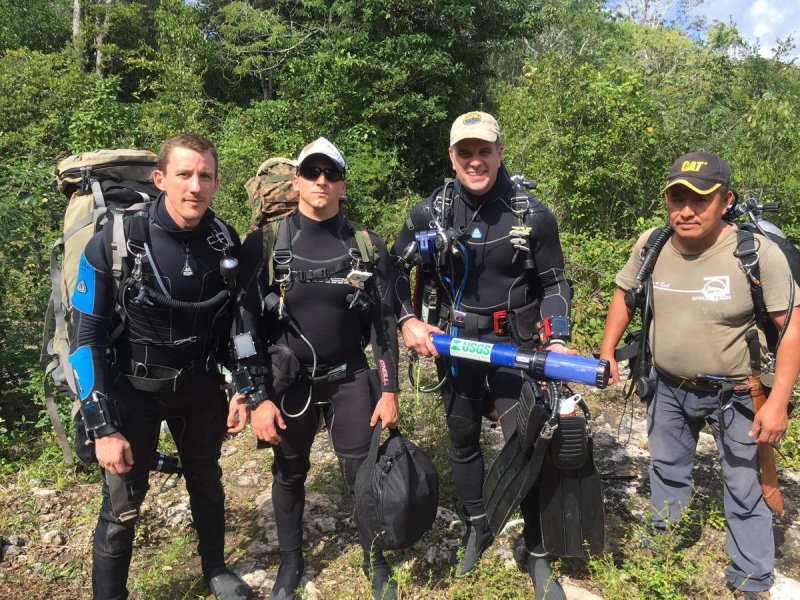
The team in the Yucatan Peninsula
(c) John Pohlman
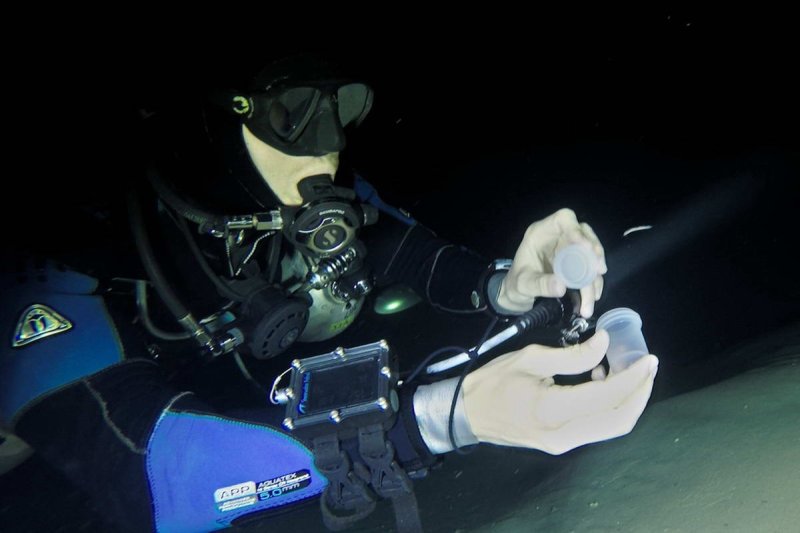
Diver (David Brankovits) collecting cave-adapted animals for the study in the Yucatan
(c) Balazs Lerner
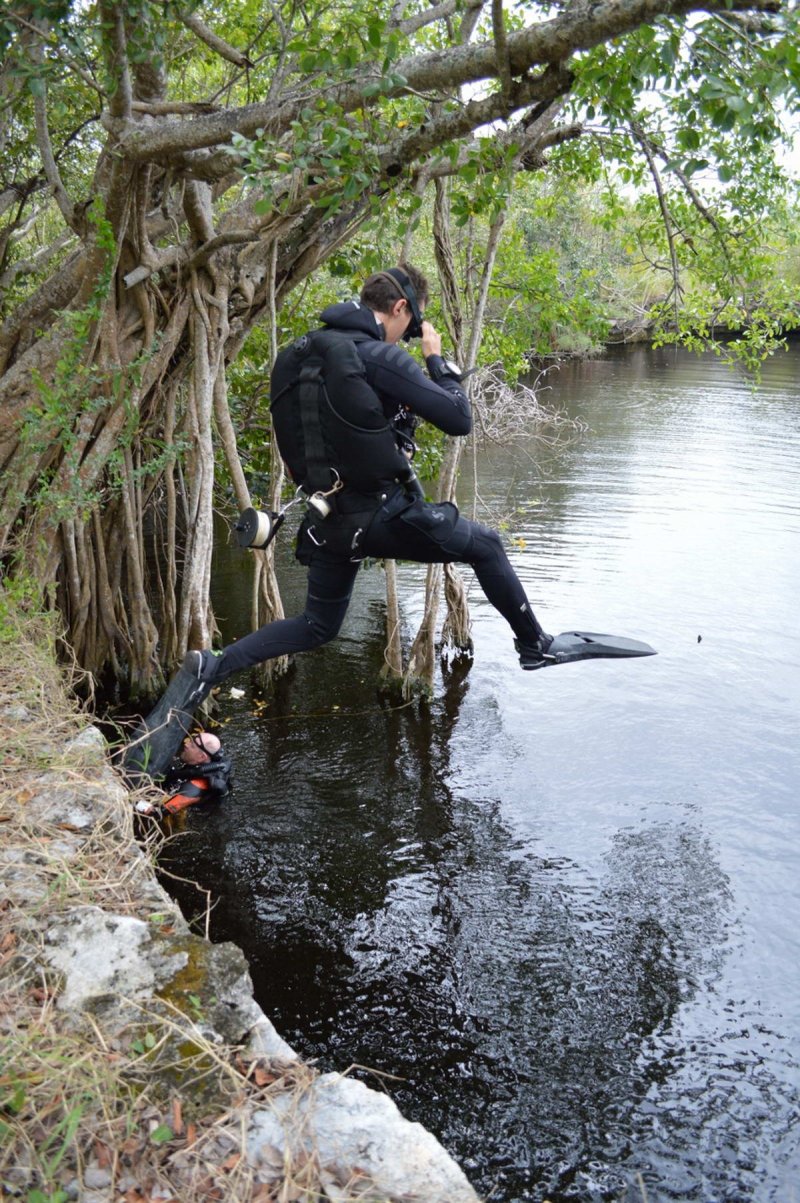
Divers (David Brankovits and Tom Iliffe) entering a cenote in the Yucatan Peninsula
(c) Sergio Benitez
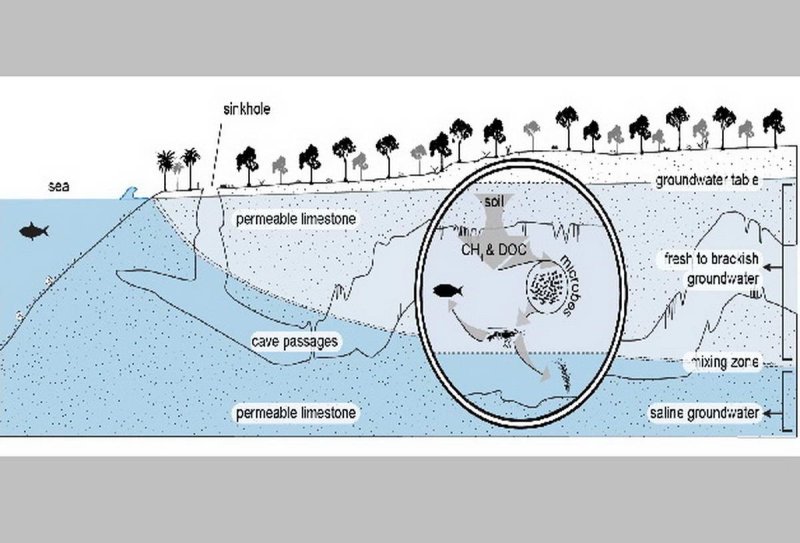
Summary of findings from the Ox Bel Ha Cave System
Ten artykuł został przetłumaczony automatycznie i może zawierać drobne nieścisłości; w razie wątpliwości zapoznaj się z oryginalną wersją angielską.