Parasites liquefy dead fish
environmentmarine lifemarine researchparasitesfish
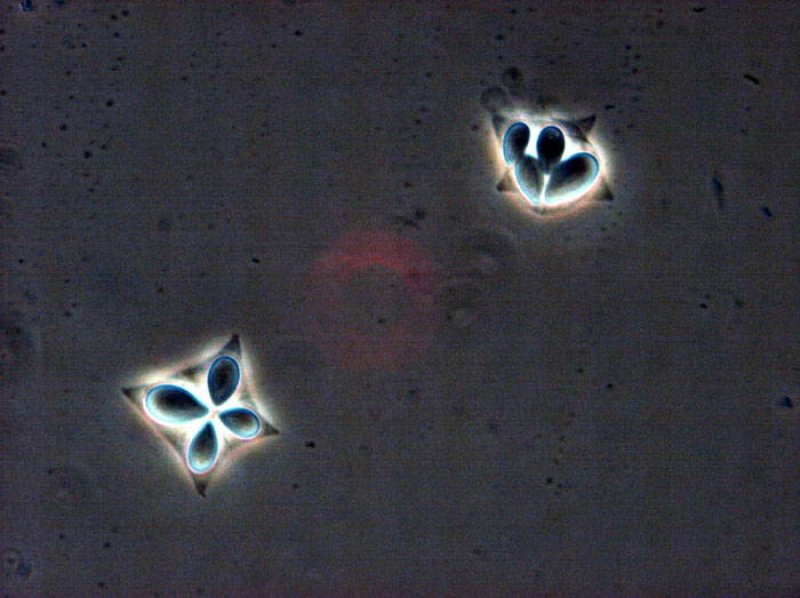
Two Kudoa spores as seen in thousandfold magnification, © Arne Levsen / Institute of Marine Research
The Kudoa-thyrsit converts fish meat to slimy mush When the host dies, microscopic Kudoa spores begin to digest the fish's flesh. Once they have completed their work, you could drink the fish with a straw... Kudoa are not harmful to humans or for live fish. However, the myxosporean parasite have the potential to adversely affect the sale of fish, " said the Parasitologin Lucilla Giulietti by the Norwegian Institute of Marine Research, which studies the parasite as part of her doctoral thesis. The Kudoa-Thyrsit is microscopically small - a tiny spore, related to nettle species such as jellyfish, corals and sea anemones, causing post-mortem "myoliquefaction", a softening of the flesh to such an extent that the fish becomes unmarketable. The Kudoa spores invade the muscle tissue of the fish in a way that is unknown to science. They rest there until the fish dies. Post mortem, the parasites begin to produce enzymes that "digest" fish meat. Within 24 to 36 hours, it is liquid and looks like a slimy fish mush. The difficulty is that the fish looks absolutely good right after the catch. It can reach the fish counter and even a customer before the meat is liquid, " said Giulietti. In this case, the customer will experience an unsavory surprise. " In Peru, for example, this happens to about half of all hake, an ordinary fish. Many people there think it’s normal that fish fillet looks like this after a few hours, " she explains. By monitoring Norwegian mackerel catches over the past fifteen years, scientists have found Kudoa parasites in up to one percent of the fish caught. " Kudoa are a worldwide group of parasites found in many different species of fish, " explains Giulietti. At the request of the fishing industry, the Norwegian Institute of Marine Research investigates mackerel catches directly on board the cutters or trawlers for microbes and parasites. While some parasites benefit from climate change and proliferate in warmer waters now, the researchers have observed fortunately no increase in the number of Kudoa in the last fifteen years. "But in 2002, there were large outbreaks of a species of Kudoa in Canadian farmed salmon that caused significant financial losses, and the responsible parasite appears to be the same species found in Norwegian mackerel," explains Giulietti.
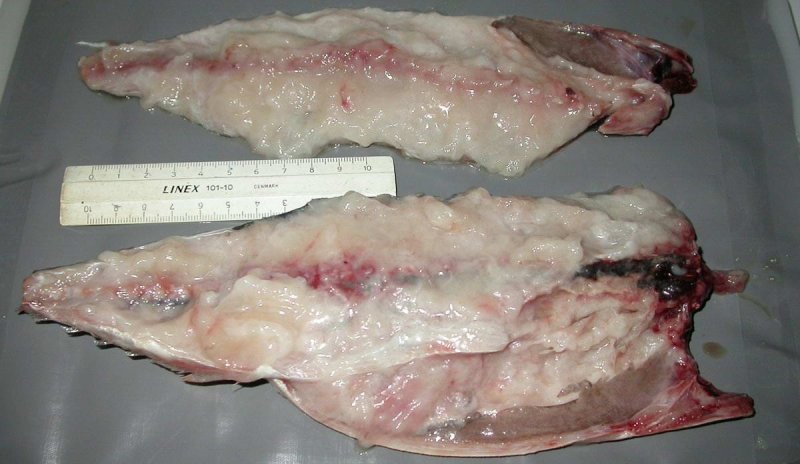
Soft meat: Mackerel fillets that are heavily infested by Kudoa thyrsites, © Arne Levsen / Institute of Marine Research
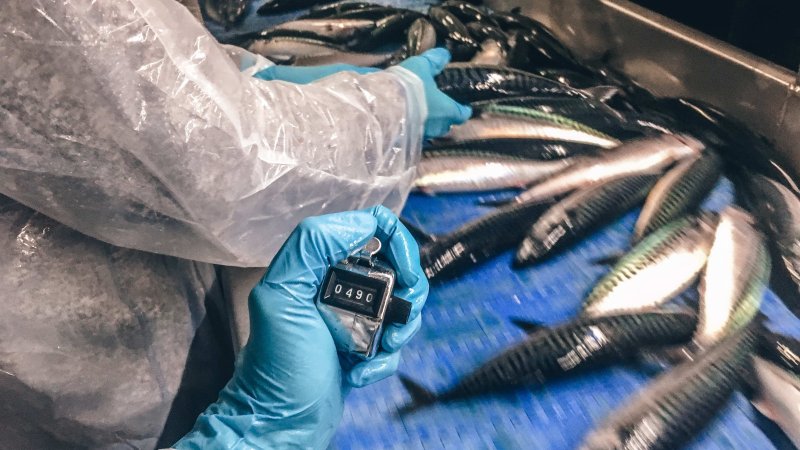
The researchers studied the fish directly after landing: by squeezing, they found soft meat and Kudoa in 0.33 percent of 3,000 fish, © Paolo Cipriani / Havforskningsinstituttet
이 기사는 자동 번역되었으며 약간의 오류가 포함될 수 있습니다. 의심스러운 점이 있으면 원문 영어 버전을 참조하십시오.