Tuna fishermen can save sharks by sharing information about sustainable fishing methods
environmentmarine conservationoceanbycatchsustainable fishing
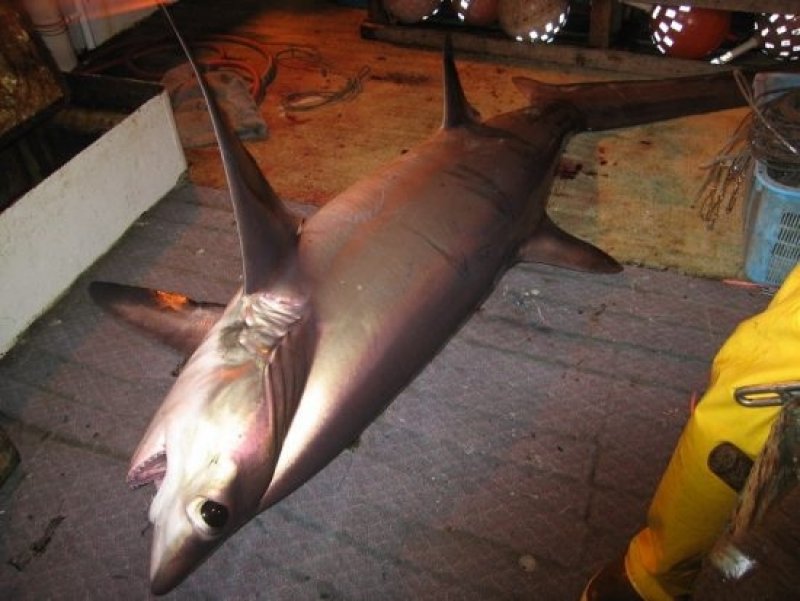
Bycatch - Thresher Shark (c) NOAA Fisheries
Thousands of sharks become bycatch and perish on longlines meant for tuna
Tuna fishermen who share information with other fishermen have the opportunity to prevent thousands of sharks in the Pacific from ending up as bycatch on longlines every year.
Researchers at the ARC Centre of Excellence for Coral Reef Studies at James Cook University and the University of Hawaii postulate that if fishermen communicated more with rival fishermen, this could lead to more sustainable fishing methods.
They published their findings in a paper "Social Networks and Environmental Outcomes" in the journal Proceedings of the National Academy of Sciences of the United States of America.
"Forty-six thousand sharks could have been saved if information about avoiding sharks was shared freely between fishing groups," said lead author Michele Barnes. After interviewing longline tuna fishermen, she discovered that there were three distinct groups of fishermen. In essence, the fishermen tended to communicate mainly with those fishermen whom they found to be more similar to themselves.
The formation of such "cliques" restricts the communication of strategies on how to avoid bycatch beyond the group.
Bycatch – the accidental capture by fishermen of non-target animal species – is a global problem. Longlines for tuna can spread across the oceans for up to about 45 nautical miles (about 84 kilometres), and can have thousands of hooks each. As many as 100 sharks may perish on a single line.
" Shark bycatch has significant ecological implications because many species of shark are in sharp decline, but when sharks are accidentally caught, there are also economic implications because it takes time for fishers to cut them off the line, they risk losing their gear, and it can be dangerous, " said John Lynham, co-author of the study.
" It is unclear whether fishers are even aware that some groups have learnt how to avoid sharks more effectively, so sharing this information with them is the first critical step. Sharks are vital to the health of the oceans, and fishing supports the livelihoods of millions of people across the globe. So when we can find simple, low-cost ways to reduce the number of sharks that are accidentally caught, it's great for fishers, and for the oceans, " said Barnes.
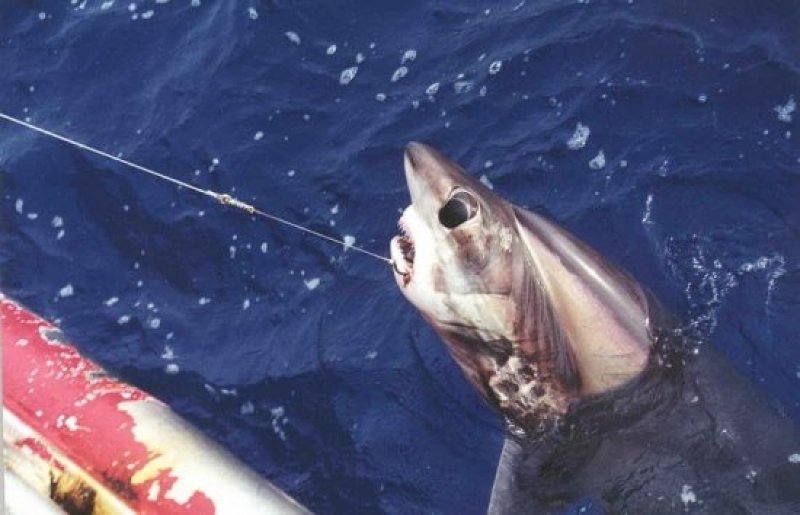
Bycatch - Thresher Shark (c) NOAA Fisheries
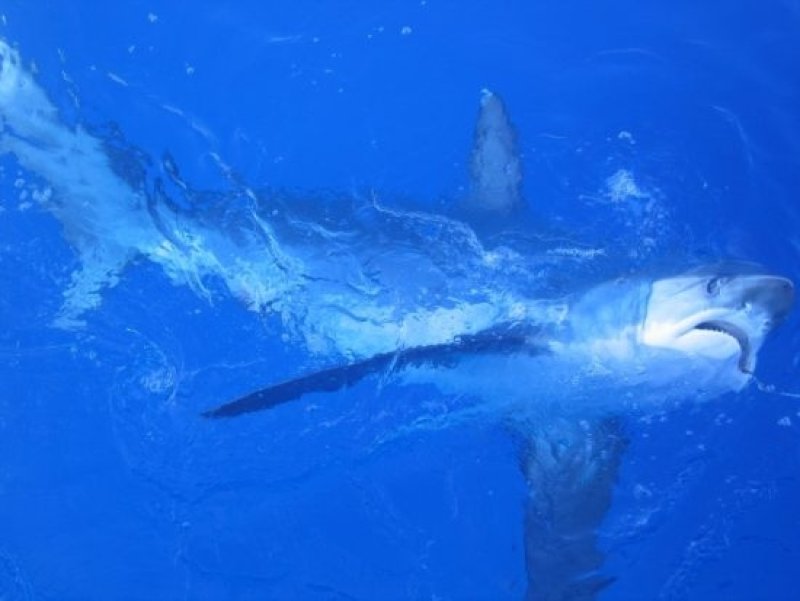
Bycatch - Thresher Shark (c) NOAA Fisheries

Fisher boats Hawaii (c) NOAA Fisheries
この記事は自動翻訳されており、多少の不正確な点が含まれている可能性があります。不明な点がある場合は、元の英語版を参照してください。