Shark selfies show unexpected behaviour
environmentmarine lifekelp forestssharksmarine research
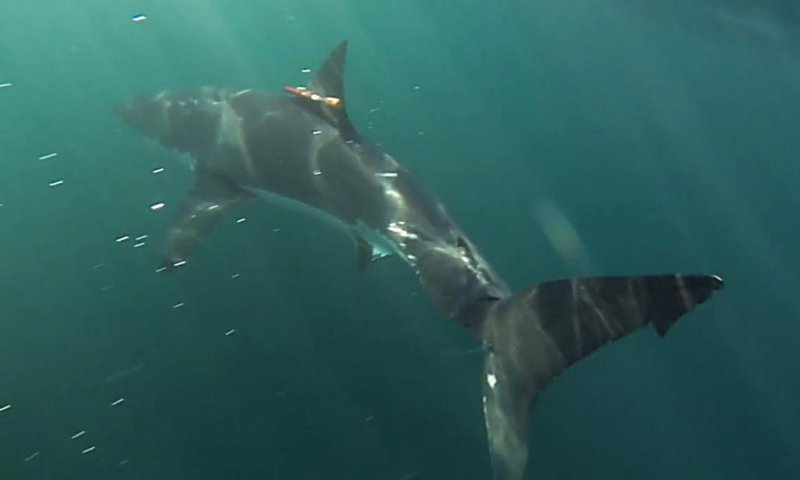
Researchers attaches a prototype of the MBARI-designed shark-cam tag to this white shark in South Africa (c) Image courtesy of the Monterey Bay Aquarium
White sharks hunt in kelp forests
White sharks are still a mystery to scientists. For example, earlier research indicated that the predators prefer open water and rarely dare to swim in kelp forests. New research shows that some sharks in South Africa spend a lot of time in kelp forests, where they may be looking for seals.
Since 2015, engineers and researchers at the Monterey Bay Aquarium Institute (MBARI) have been working together to develop an open-source video camera that allows researchers to observe the behaviour of the Great White Shark directly in their natural marine environment. The innovative instrument, attached to the shark's dorsal fin, provides a glimpse into the lives of the predators by collecting video footage.
The ocean from a shark's perspective
Researchers in South Africa used a video technology whose features were inspired by MBARI's Shark Café Cam. With this system they made a surprising discovery about the behaviour of sharks, which they describe in a recent article in the journal Biology Letters. The videos show the ocean from a shark's perspective.
Observations of the behaviour of the Great White Shark in foraging show that they generally surprise their prey and swim from below to attack animals like seals and sea lions on the sea surface. However, the new study suggests that white sharks can show a different hunting strategy in a habitat formerly considered taboo for these large predators - the kelp forest.
The authors point out that, to their knowledge, this is the first study to document the extensive and repeated use of kelp forests by white shark. The study describes the interactions between predator and prey in this habitat.
The discovery demonstrates how the innovative technology developed at MBARI can help scientists around the world gain new perspectives on the ocean and its inhabitants. " Our results demonstrate the power of animal-based video to improve our understanding of the habitat utilization of large marine predators and to uncover interactions within the marine environment. "
More Information: https://www.mbari.org Link to the study: https://royalsocietypublishing.org/doi/full/10.1098/rsbl.2019.0085.
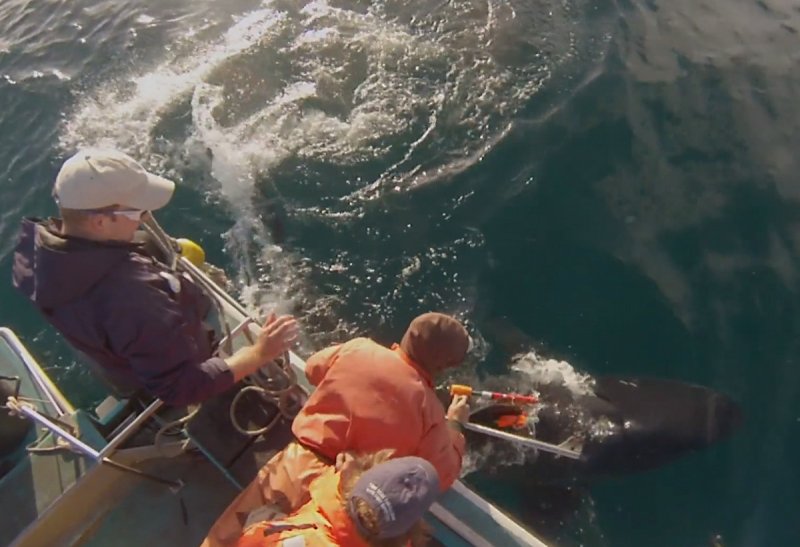
Researchers attaches a prototype of the MBARI-designed shark-cam tag to this white shark in South Africa (c) Image courtesy of the Monterey Bay Aquarium
この記事は自動翻訳されており、多少の不正確な点が含まれている可能性があります。不明な点がある場合は、元の英語版を参照してください。