Help needed in quest to study deepwater coral reefs
environmentmarine conservationtechnical divingdeepwater coral reefscrowdfunding
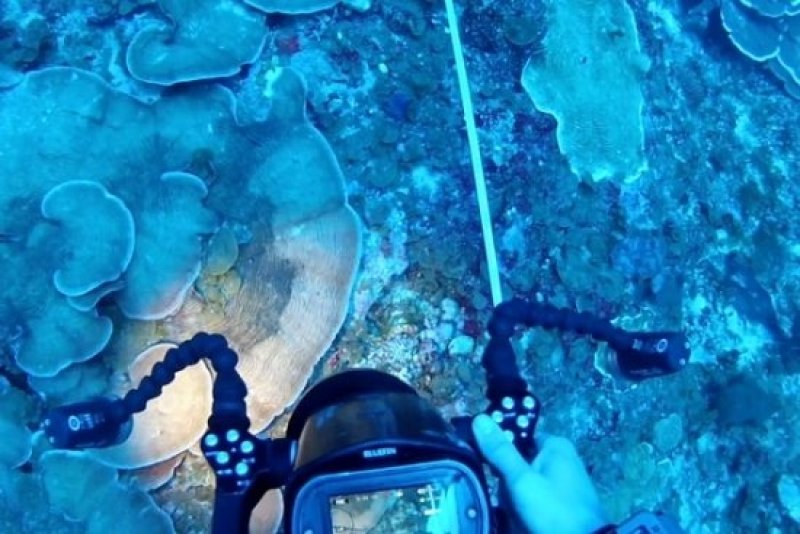
Help needed in quest to study deepwater coral reefs (c) Viktor Brandtneris, University of Virgin Islands
It is not all doom and gloom for the world’s coral reefs. While things are indeed dire for those in the upper layers (from the surface to 100 feet deep), the coral reefs in the lower layers (between 100 and 250 feet) are still pretty much intact.
This is because their depth shields them from the rising temperatures, wave action and ultraviolet light. Their remote location and greater depth means that less is known about them.
What we do know is that they are the spawning grounds for a number of commercially important fish species in the Mesophotic reefs, at 100 to 400 feet deep. And, since they are generally intact, scientists are pushing for more protection to be implemented for them so that they will remain that way.
However, because they are not visible from the surface, and hard to reach, there is little interest about them. Their locations remain unknown and many deepwater reefs are explored.
"How can we protect reefs if we don’t know where they are? The current storyline about coral reefs is horrendous and lacks hope, but there are incredible living reefs doing well that we need to learn more about," said Viktor Brandtneris from the University of the Virgin Islands.
Brandtneris’ quest is hindered by the high cost of equipment, as diving such deepwater reefs require large boats and technical dive experience. According to him, a diver can remain at 225 feet depth for just 20 minutes, and every dive is a hit-and-miss affair. Sometimes, they find coral reefs; sometimes, all they can find is sand.
As a result, he has decided to tie a GoPro camera to a reel and lowering it to about 300 feet to photograph the reefs. This method would allow them to cover more ground and minimise costs.
"The idea was to make something cheap, simple and widely available, so we could afford to go study more of these reefs," said Brandtneris.
Using the GoPro camera, he and his team were able to survey and process data from more than 300 sites around Montserrat in just 21 days. Without it, they would have taken 75 days to do just the surveys.
To speed up the work even more, Brandtneris embarked on a crowdfunding campaign last week to raise the funds to buy more equipment like an electronic fishing rod, reel and line, which would be able to pull up 300 feet of line in a minute. Using it, the work would be faster, and just two people can cover seventy sites in a day. All this works out to a time savings of 50 minutes for every ten sites.
"These funds will be used to speed up our sampling, reduce our costs and increase the breadth of data we can collect," said Brandtneris.
Information, Video & Crowdfunding site: experiment.com/projects/corals-in-the-twilight-zone
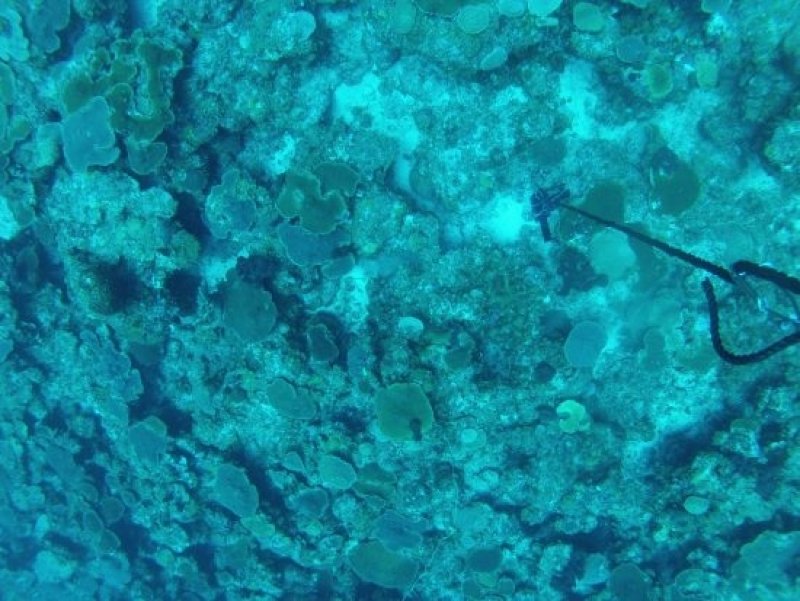
An image of a coral reef at 128 feet, captured using the first version of the camera system (c) Viktor Brandtneris, University of Virgin Islands
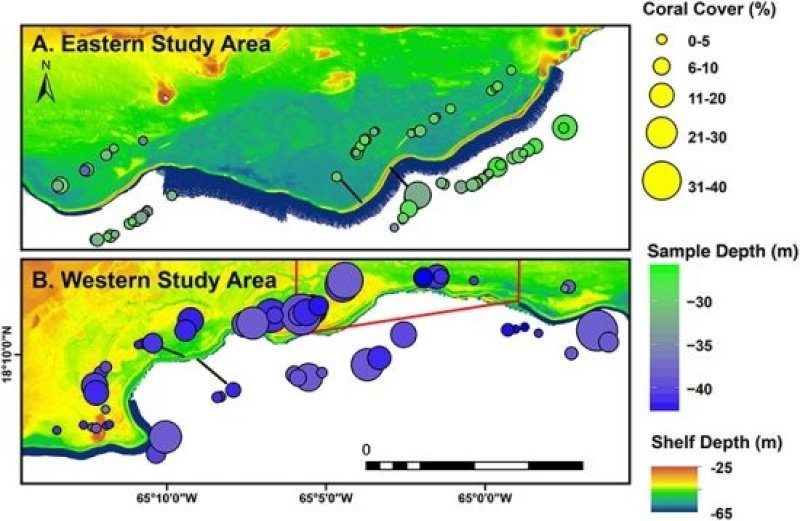
An example of the data produced using the drop camera methodology. (Figure taken from Smith et al. 2016) (c) Viktor Brandtneris, University of Virgin Islands
Ez a cikk automatikusan lett lefordítva, és apróbb pontatlanságokat tartalmazhat; kétség esetén kérjük, tekintsd meg az eredeti angol változatot.