Great Barrier Reef suffers largest loss of corals ever
environmentmarine conservationoceangreat barrier reefcoral bleaching
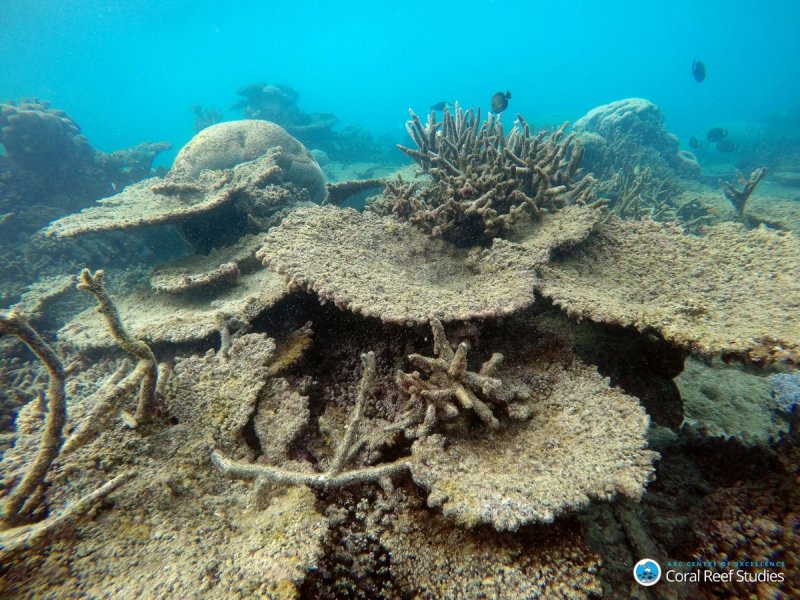
Dead table corals killed by bleaching on Zenith Reef, on the Northern Great Barrier Reef, November 2016.
(c) Greg Torda, ARC Centre of Excellence for Coral Reef Studies
Scientists have confirmed the largest die-off of corals at Australia's
Great Barrier Reef, with the northern part being the worst affected
area. This covers a series of reefs that extend more than 700
kilometres, where an average of 67 percent of the shallow corals have
perished in the last eight to nine months. Further south, in the
central and southern regions of the Reef, the death rate was much
lower. Professor Terry Hughes, Director of the Australian Research Council (
ARC), based at the Center of Excellence for Coral Reef Studies at James
Cook University, had carried out extensive surveys at the height of the
bleaching.
He said, " Most of the losses in 2016 have occurred in the northern,
most pristine part of the Great Barrier Reef. This region escaped with
minor damage in two earlier bleaching events in 1998 and 2002, but this
time around it has been badly affected. Specifically, two-thirds of
the corals there have perished, and some banks no longer have any
living corals.
The good news is the southern two-thirds of the Reef has escaped with
minor damage. On average, six percent of bleached corals died in the
central region in 2016, and only one percent in the south. The corals
have now regained their vibrant colour, and these reefs are in good
condition, " said Professor Andrew Baird, also from the ARC. He had led
teams of divers to examine the reefs in October and November.
This is welcome news for our tourism industry. The patchiness of the
bleaching means that we can still provide our customers with a
world-class coral reef experience by taking them to reefs that are
still in top condition, " said Craig Stephen, who runs a liveaboard
company in the vicinity. The tourism sector at the Great Barrier Reef
employs 70,000 people and generates about $5 billion annually.
Another piece of good news was found in the northern offshore area of
the Great Barrier Reef Marine Park, where the loss of corals was
significantly lower than the reefs in the north.
" We found a large corridor of reefs that escaped the most severe damage
along the eastern edge of the continental shelf in the far north of the
Great Barrier Reef. We suspect these reefs are partially protected from
heat stress by upwelling of cooler water from the Coral Sea, " said
Professor Hughes.
The scientists expect that the severely damaged northern region of the
Great Barrier Reef would take at least ten to 15 years to recover the
lost corals. However, this recovery would be disrupted if a fourth
bleaching event were to occur during this process.
See here for further information
Video
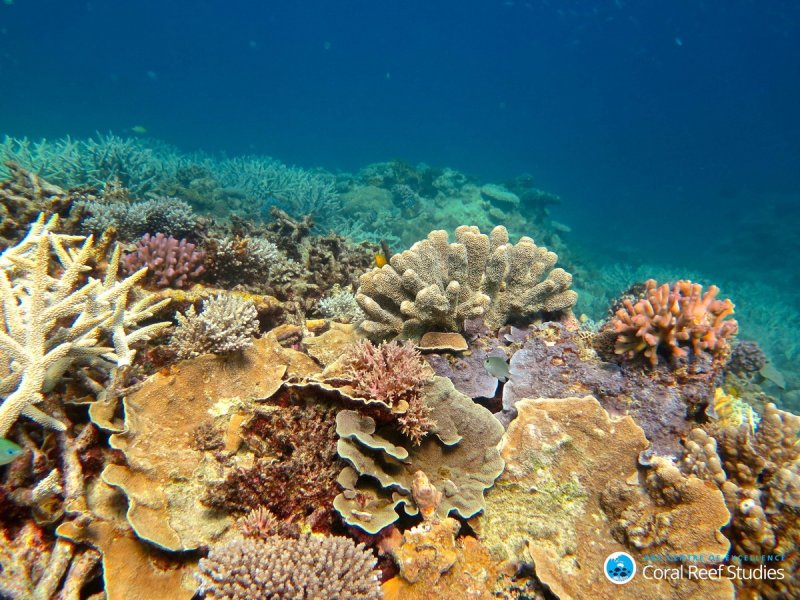
Healthy Coral in the Capricorn Group of Islands, Southern Great Barrier Reef, November 2016.
(c) Tory Chase, ARC Centre of Excellence for Coral Reef Studies
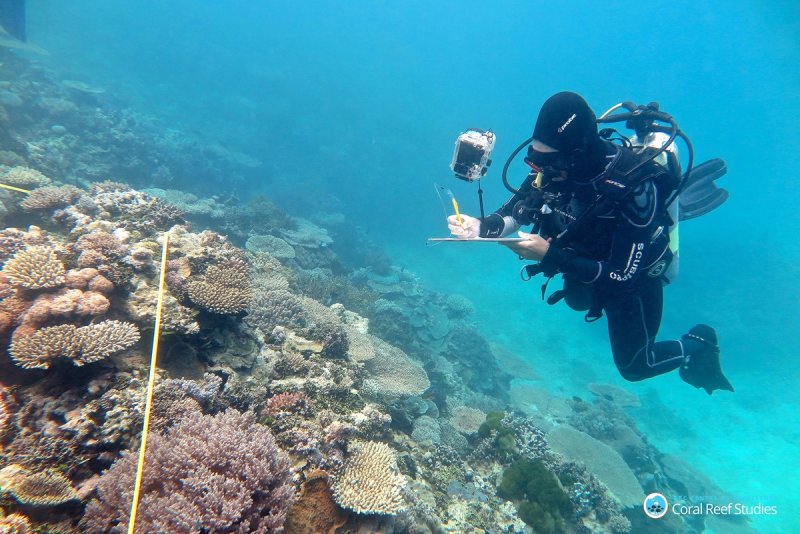
Researcher Grace Frank completing bleaching surveys along a transect line, One Tree Reef, Capricorn Group of Islands, Southern Great Barrier Reef, November 2016.
(c) Tory Chase, ARC Centre of Excellence for Coral Reef Studies
מאמר זה תורגם אוטומטית וייתכן שהוא מכיל אי דיוקים קלים; אנא עיינו בגרסה המקורית באנגלית במקרה של ספק.