The path of plastic in the oceans
environmentmarine conservationoceanunderwater ecosystemmicroplastics
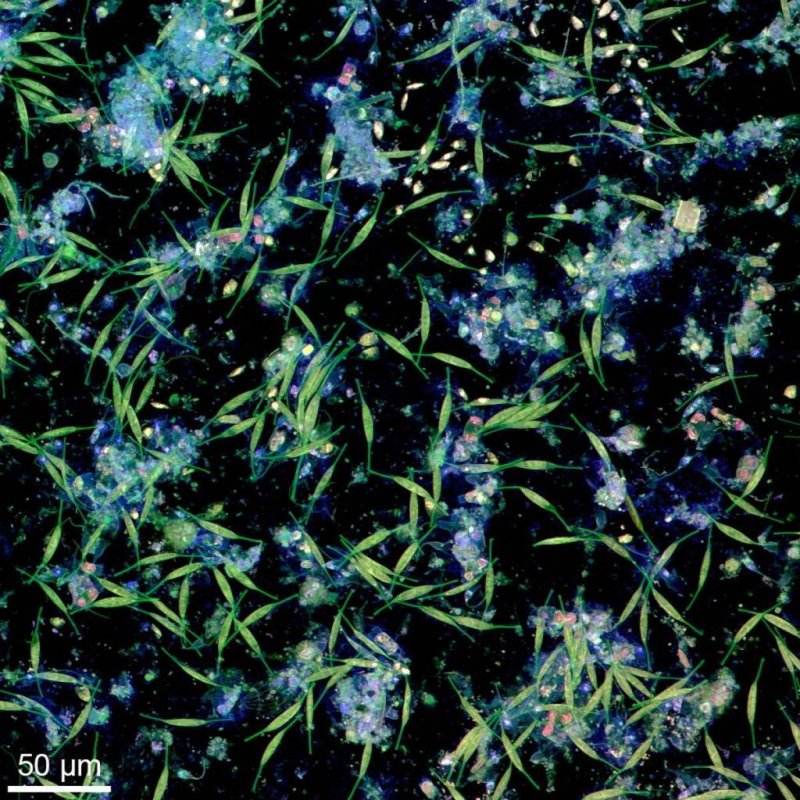
Biofilm formed by bacteria and microalgae on a plastic surface in water from the Kiel Fjord. The image was taken using confocal laser scanning microscopy, photo: © Jan Michels / Future Ocean
Microplastic connects to naturally occurring particles and forms aggregates Although vast amounts of plastic are drifting in the oceans and new microplastics are constantly being released into the oceans, the concentrations of microplastic in the surface layer are lower than expected. Researchers from the GEOMAR Helmholtz Center for Ocean Research Kiel, the Kiel Cluster of Excellence "Ocean of the Future" and the Helmholtz Center Geesthacht have now shown that microplastics in seawater interact with naturally occurring particles and form so-called aggregates. This aggregate formation could explain how microplastic sinks from the surface into deeper water layers. The oceans contain a large number of particles of biological origin, including, for example, living and dead plankton organisms and their faecal material. These so-called biogenic particles interact with each other and often form lumps that sink into deeper layers of water or are scientifically correct: aggregates. In addition to the natural particles, a large amount of plastic particles less than five millimetres in size, ie microplastics, has been in the oceans for some time. Although new microplastics are currently being released into the oceans and some plastic species are of relatively low density and therefore drift on the surface of the water, the concentrations on the surface of the oceans are often lower than expected. In addition, several microplastics have been found in deep-sea sediments in recent years. What happens to the microplastic in the surface layer? How does it get into great water depths? " Our hypothesis was that microplastics together with the biogenic particles form aggregates in the seawater, where it may then sink into deeper water layers, " explains Dr. Jan Michels, member of the Cluster of Excellence "Ocean of the Future" and lead author of the study, recently published in the international journal Proceedings of the Royal Society B. To test this hypothesis, researchers conducted laboratory experiments using 700 to 900 micron polystyrene beads. They compared the behaviour of the beads in the presence or absence of biogenic particles. The experiments provided a clear result: " The presence of biogenic particles was crucial for aggregate formation. While microplastic particles alone aggregated only slightly, together with biogenic particles they formed quite distinct and stable aggregates within a few days ", explains Prof. Dr. med. Anja Engel vom GEOMAR. After twelve days, on average, 73 percent of the microplastics were in aggregates. "In addition, we hypothesized that biofilms on the surface of the microplastic play a role in aggregate formation," explains Michels. Such biofilms are formed by microorganisms, especially bacteria and unicellular algae, and are relatively sticky. To investigate their impact on aggregation, comparative experiments were performed with purified plastic beads and those coated with a biofilm. "The microplastic covered by a biofilm together with biogenic particles formed first aggregates within a few hours, much earlier and faster than the microplastic purified at the beginning of the experiments," Michels describes. On average, 91 percent of the biofilm-coated microplastics were integrated into the aggregates after three days. If microplastics are covered with a biofilm and at the same time biogenic particles are present, stable aggregates of microplastics and biogenic particles form very quickly in the laboratory, " Michels sums up. In many regions of the oceans, the presence of numerous biogenic particles and biofilms on the microplastic is probably a typical situation. " Therefore, there are many indications that the aggregation processes that we have observed in our laboratory experiments also take place in the oceans and have a great influence on the transport and distribution of microplastics, " explains Prof. Dr. med. Kai Wirtz from the Helmholtz Center Geesthacht. Link to the study: http://dx.doi.org/10.1098/rspb.2018.1203
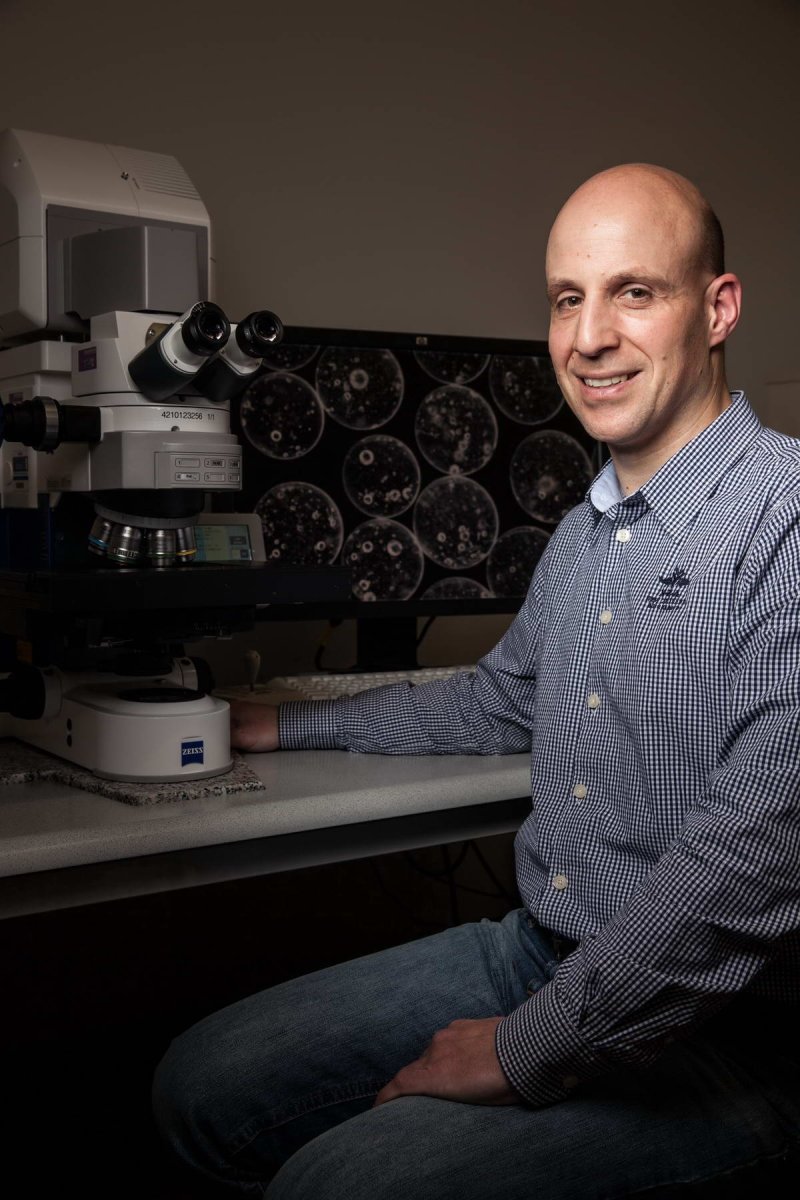
Dr. Jan Michels led the investigations, photo: © Jolan Kieschke / Future Ocean.
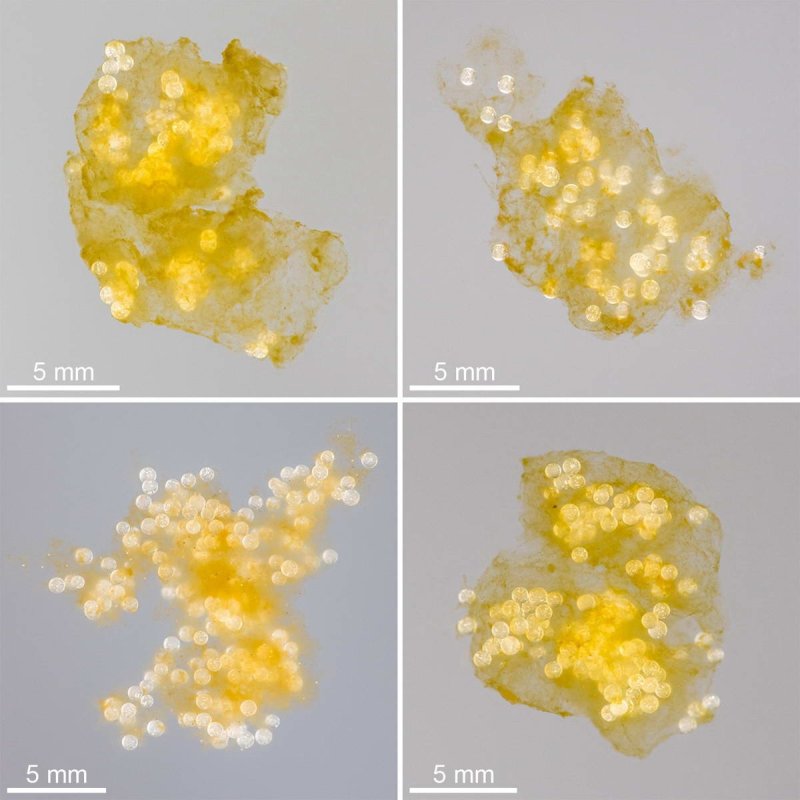
Photographs of typical aggregates made of plastic globules and biogenic particles that were generated during laboratory experiments, Photo: © Jan Michels / Future Ocean
این مقاله به صورت خودکار ترجمه شده است و ممکن است حاوی اشتباهات جزئی باشد؛ در صورت هرگونه شک و تردید، لطفاً به نسخه اصلی انگلیسی مراجعه کنید.