Ammunition in the Baltic Sea: monitoring, recovering or leaving behind?
environmentmarine conservationbaltic seaenvironmental monitoringchemical warfare

Warning buoy to the restricted area Kolberger Heide with adjoining net for the sampling of fish © Thünen-Institut / Th. Long
Researchers provide instructions and decision aids
The Baltic Sea contains a dark legacy of ca. 50 000 tons of dumped chemical warfare agents (CWA) and more than 200 000 tons conventional munitions originating from the I and II WWs. The question is: Are you leaving them there and accepting that toxic substances are slowly escaping, or are you holding the ammunition and risking the porous metal bodies to break or even explode? Such questions are dealt with by administration and politics. Scientists have developed decision aids in the international research project DAIMON and have now presented them at the Thünen Institute in Bremerhaven.
The amount of conventional ammunition and chemical warfare agents is estimated at 300,000 tonnes in German waters alone. These were disposed of after the war, without worrying about the environmental consequences. Just outside Kiel, for example, is the ammunition sinking area Kolberger Heide - a restricted area in which about 35,000 tonnes of mines and torpedoes lie in a maximum of twelve meters of water depth and within sight of the beach. Ammunition on the seabed continues to develop a dangerous effect even decades after sinking, as an international research team now found out: The results of the research project DAIMON (Decision Aid for Marine Munitions) were held at the joint final conference of the Thünen- und Tübingen from 5 to 7 February 2019 presented by the Alfred Wegner Institute in Bremerhaven.
The researchers have collected samples and analyzed the chemicals that escape from the ammunition bodies. Traces of ammunition were detected in fish caught near ammunition areas. This applies equally to breakdown products of the explosive TNT and arsenic-containing chemical warfare agents. Shells that were exposed to the influence of ammunition in the Kolberg Heath in small net cages aggravated TNT degradation products. This makes it clear that toxic substances escape from the bombs and are absorbed by the organisms living there. In addition, the researchers found that TNT is toxic to mussels and harms the genome in fish, which can lead to tumours. The sensitive flatfish species Common dab actually has more liver tumours in the Kolberger Heide than elsewhere: a correlation between local TNT exposure and increased tumour rate is obvious. The breakdown products of TNT are also mutagenic, so that the organisms are still exposed to the effect of ammunition, even if the rapidly degradable TNT is no longer detectable.
The results of these and other studies will include practical and directly applicable recommendations for environmental monitoring and handling of ammunition. The main products of the DAIMON project are instructions for risk monitoring and assessment: a directly applicable collection of methods from environmental monitoring for the assessment of acute danger to the ecosystem by ammunition (DAIMON Toolbox) as well as a web-based system (Decision Support System), for example politicians and authorities in the decision will help whether ammunition objects in the Baltic Sea eg merely to be monitored or salvaged.
More Information: https://www.daimonproject.com

Polluted shells © Ilkka Lastumaki
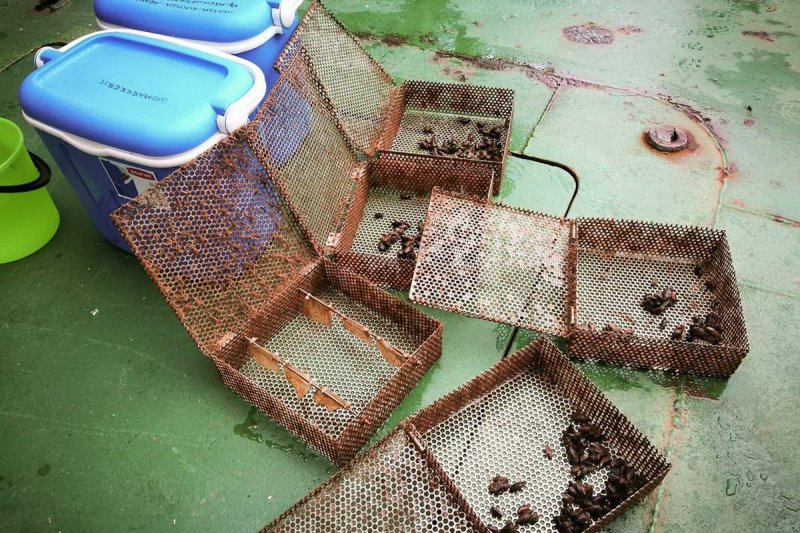
Salvaged shell boxes © Alfred Wegener Institute
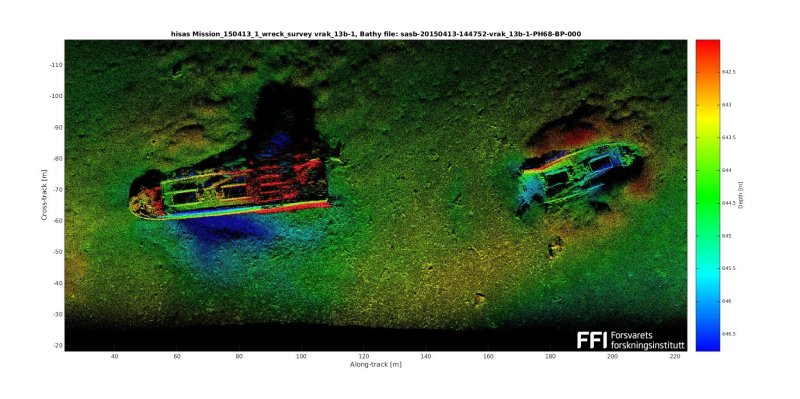
Wreck with ammunition at the bottom of the Baltic Sea © Alfred Wegener Institute
این مقاله به صورت خودکار ترجمه شده است و ممکن است حاوی اشتباهات جزئی باشد؛ در صورت هرگونه شک و تردید، لطفاً به نسخه اصلی انگلیسی مراجعه کنید.