Wild living whales at audiometry
environmentmarine conservationmarine mammalsbeluga whalesaudiometry
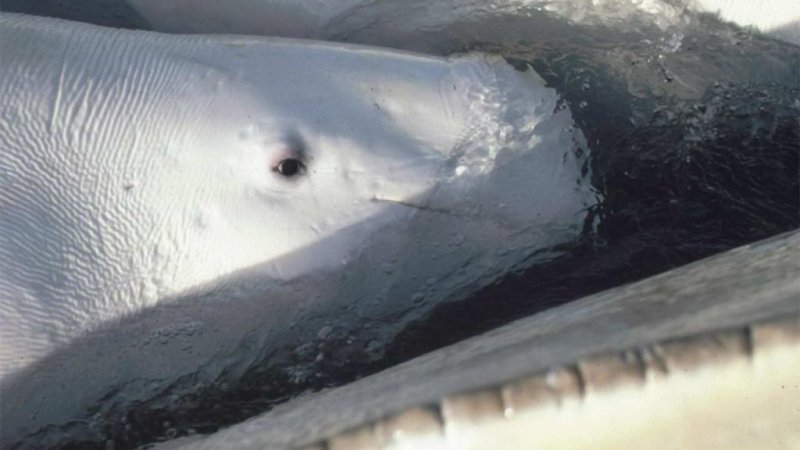
Beluga whales have tiny outer ear openings that are a few inches behind each eye.
(c) Alaska Department of Fish and Game
Beluga whales are more sensitive than previously thought Scientists have carried out the first audiometry (listening tests) on a wild living population of healthy marine mammals. Testing was done with Beluga whales in Bristol Bay, Alaska. The scientists found out that whales have sensitive hearing and that the number of animals that suffered a severe hearing loss was far below what scientists had expected. The latter findings contrasted with expectations from previous studies with humans and porpoises that showed hearing loss in old age, said Aran Mooney, a biologist at the Woods Hole Oceanographic Institution (WHOI) and lead author of two new studies on beluga whales: " Different than the free Beluga population, the dolphins studied lived in a very noisy environment, as most people do. At a time when sea-level noise is increasing through human activities such as oil, gas and shipping, understanding the natural hearing capabilities of whales and other endangered marine mammals is critical to assessing potential noise effects on animals and management for sound-related hearing loss to reduce. In the two studies, WHOI researchers and their colleagues measured the hearing sensitivity of 26 wild living belugas and then compared the audiograms with acoustic measurements in their summer habitat in Bristol Bay to investigate how natural soundscapes - all the noises of the environment - can affect hearing sensitivity. The background noise also reveals audible clues that allow the belugas to navigate. The first study was published in the Journal of Experimental Biology. The results of the Soundscape study have now been published in the Journal of Ecoacoustics. n the first post, we characterized the hearing of the Beluga population ," says Mooney. " In the second post, we put this into context to see how they can use acoustic differences in their habitat and how their hearing is affected by the natural environmental noise in their environment. How to test the hearing of a beluga whale? The researchers used the same screening method that doctors use to test the hearing of newborns who cannot vocally respond to whether they hear sounds or not: the automated auditory brainstem response. A suction cup sensor is gently placed on the head of whales, just behind the blow hole, and another on the back as a reference. A series of soft tones are played, and the sensors help measure the brain's response to the sounds. It's pretty easy," says Mooney. " We just had to build a portable system that we could put in an extreme environment to run the listening tests. " The test itself only takes about five minutes to measure each frequency. The hardest part, according to Mooney, is to catch the animals. The researchers trusted in the expertise of the natives who hunt belugas. From small aluminium boats, the team approached a single adult whale - no calves were examined in the shallow waters of the bay. The whales were caught in a soft net. The researchers went into the water to secure the tail of the animal with a rope before moving it to a belly band (a small stretcher) next to a soft dinghy, where the listening tests took place. The belugas stayed relatively relaxed during the tests, seemingly adopting a quiescent behaviour that they also use to escape killer whales, " Mooney explains. " When a killer whale chases them, belugas often migrate to very shallow water and stay there until they can safely return to deeper waters. In addition to the hearing tests, the researchers performed physical examinations. On some of the whales, satellite transmitters were installed prior to release to study whale movements. The hearing tests revealed little hearing loss in the seemingly elderly populations, which may be due to the fact that the estuary where the belugas live is relatively quiet compared to other urban areas. Because there were no other studies on the hearing of wild marine mammals, we compared the results to previous studies on trapped dolphins in San Diego and Russia, which showed a marked hearing loss in old age, but the group from San Diego lives in one very noisy environment, " says Mooney. More Information: http://www.whoi.edu
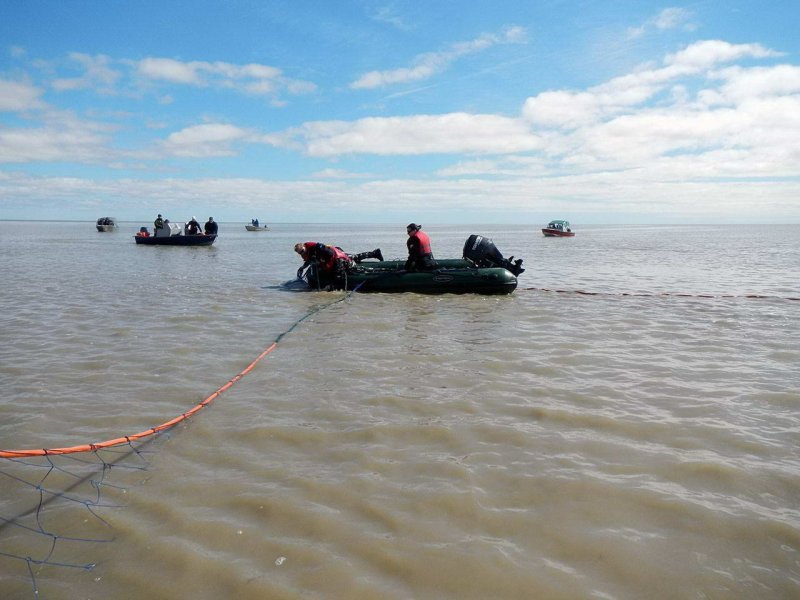
The research team used a group of small aluminum boats to approach individual adult whales in shallow waters of the bay.
(c) NOAA Fisheries/Manuel Castellote
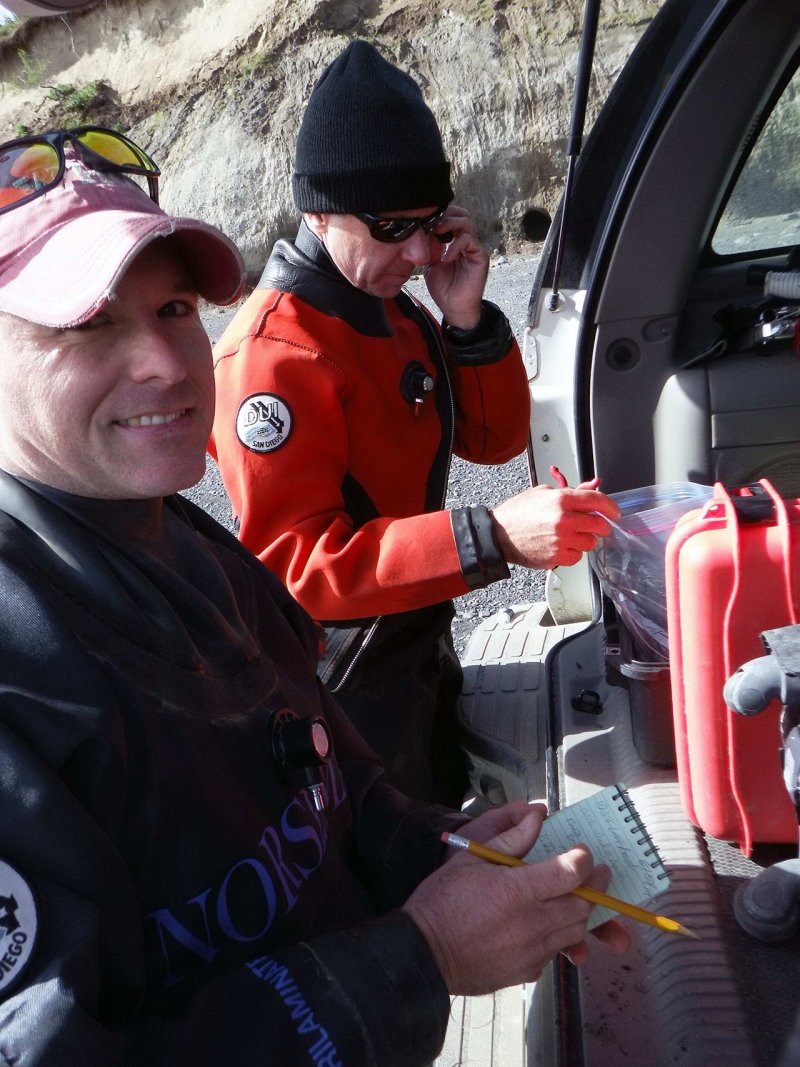
WHOI biologist Aran Mooney (left) with Russ Andrews from the Alaska SeaLife Center during field work in Bristol Bay
(c) Aran Mooney, Woods Hole Oceanographic Institution /Photo (c) with courtesy
Este artículo se ha traducido automáticamente y puede contener pequeñas inexactitudes; en caso de duda, consulta la versión original en inglés.