Study identifies microbiome in whale blow
environmentmarine lifewhale researchmicrobiomedrones
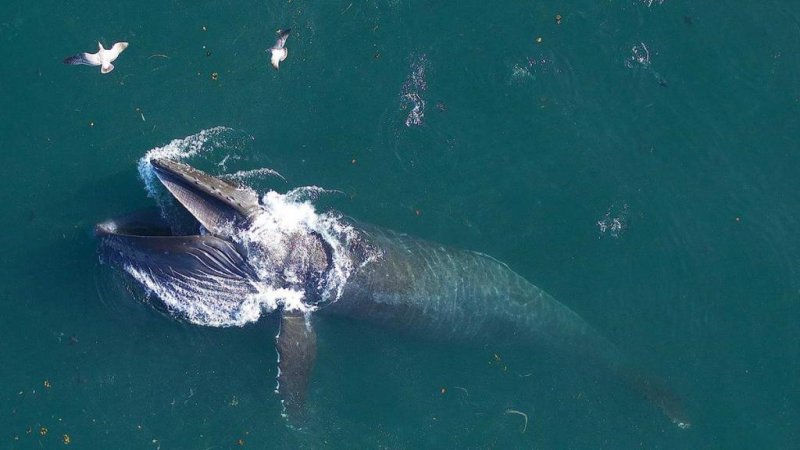
A humpback whale feeds in waters off Vancouver.
(c) John Durban (NOAA)/Holly Fearnbach (SR3)/Lance Barrett-Lennard (Coastal Ocean Research Institute)
Drones used in collection of samples A research group, together with the Woods Hole Oceanographic Institution (WHOI), has used drones to successfully investigate the blow of humpback whales to determine its microbiome. The scientists recently published their findings in the journal mSystems.
The discovery of the "microbiome" in whale breath can help to monitor the health of humpback whales and other whale species. According to the scientists, the "community" of microorganisms that live in and on whales – called microbiomes – plays a crucial role in their overall health, from the maintenance of a healthy immune system to the control of diseases.
The pulmonary system is a common site for bacterial infections in whales, " said WHOI researcher Amy Apprill, the study’s lead author.
" We see evidence of respiratory illnesses frequently in stranded and deceased animals, " she added. " Until now, little has been known about the normal respiratory microbiome of healthy whales. "
Previously, to collect a sample, researchers would pursue the whale in a small boat. Once close enough, they hold a long pole with a large petri dish at the end as close to the whale’s blow hole as possible. Although this method works, it can modify the whale’s behaviour and cause them stress.
For this research, the team used a drone to collect the samples from whales in the wild. Two years ago, scientists have started using special drones called "snotbots" for this function, as we had reported here.
The sample is collected using a sterilised petri dish on the top of the drone.
We were using the drone to take aerial images of the whales, so that we could assess body conditions, " said co-author Durban. " Because of the stable flight performance of our hexacopter, we quickly learnt that we could reliably fly through whale blow without disturbing the animals. The whales don't seem to know the aircraft is there, " said Moore, another co-author. " We want to study whale health, but not affect their behaviour. "
Blow samples were collected from two different humpback whale populations: 17 from whales in coastal waters off Cape Cod, Ma. and nine from whales in the waters around Vancouver Island, Canada. The team then sequenced the genetic material in the samples to find out the kinds of microorganisms living in the whales’ respiratory system.
Apprill said that they were surprised to find a microbiome that looked very different from seawater, adding: " That's really exciting because it demonstrates that we are obtaining a clear signal of a microbiome that's coming from the animal. "
Next, the researchers want to examine samples from whales in poor body condition and compare the microbes found in their blow with that of healthy whales.
More Information: www.whoi.edu
Video: https://vimeo.com/236952284
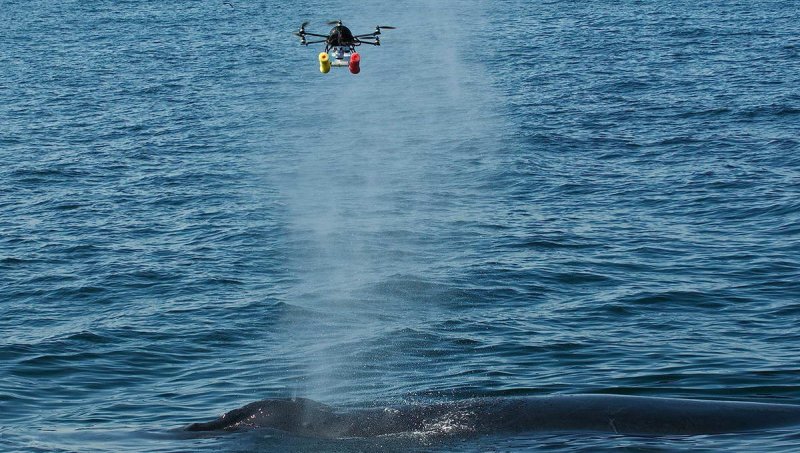
The drone hovers for a few seconds in the whale's blow to collect a sample.
(c) Michael Moore, WHOI
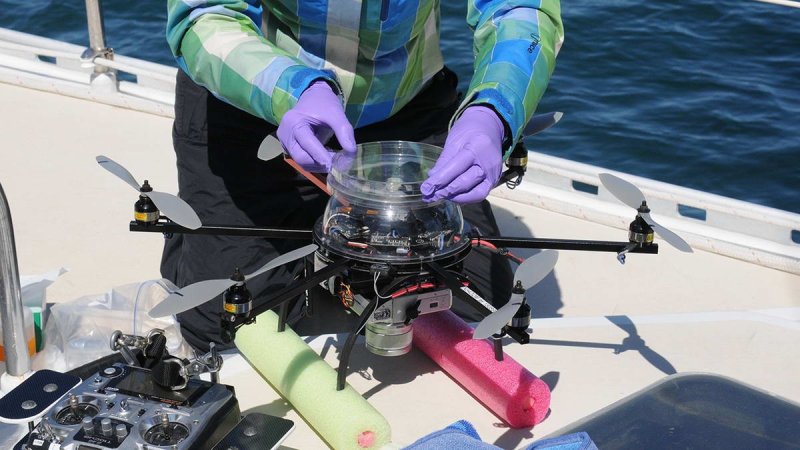
The researchers attach a sterilized petri dish to the top of the hexacopter to collect some of the whale blow.
(c) Véroniqe LaCapra, WHOI
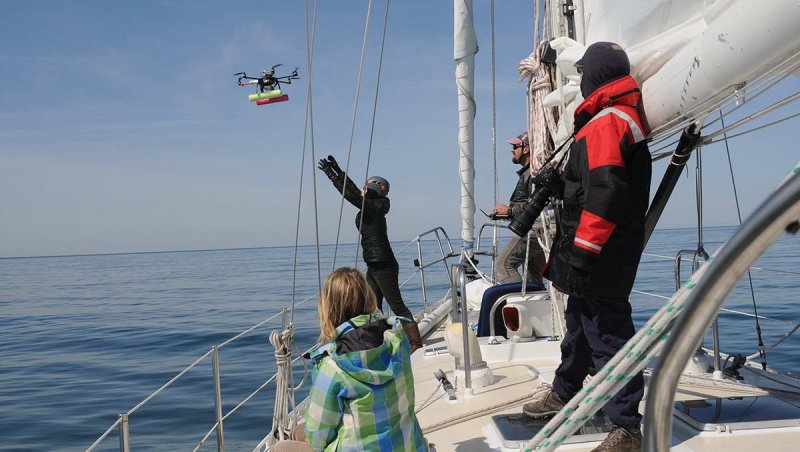
The research team launches a drone during field work in Cape Cod Bay.
(c) Véroniqe LaCapra, WHOI
Este artículo se ha traducido automáticamente y puede contener pequeñas inexactitudes; en caso de duda, consulta la versión original en inglés.