Mission to save river dolphins in Amazon
environmentconservationwwfriver dolphinsamazon
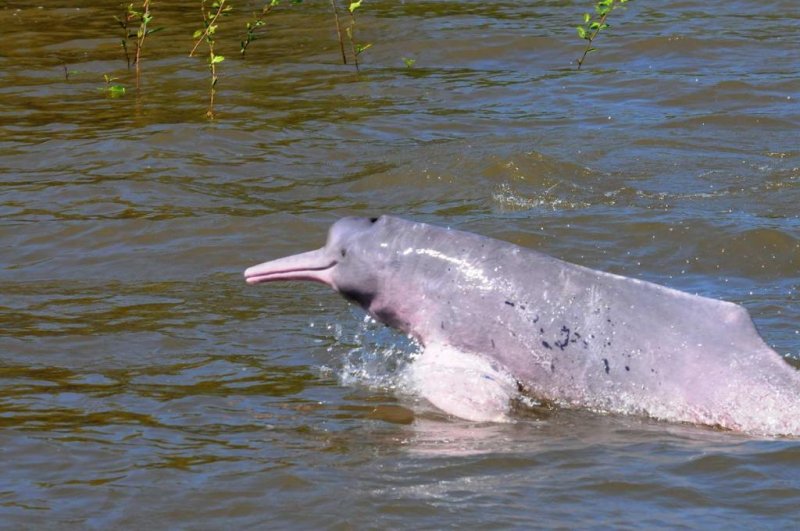
Amazon river dolphin (Inia geoffrensis)
(c) Federico Mosquera/Fundación Omacha
WWF expedition equips river dolphins with trackers for the first time
The river dolphins of the Amazon are extremely rare and are among the least studied mammals on earth. Now, the WWF has launched a project to protect them, in which they are equipped, inter alia, with GPS transmitters. Eleven freshwater dolphins of the Amazon river dolphin (Inia geoffrensis) and Bolivian river dolphin (Inia boliviensis) are now "on air" in the rainforest in Brazil, Colombia and Bolivia.
The WWF caught and examined 15 of the dolphins in the previous week. Eleven of them were tagged with GPS devices. It's the first time ever that dolphins in the Amazon have been equipped with tracking devices, in a bid to learn more about their movements and habits in both the dry and rainy season.
"It's obvious that Amazon river dolphins have become increasingly rare in recent years. However, they are not yet classified as threatened on the Red List because we lack the data. This makes it difficult to enforce necessary countermeasures, such as the establishment of protected areas," explained Roberto Maldonado from WWF Germany.
The construction of dozens of hydroelectric power plants on the Amazon have massively affected the habitat of dolphins and restricted their freedom of movement. The threats also include the still widespread gold mining activities in the entire region. They introduce large amounts of mercury into the rivers. This leads to the slow poisoning of microorganisms and fish, as well as the dolphins which are at the end of the food chain. The dolphins, together with the people of the region who eat a lot of fish, are hence exposed to increasing mercury levels. Another danger comes from fishing. In Colombia and Brazil, dolphins are killed for their meat, which is used as bait to catch a type of catfish (Calophysus macropterus).
This current research project will help to better protect the dolphins in the future. The animals are captured in nets and taken to the shore to be examined and tagged with GPS devices. Their organs are scanned, and a complete blood count is done; they are also measured and weighted. In addition, tissue samples are taken. They are then released after biologists fasten GPS trackers to their dorsal fin with a clamp. "Of course, that means stress for river dolphins," explained Roberto Maldonado. "However, it is the gentlest method that exists. And if we can help the animals with the data in the future, it's worth it."
There are a total of three different freshwater dolphins in the Amazon. The best known is the Amazon river dolphin (Inia geoffrensis), also called the Boto. They are about 2 to 2.5 metres in size and weigh 85 to 130 kilogrammes. They have a narrow and long snout, with vibrissae, small eyes and, instead of a dorsal fin, they have a low ridge or hump with a broad base. Their bodies are dark blue-gray on top and pink at the belly section. The colouration varies according to age, activity and the waters they live in. In addition to the Amazon dolphins, the WWF has also equipped the Bolivian river dolphins (Inia boliviensis) with GPS trackers/devices. The third type of freshwater dolphins in the Amazon is the Araguaia river dolphin (Inia araguaiaensis), which was discovered in 2014.
More information: www.wwf.de

Amazon river dolphin (Inia geoffrensis)
(c) Clóvis Fabiano/WWF-Brasil
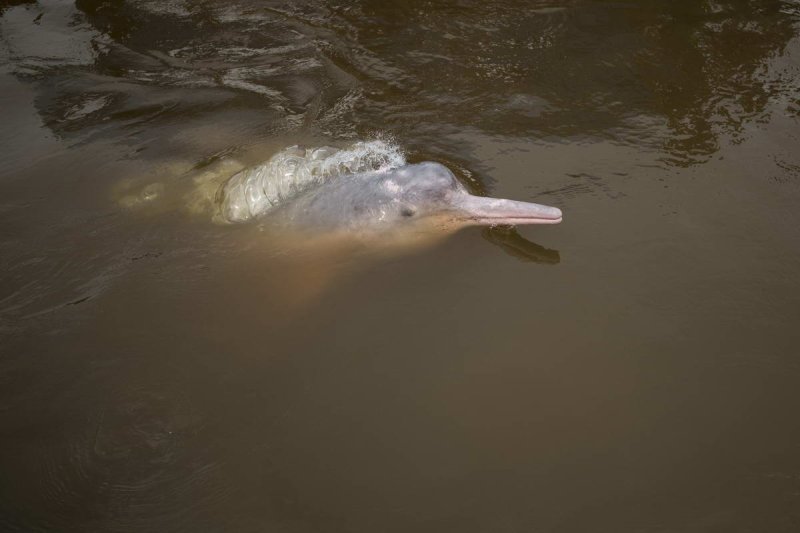
Amazon river dolphin (Inia geoffrensis)
(c) WWF

Amazon river dolphin (Inia geoffrensis)
(c) WWF
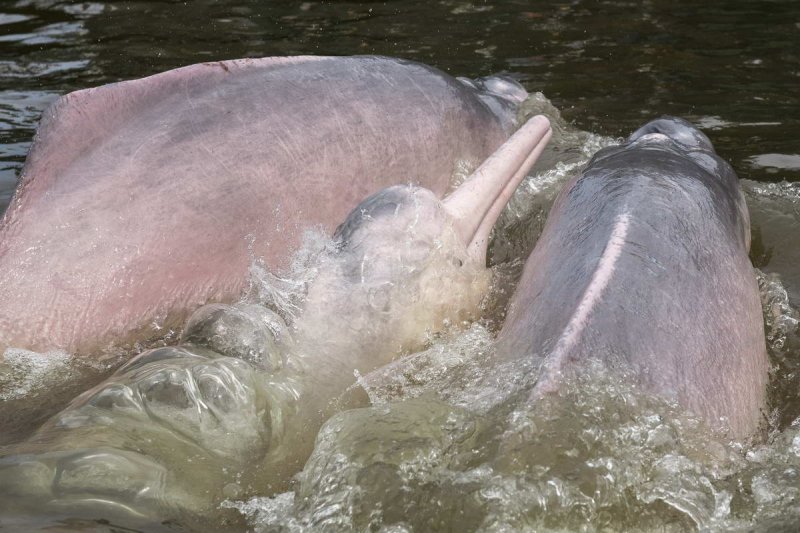
Amazon river dolphin (Inia geoffrensis)
(c) WWF
Tento článek byl automaticky přeložen a může obsahovat drobné nepřesnosti; v případě pochybností se podívejte na originální anglickou verzi.