How does seawater density affect cold-water coral reefs in Europe?
environmentmarine conservationclimate changecold-water coralsseawater density
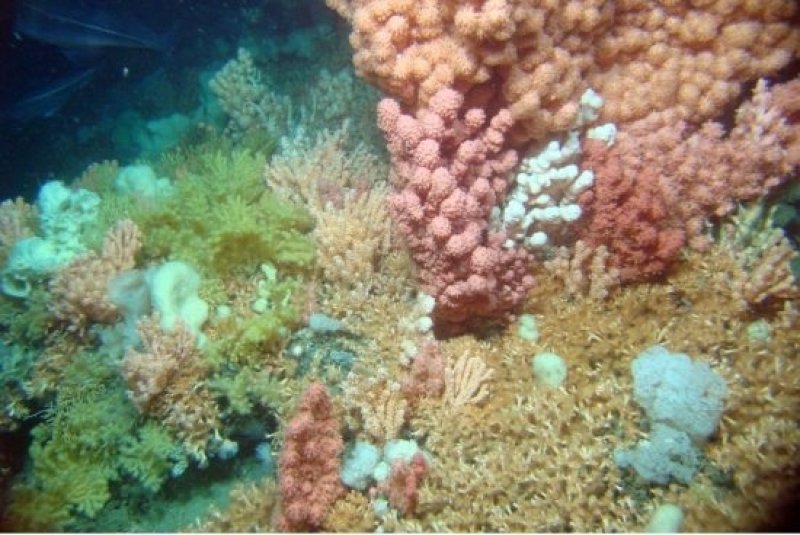
Data gathered by the paleoceanographers shows that cold-water corals off the coast of Europe require a specific density of seawater to thrive. However, the growth of the coral reefs, which form large carbonate mounds, have been directly tempered by the natural climatic changes that took place over the past 2.5 million years.
Large areas of coral reefs can be found from northern Norway to Mauritania to the coasts of Europe and North Africa. Unlike tropical corals (which grow several metres below the water surface), these cold-water coral reefs flourish mainly at depths of 200 to 1,000 metres. In some regions, they have even led to carbonate mounds as high as 300 metres, built up over millions of years.
Several years ago, we did not know what type of environmental conditions such a settlement of cold-water corals favoured. However, from new data gathered by paleoceanographers at GEOMAR Helmholtz Centre for Ocean Research Kiel, it has been concluded that coral reefs prefer seawater of a specific density.
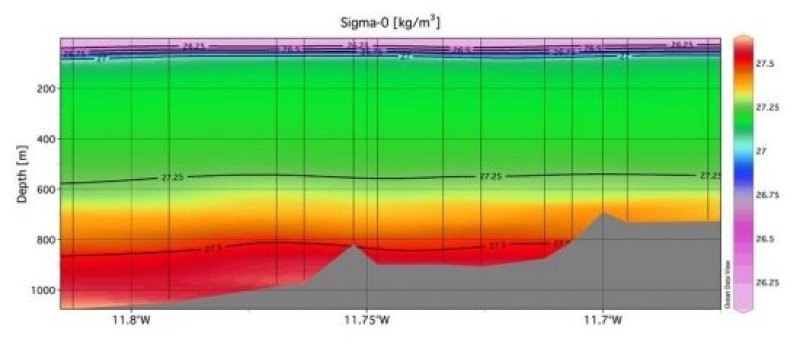
The same research team has also reconstructed the fluctuations of seawater density over the past 2.5 million years, and compared it to the development of the carbonate mounds. In doing so, they demonstrated that cold-water corals were dependent on the surrounding seawater possessing the same density levels. The depth of this zone is dependent on the natural climate conditions, and this impacts directly on the coral reefs in the North Atlantic, said Dr Andres Rüggeberg, author of the study.
For the study, cores from the carbonate mounds in the Porcupine Seabight were used. This is a wide continental basin off the western coast of Ireland, with depths from 400 to 3,000 metres. The cores were sampled in 2005 from the US ship JOIDES RESOLUTION.
At GEOMAR, the age of the carbonate mounds were determined using isotope analysis, as was the reconstruction of the density of the seawater during the past 2.7 million years. The researchers then synchronised the development of the carbonate mounds with the respective depth of the specific density layer. The study's co-author, GEOMAR's Dr Sascha Flögel, observed that the corals at the top of the carbonate mounds flourished and led to the mounds growing taller. However, if the corals were situated lower down the mound, they grew slowly or not at all.
Dr Rüggeberg said that the results of the research enabled them to better trace the history of different ocean currents and water levels in the region. Dr Flögel added that the study demonstrated that coral reefs were sensitive to environmental changes. Since the water temperature had an effect on water density, a rise in seawater temperature could significantly affect coral growth.
Source: www.geomar.de
Tento článek byl automaticky přeložen a může obsahovat drobné nepřesnosti; v případě pochybností se podívejte na originální anglickou verzi.