Deafening fish in the Gulf of California
environmentmarine lifessioverfishinggulf of californiafish
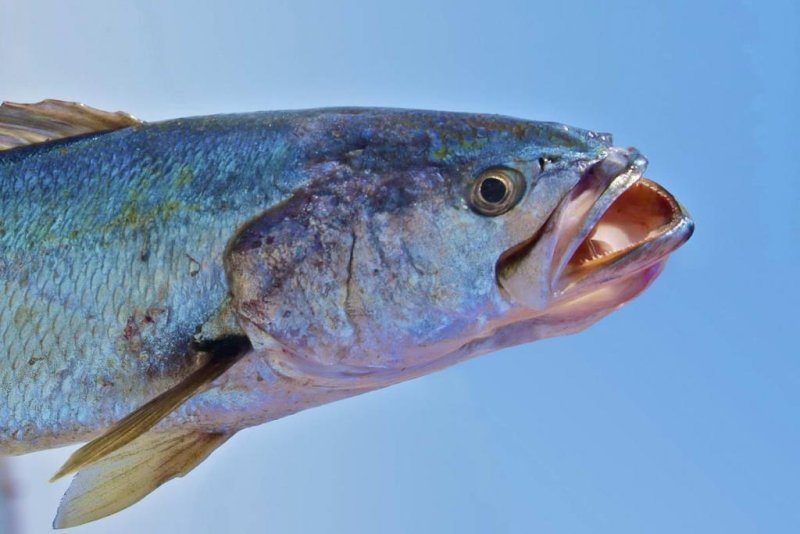
Cynoscion othonopterus
The mating call of this fish of the Sciaenidae family is louder than an aircraft taking off Researchers in the Gulf of California have measured the volume of a particular species of fish: their calls are louder than an airplane taking off. Their deafening calls can damage the hearing of other marine creatures.
This noisy fish is the Gulf corvina (Cynoscion othonopterus). It belongs to the Sciaenidae family and lives exclusively in the northern Gulf of California. During the spawning season, the fish can be found in huge schools comprising up to 1.5 million individuals, and covering over a distance of up to 27 kilometres. In order to attract females, the males issue a very loud mating call together, as if in a huge choir, at volumes of up to 177 decibels. In comparison, a jet taking off emits sound levels of about 140 decibels.
This makes the Gulf corvina the loudest fish ever measured. Only the whales in the sea are louder, having been measured at up to 236 decibels. The researchers, who recently published their findings in the journal Biology Letters, wrote: "The spatial-temporal magnitude of their collective choruses are among the loudest animal sounds recorded in aquatic environments."
The mass spawning event takes place every year in the Colorado River Delta in April and May. A few days before and after the full moon, the males begin their mating calls, which may even reverberate through the hulls of small fishing boats and be heard by the human ear.
The researchers suspect that the high volume is due to the fish's adaptation to their environment, which is characterised by cloudy water and a high level of ambient noise, causing them to "outshout".
The loudness, which seems to be useful for their spawning behaviour, can prove to be deadly for the fish, as it can cause them to be easily detected by fishermen. The Gulf corvina is severely overfished and is listed as vulnerable on the IUCN Red List of Threatened Species.
Hear an audio example For more information see here For a link to the study see here
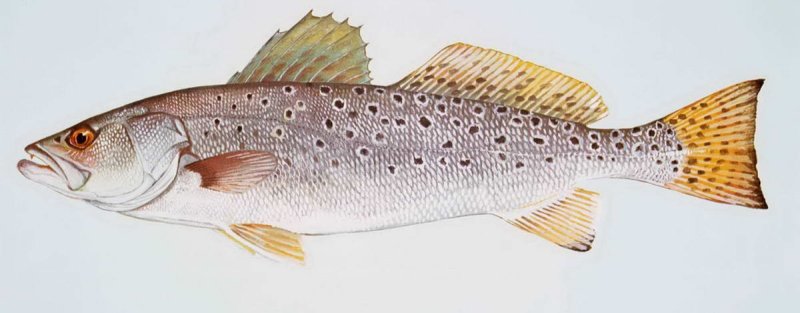
Cynoscion othonopterus
Este artigo foi traduzido automaticamente e pode conter pequenas imprecisões; em caso de dúvida, consulte a versão original em Inglês.