Is it fun? A 40-meter dive in the sewage sludge of a digestion tower
scuba divingenvironmentprofessional divingindustrial divingwastewater treatment
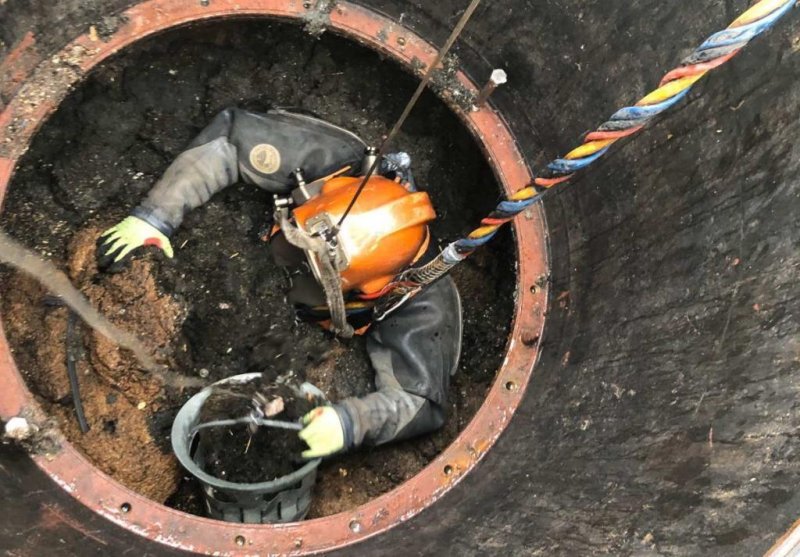
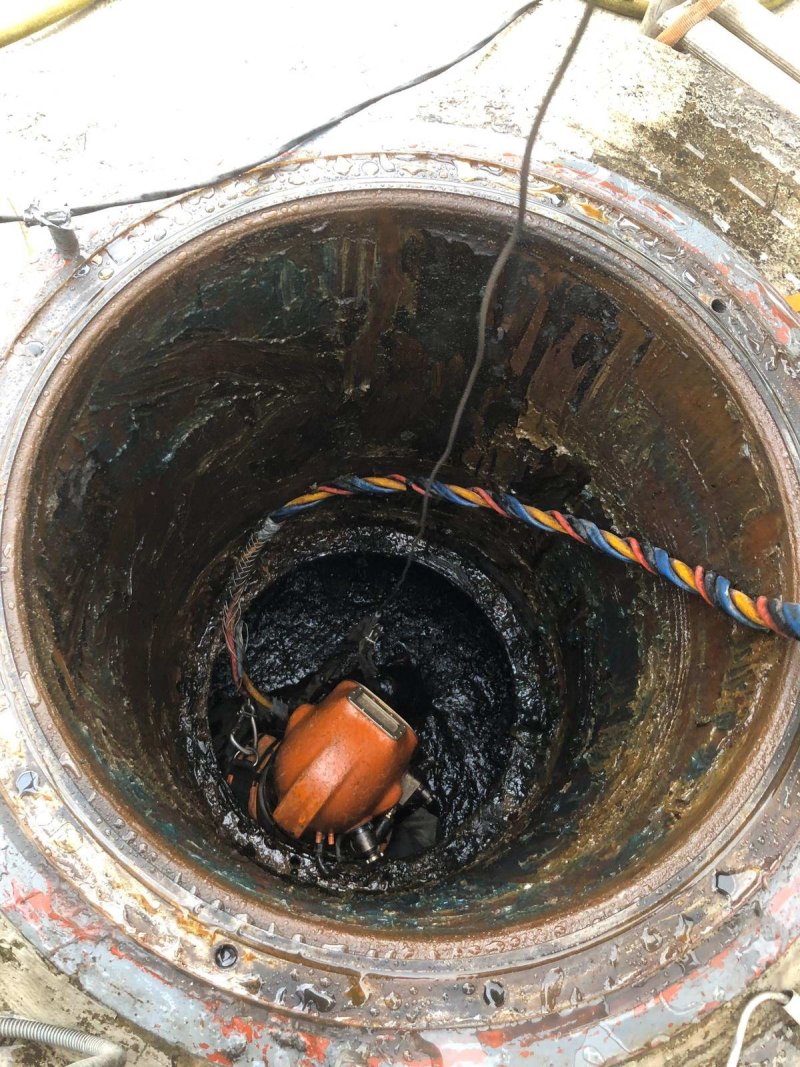
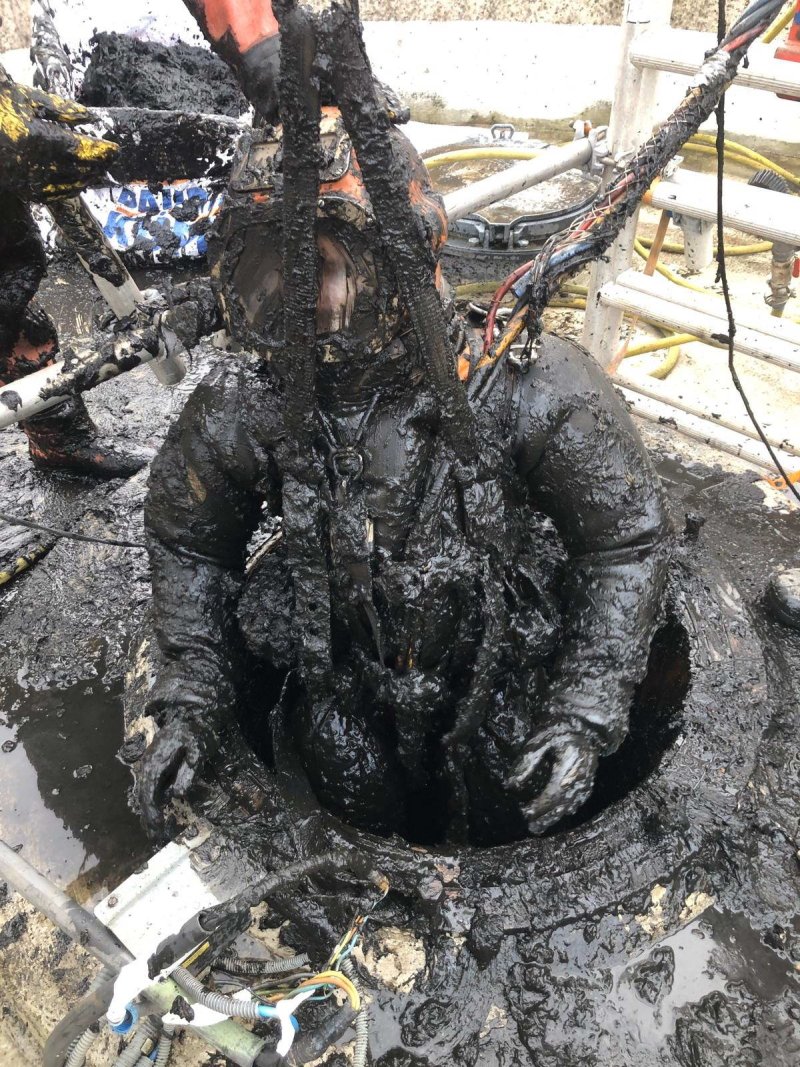
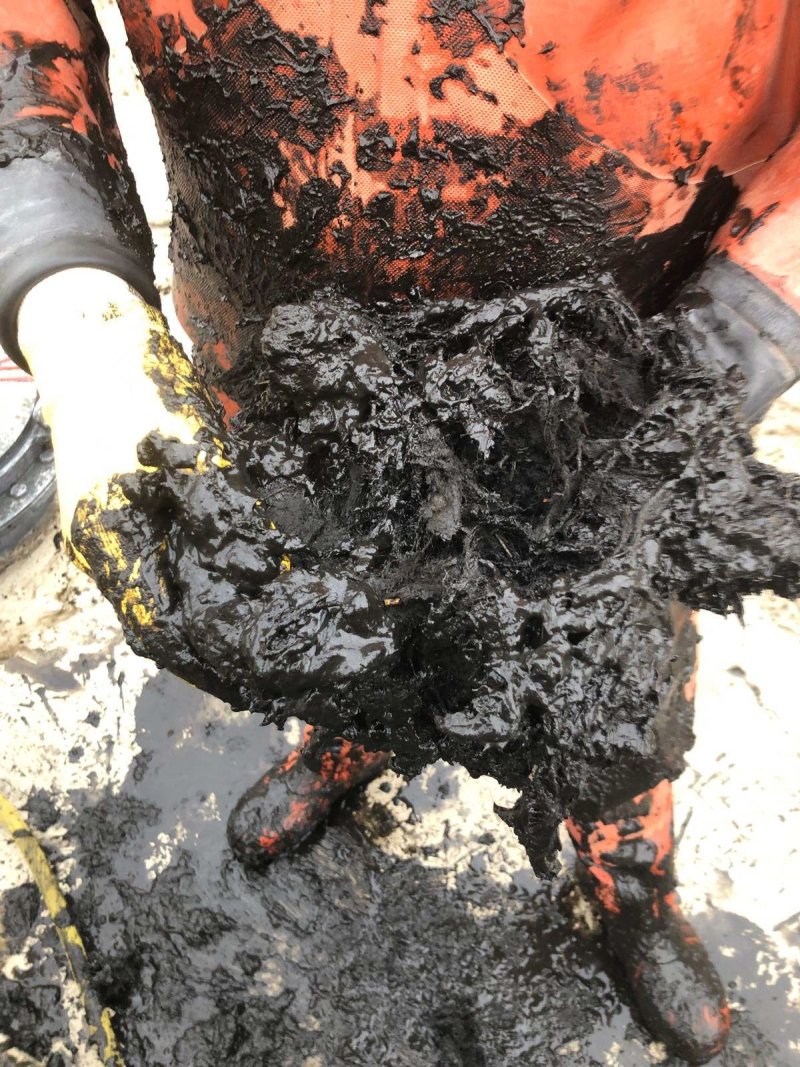
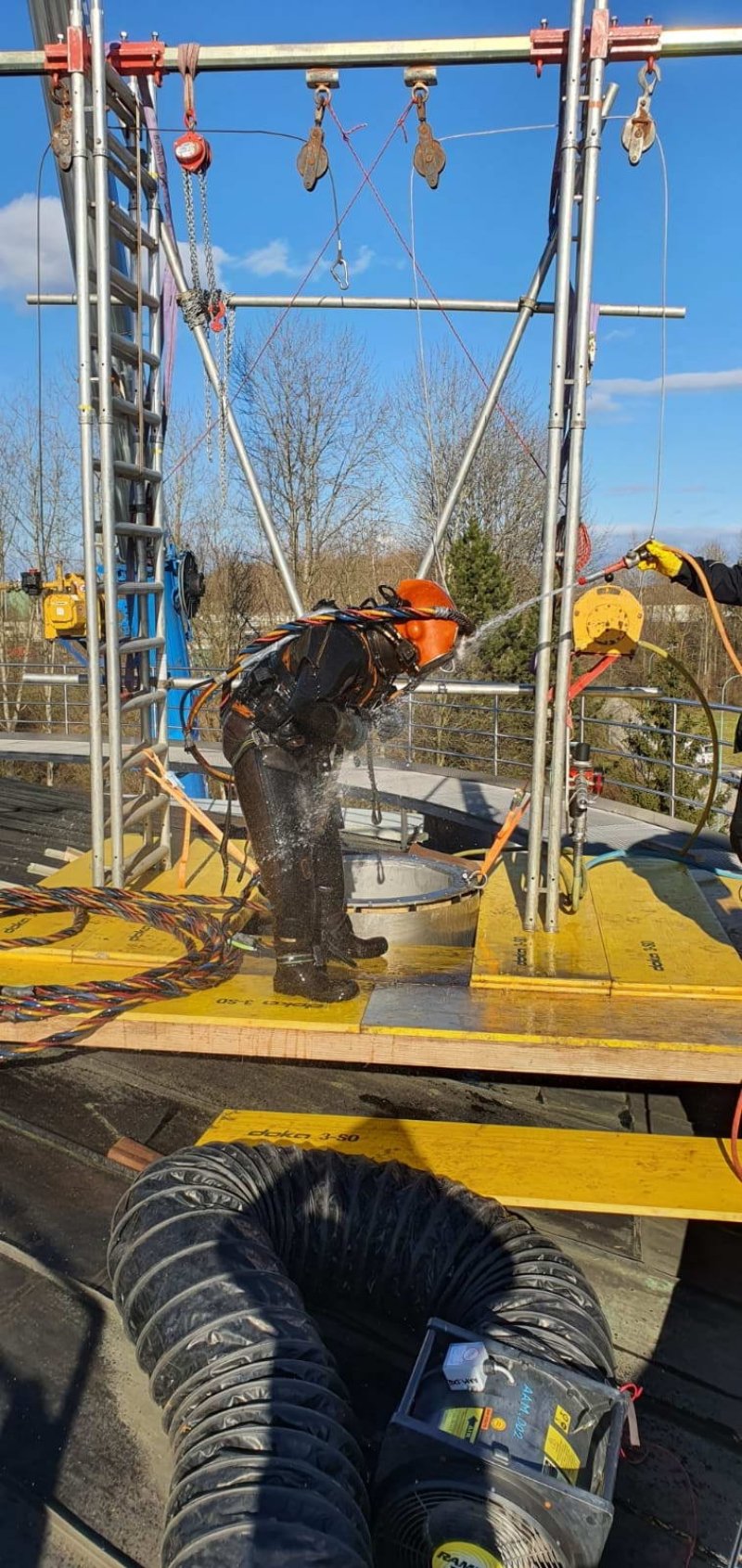
It's like shoveling snow at 37 degrees The diving conditions are actually optimal: no current, no dangerous wreckage in the area, pleasant temperatures and a manageable diving area... manageable...? Now serious: actually not, because the dive will take place in the digester tower of a sewage treatment plant with "zero" visibility. And we are talking about professional divers, more precisely Gregor Ulrich, who, with his twelve-person diving team from the Vienna Environmental Diving Service, dives (and works) mainly in wastewater treatment plants all over Germany. The Viennese family company was founded by Gregor's father Anton over 40 years ago. The Ulrichs have been working as specialists for digester and sewage treatment works since 1996. Gregor spent ten years with the European wastewater treatment plants. Now he combines his company with the company of his father Anton, who has become one of the few top specialists in this "smelly" business sector. The whole diving stuff has very little to do with the most beautiful sport in the world and such operations in three-stage sewage treatment plants are literally not honey licking but rather a "shitty" business – but nevertheless very interesting which kind of jobs are done by industrial divers. Gregor is now 36 years old, has done his job as a professional diver in numerous clarifiers and digesters for ten years. What he and his colleagues do in digestion towers with depths of up to 40 meters at temperatures around 37 degrees Celsius is a "blind flight" in a dangerous environment. Gregor Ulrich generally only dives in contaminated waters, i.e. in the wastewater from sewage treatment plants. The smaller clarifiers are the overture. Only four to eight meters depth and mostly 20 degrees warm. Here the dives sometimes last up to three hours. The Vienna diving specialists do not need decompression tables for this due to the shallow depths. In these basins, aerobic bacteria clarify the wastewater. In order to create the aerobic environment necessary for the important bacterial cultures, compressed air is blown into the pools with low-pressure compressors and swirled over. The "air blowers" are switched off during the inspection and cleaning dives and the divers remove sludge and foreign matter from the pool in order to successfully keep the wastewater treatment going. From here, the pre-cleaned wastewater goes into the sewage and mud towers... These large, up to 40 meter high digestion towers have an anaerobic environment and during the digestion processes methane gas is generated, which makes diving activities even more difficult. "In such digestion towers, the process generates more energy than the entire system consumes and the methane gas is a welcome but also dangerous by-product of the clarification process," explains Gregor Ulrich. There are strict safety regulations, because there is a risk of explosion, the so-called Zone 1, from distances of five meters from the methane environment in the clarification tower. Inside the tower, above the filling level of the digestion mass - in the "zero" zone - any spark can lead to a drama, which is why only special equipment and materials may be used here. This has nothing to do with industrial diving as normally known. "When you see the residual light disappearing through the hatch and you suddenly have zero visibility, you have left the critical zone zero behind, but then you are stuck in the mess - up to your ears," explains Gregor Ulrich, because the semifluid mass at a temperature of 37 degrees Celsius is anything but a pleasant diving temperature. The water- and gas-tight special suit with its bayonet connection on the neck picks up the special helmet, the viewing window of which actually shows nothing. That is why a diving lamp, a computer or a depth gauge is not part of the equipment, because it cannot be used anyway. The closed suit is supplied with air by the service team on the surface, outside the digester, via a hose package with four lines – called umbilical. With Free-Flow, breathing air is blown into the suit. This also flows into the helmet so that the diver can breathe without a regulator, just like with classic helmet diving. The flow and the air volume are regulated via valves. Dialogues between the service team and divers are possible via an integrated telephone. The air blown into the suit cools the diver down a bit, because after just a few minutes the 37 degree ambient temperature is anything but fun. A small hose, almost one and a half meters long, occasionally cools down "the system" when the diver can use the so-called pneumatic valve to direct a cold water jet onto his chest or hands from the outside, which at least temporarily ensures a slight cooling. How do you feel when you practically only dive in the wastewater of mankind? "At least from the professional diver's point of view, this has many advantages," says Gregor Ulrich. "It is always warm and we never have to dive in icy waters or in the cold environment. We have a calm, constant medium and we only dive in a clearly defined space," explains the professional. And: "We actually always dive in a safe environment. During our dives there is never a current, we have no shipping traffic over our heads and no dangerous installations or wrecks that pose a danger," Gregor Ulrich almost makes you want to try it out for yourself when you listen. But he also immediately added a disadvantage: "It's pretty tough for the psyche. At least in the beginning!" And that is probably one of the main reasons that professional diving in such difficult environments is not exactly the dream job, apart from the salary with around 500 euros per day! The only question left is: what on earth is a diver doing in a digester without a centimeter of visibility at 37 degrees? Well, the question is answered very easily, because the reason for the regular cleaning of the settling tanks and digestion towers results from the organic components broken down by the microbes and bacteria, which then settle as sewage sludge at the bottom of the digestion tower. A venturi effect is then generated with a mammoth pump while blowing in compressed air, with which the diver frees the soil from the sludge and thus spices up the bacterial milieu in the digestion tower. Sometimes they are real lumps, a wavering mass that is transported from the digestion tower into a disposal container outside at the base of the digestion tower using the innovative double-pump suction technology developed by the Viennese company itself. "It's like shovelling snow at 37 degrees," explains Gregor Ulrich with his Viennese humour and laughs. "Sometimes so-called 'braids' have to be removed – these are remains of human waste that are glued together with other foreign material - also disposed of in toilets and waste water," Gregor explains, not very enthusiastically about the waste disposal via the toilets... Oh yes: the dives in the Digestion towers are, of course, sometimes also decompression dives, because with 90 minutes of diving time in the up to 40 meter deep digestion tower you sometimes have decompression obligation, "says Gregor. Even in the unlikely event of a compressor failure, two 40 litre reserve bottles are always connected and ready to ensure a constant flow of breathing gas via the emergency hose in the hose package. The most beautiful moment of the dive is the diving out when the head penetrates through the surface. Cool rinsing water splashes from above onto the helmet, the suit, the gloves, a great feeling for the diver. Maybe it is a little bit like when you meet a whale shark while diving in the Maldives... Maybe... But definitely liberating and clean and cool and finally back from... the "excrement bath"... Contact: Gregor Ulrich Umwelttauchservice Österreich, Wien www.umwelttauchservice.at
이 기사는 자동 번역되었으며 약간의 오류가 포함될 수 있습니다. 의심스러운 점이 있으면 원문 영어 버전을 참조하십시오.