Yummy - seasoning with plastic ...
environmentmarine conservationoceanpollutionmicroplastics
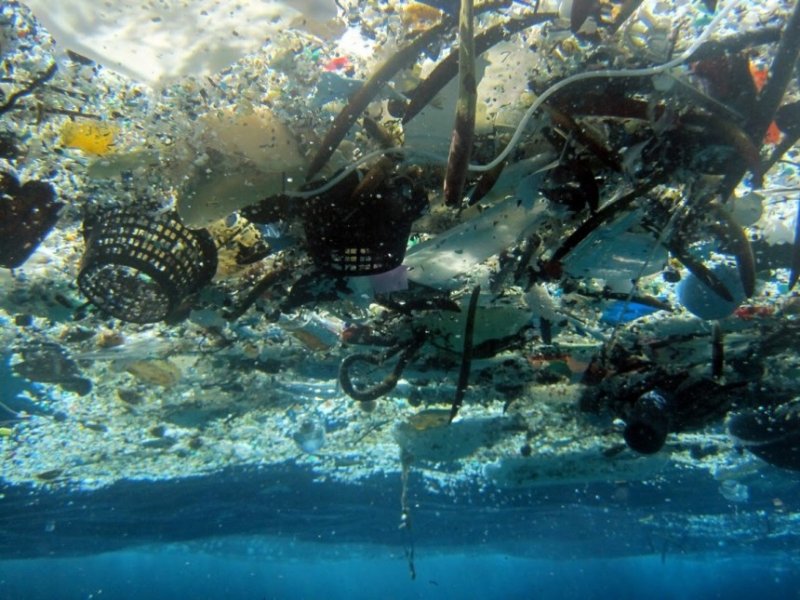
Plastic litter in the seas - the starting point of the problem
(c) NOAA
More than 90% of the salt brands worldwide contain microplastic According to a new study led by Seung-Kyu Kim, a professor at Incheon University, and Greenpeace East Asia, over 90% of the salt brands surveyed worldwide contained micro-plastics. Sea salts from Asia are the most polluted products. The study, which is now published in the journal Environmental Science & Technology, analyzed 39 different salt brands worldwide and showed that pollution with microplastics was highest in sea salt, followed by rock salt - an indicator of the degree of contamination with plastic garbage in the areas where the salt was extracted. Only three of the investigated salt brands contained no microplastics. Recent studies have found plastics in seafood, wildlife, tap water and now salt, and there is no escape from this plastic crisis, especially as plastics are still entering our waters in masses ," says Mikyoung Kim of Greenpeace East Asia. Building on previous studies on microplastics in salt, the current study is the first global study to establish the relationship between plastic contamination in salt and local pollution throughout the world. The study highlights Asia as a hotspot for global plastic pollution, which means that the ecosystem and human health could potentially be at greater risk due to heavy pollution with micro-plastics in asian waters. In an Indonesian sea salt sample, the researchers found the highest amounts of micro-plastics. The country is considered the second largest plastic polluter of the oceans worldwide. Consuming 10 grams of salt per day, an average adult could consume about 2,000 micro-plastic particles each year. Even after subtracting the highly contaminated Indonesian salt sample from the study, the average adult could still consume many hundreds of plastic particles per year. "The results suggest that the human uptake of micro-plastics via seafood consumption is strongly related to plastic pollution in a particular region," says Professor Kim. Consequently, the authors of the study urge drastically to reduce plastic waste worldwide. Link to the study: pubs.acs.org/doi/10.1021/acs.est.8b04180
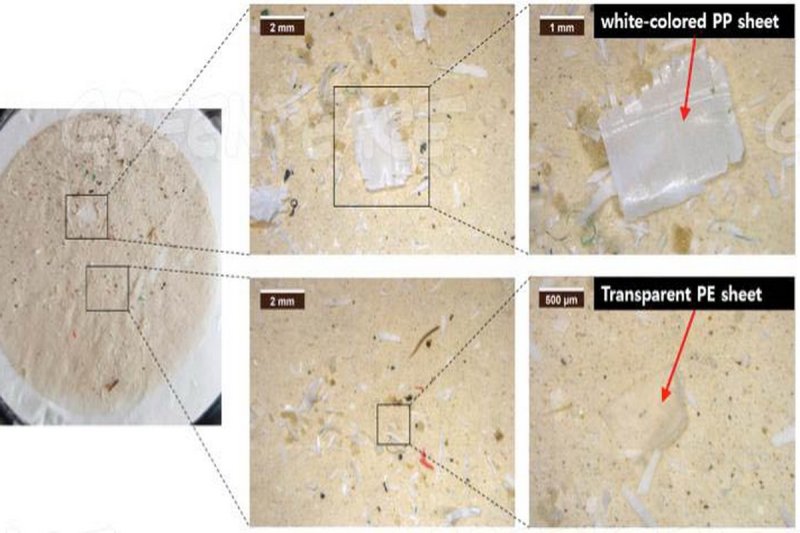
Micro-plastics in Indonesian sea salt sample
(c) Seung-Kyu Kim
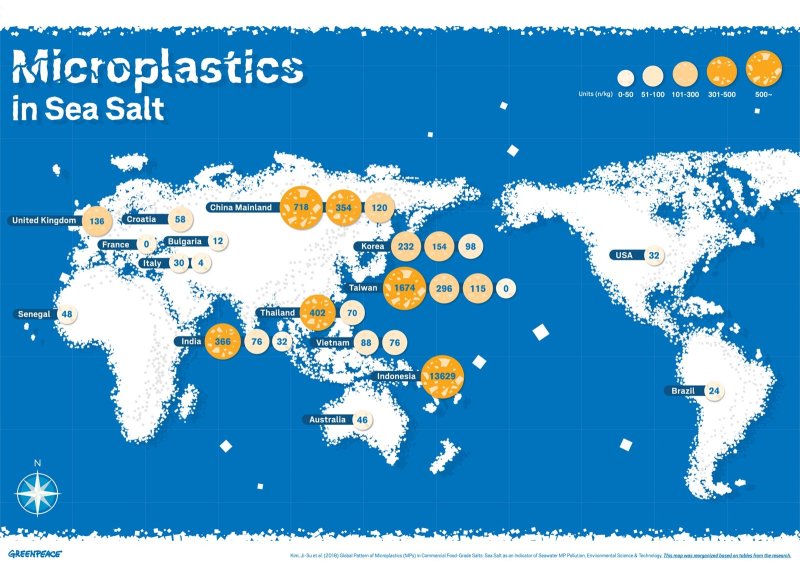
Ranking of the most contaminated sea salts
(c) Greenpeace
この記事は自動翻訳されており、多少の不正確な点が含まれている可能性があります。不明な点がある場合は、元の英語版を参照してください。