ROV discovers new deepsea octopod species
environmentmarine lifeoceanexplorationdeep sea
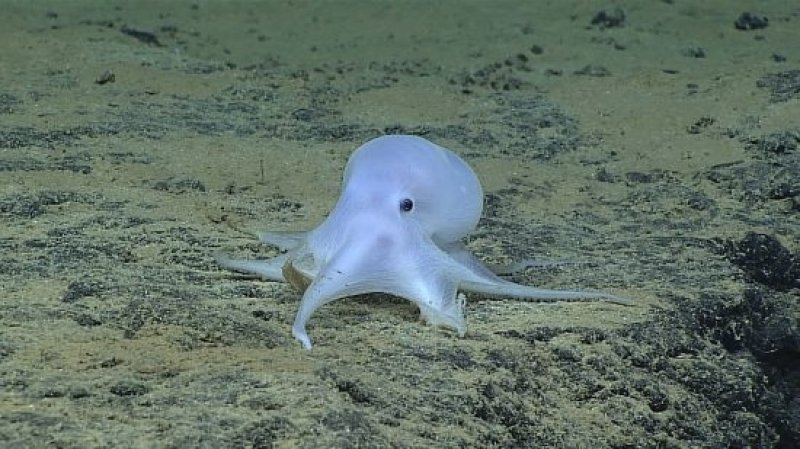
This ghostlike octopod probably belongs to a new species, as yet documented. (c) NOAA Office of Ocean Exploration and Research
The mysteries of the deep sea became a little more enchanting when the somewhat errie image of a small octopod turned up on the monitors during a NOAA expedition. Discovered on February 27th during the Okeanos Explorer's first operational dive of 2016, the ROV Deep Discoverer chanced upon the creature sitting on a flat rock at 4,290 metres depth, northeast of Necker Island, in the Hawaiian Archipelago. Since then, its enigmatic appearance has caused quite a stir in the scientific world and on social media. It was clearly not a known species. Writing in a blog post of the expedition, scientists suggested that it might even belong to an entirely new genus. However, confirmation of this would require more investigation. In the meantime, the octopod has been named Casper, as its ghostlike appearance was reminiscent of the fictional cartoon character.
Deep-sea octopods, which are found at depths beyond 5,000 metres deep, are of two types.
They are mostly cirrate, which means they have fins behind the head and small movable appendages on their tentacles. The other type are the incirrate octopods, which do not have fins or cirri, and look like the common shallow-water octopus. Based on its appearance, Casper was of the incirrate kind, and its suckers were in one, and not two, rows on each tentacle. It did not appear to be muscular and it also lacked pigment cells (chromatophores), thus giving rise to its ghostly appearance.
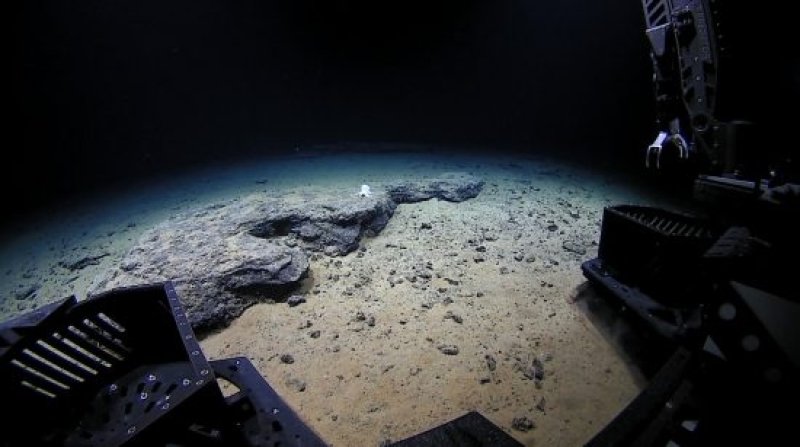
Close Encounters: The ROV Deep Discoverer approaches the octopus 4,290 meters below the ocean surface. (c) NOAA Office of Ocean Exploration and Research
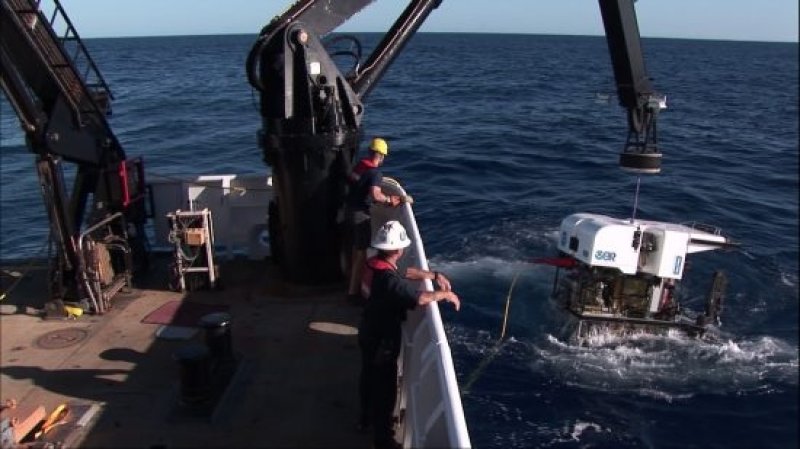
The ROV Deep Discoverer, after the first dive of the expedition. (c) NOAA Office of Ocean Exploration and Research
この記事は自動翻訳されており、多少の不正確な点が含まれている可能性があります。不明な点がある場合は、元の英語版を参照してください。