Orcas prefer salmon on their plate
environmentmarine lifeorcassalmon
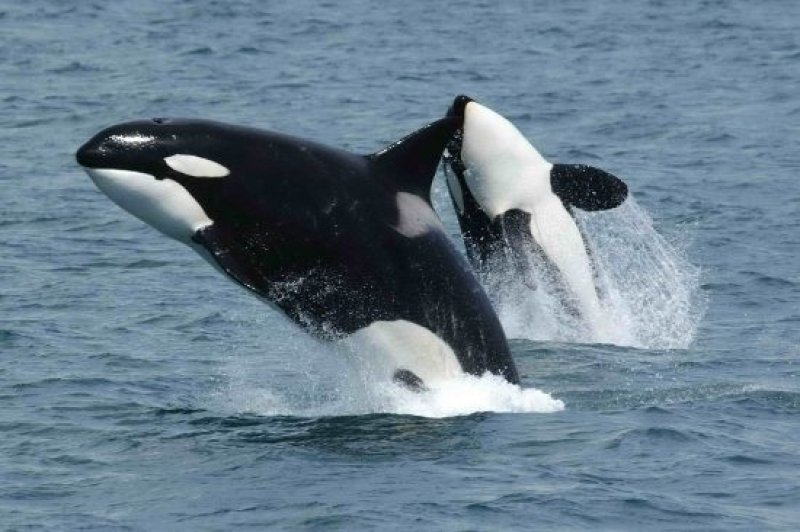
Jumping Orcas (c) Robert Pittman (NOAA)
An endangered population of wild killer whales in the Salish Sea (between Vancouver Island and Washington State) have been found to consume a diet of exclusively salmon. In a study by National Marine Fisheries Service in Seattle, a research team led by Michael Ford surveyed this population during the summer months, using stool samples collected from them between May to September in the years 2006 to 2011. The study was recently published in the journal PloS One.
To obtain the stool samples, two methods were used. One of the methods involved following the orcas by boat and collecting samples using a fine mesh net, and the other was the use of scent detection dogs to locate samples floating on the water surface.
Using genetic analysis, the researchers were able to identify the species of fish consumed by the orcas. The results showed that 98 percent of the samples contained the DNA of six different species of salmon. Of these, Chinook salmon (Oncorhynchus tshawytscha) made up 80 percent, followed by coho salmon (Oncorhynchus
kisutch) at 15 percent.
It was also found that the specific salmon species consumed was dependent on the time of the year. So, in early summer, Chinook salmon was predominantly on the menu; then, later in the summer, it was coho salmon.
Ford said, "Using an independent method, we have confirmed that salmon, and especially Chinook salmon, are by far the dominant component of this whale population's summer diet. The study helps to solidify our understanding of the ecology of this endangered population, and will be useful for continuing to prioritise recovery efforts."
This research has helped to confirm previous studies which underlined the prevalence of Chinook salmon as the orcas' main food during the summer months.
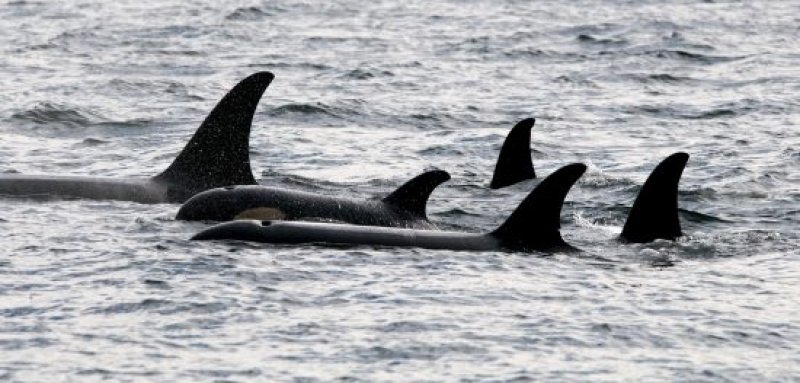
5 Orcas in Johnstone Strait (c) Winky from Vancouver (Wikipedia)
この記事は自動翻訳されており、多少の不正確な点が含まれている可能性があります。不明な点がある場合は、元の英語版を参照してください。